MON - FRI 8AM - 5PM

Top 10 316 Stainless Steel Suppliers for Global Buyers

Choosing a 316 stainless steel supplier involves more than comparing price lists. Buyers need material that matches the application, arrives on schedule, and comes with clear documentation. Small details matter: a heat number on a test certificate, a consistent sheet thickness, or a realistic delivery estimate can affect production planning.

This guide introduces ten suppliers serving global buyers and outlines the factors worth checking before requesting a quotation. These include product forms, available grades, production or stock capacity, export experience, and quality records. 316 stainless steel is widely selected for its corrosion resistance, but performance depends on the environment, fabrication, and maintenance. It is not a universal solution. Ask suppliers to confirm the specification and provide relevant mill test certificates; where 316L is offered, verify that it meets your requirements rather than assuming it is interchangeable in every application.

Supplier capabilities and lead times can change. Details matter. Treat this list as a starting point, not a substitute for technical review or direct verification. Compare quotations using the same dimensions, tolerances, finish, packaging, and delivery terms. Clarify how each supplier handles traceability, inspection requests, and issues with nonconforming material. A polished website may help you find a contact, but it cannot prove a shipment will meet your specification. The strongest choice is the supplier that can explain its claims, document the material, and respond clearly when requirements are less than straightforward.
Top 10 316 Stainless Steel Suppliers for Global Buyers

What Defines 316 Stainless Steel and Where It Is Used

Grade 316 is an austenitic stainless steel defined by its chromium, nickel, and molybdenum content. ASTM A240 specifies 16–18% chromium, 10–14% nickel, and 2–3% molybdenum for 316 plate, sheet, and strip. Molybdenum helps resist pitting and crevice corrosion in chloride-bearing environments. Grade 316L has a lower carbon limit, which helps reduce sensitization during welding. It is not corrosion-proof. Persistent salt deposits, stagnant seawater, and unsuitable cleaning practices can still cause damage. That distinction matters.

Common uses include coastal fittings, chemical-processing equipment, food-production surfaces, and marine hardware. In practice, the right grade depends on chloride exposure, temperature, cleaning routines, and fabrication quality—not just a product label. World Stainless Association’s Stainless Steel in Figures 2024 reports 58.4 million tonnes of stainless crude steel production in 2023. That figure covers all stainless grades, not 316 alone, so it should not be read as a measure of 316 demand. For buyers, checking the mill test certificate and confirming the specified grade are practical steps. Small details count. A polished surface can help cleaning, but it cannot compensate for poor drainage or trapped moisture.
316 Stainless Steel: Key Alloy Composition Ranges

Typical weight-percent ranges for chromium, nickel, and molybdenum in Type 316 stainless steel, as specified for plate, sheet, and strip in ASTM A240/A240M.

Molybdenum helps improve 316’s resistance to chloride-related pitting compared with 304, making it a common choice for marine equipment, chemical processing, and food-processing applications. Actual requirements depend on the product specification and application.

How to Evaluate 316 Stainless Steel Suppliers

When evaluating 316 stainless steel suppliers, verify the material, not just the product label. Request a mill test report showing chemical composition and heat number, then check that the number matches the delivered bundle. For applications requiring lower carbon content, confirm whether 316L is specified. Paperwork matters. Compare stated thickness, width, surface finish, and tolerances with your drawings. A polished sample can look convincing, but it should also match the agreed specification.

Assess how the supplier manages quality and delivery. Ask how material is identified during storage and whether mixed grades are kept apart. Clarify lead times, minimum order quantities, packaging, and how damaged or out-of-spec material is handled. If corrosion resistance is critical, discuss the service environment and suitable verification tests with a qualified technical professional; a generic test result may not predict performance in every setting. Small details count. One weak point in traceability can complicate an otherwise sound purchase, and supplier claims should be checked rather than accepted automatically.

Tips: Request a sample from the same production lot when possible. Check its dimensions and finish against your requirements. Keep written specifications and inspection records; they make follow-up easier, though they cannot replace careful incoming checks.

Top 10 316 Stainless Steel Suppliers for Global Buyers - How to Evaluate 316 Stainless Steel Suppliers

The entries below are supplier categories, not ranked or named companies. Product ranges, certifications, and export capabilities vary by supplier; verify all claims for the specific order.

Supplier Category Typical 316 Product Forms Useful Standards to Check Evaluation Priorities Best Fit For
1. Primary stainless steel mills Coils, sheets, plates, and selected long products ASTM A240/A240M for plate, sheet, and strip; applicable national or international product specifications Confirm the producing mill, grade and condition, heat traceability, production tolerances, and mill test documentation. Large-volume buyers seeking direct production sourcing and consistent specifications
2. Regional stainless steel service centers Sheet, plate, coil, bar, and cut-to-size stock Product-specific ASTM or EN specifications; EN 10204 inspection documentation where required Check local inventory, traceability after processing, cutting tolerances, stock condition, and delivery lead time. Buyers needing shorter lead times, smaller lots, or local processing
3. Stainless pipe and tube specialists Seamless or welded pipe and tubing ASTM A312/A312M for austenitic stainless steel pipe; ASTM A213/A213M for certain boiler, superheater, and heat-exchanger tubes Verify manufacturing route, dimensions, wall thickness, test requirements, surface condition, and grade-specific certificates. Process, utility, and heat-exchanger applications with defined piping or tubing requirements
4. Plate and structural-product suppliers Plate, sheet, flat bar, and fabricated plate components ASTM A240/A240M for plate and sheet; confirm the relevant specification for any processed component Assess plate-size availability, thickness tolerances, flatness, cutting capability, and material identification through fabrication. Equipment, tanks, frames, and projects requiring larger flat products
5. Bar and long-product specialists Round, square, and flat bar; selected shapes ASTM A276/A276M for stainless steel bars and shapes, where applicable Check size range, dimensional tolerances, finish, straightness, heat numbers, and machining suitability. Machined components, shafts, fasteners, and general engineering parts
6. Stainless steel forging suppliers Forged bars, rings, blocks, and custom-shaped forgings Confirm the applicable forging and material specifications for the product, dimensions, and intended service Review forging process controls, heat treatment, testing scope, defect-inspection methods, and traceable test reports. Pressure-related or heavy-duty components requiring specified forged product properties
7. Fittings and flanges specialists Butt-welding fittings, flanges, and other piping components ASTM A403/A403M for wrought austenitic stainless steel piping fittings; verify the applicable flange specification separately Confirm grade, dimensions, pressure class where relevant, end preparation, marking, and material certificates. Piping packages that require compatible, documented components
8. Precision strip and coil suppliers Thin strip, precision coil, and slit coil ASTM A240/A240M or the agreed product specification, with thickness and tolerance requirements stated in the purchase order Assess thickness consistency, width tolerances, edge condition, surface finish, flatness, and coil packaging. Stamping, forming, precision fabrication, and repeat-production applications
9. Cut-to-size and processing suppliers Cut plate, blanks, slit strip, and processed stock made from certified material Original material specification plus clearly documented processing and inspection requirements Trace the processed pieces back to the original heat; check dimensional inspection, handling controls, and segregation practices. Buyers who need ready-to-use dimensions or reduced in-house processing
10. Export-focused multi-product distributors A mix of sheet, plate, pipe, tube, bar, fittings, or flanges sourced from multiple producers Product-specific ASTM or EN standards; agree on certificate format, inspection, and shipping documentation before purchase Verify the actual manufacturer for each item, document consistency, export packing, logistics experience, and responsibility for nonconforming goods. International buyers consolidating several product types into one procurement order

Top 10 316 Stainless Steel Suppliers for Global Buyers

Global buyers comparing the top 10 316 stainless steel suppliers should look beyond quoted price. Ask for the material test certificate, heat number, product form, and applicable specification. For common 316 sheet and plate, ASTM A240 chemistry includes 2–3% molybdenum, which supports corrosion resistance in many chloride-exposed environments. Check the certificate against the ordered grade and the physical markings. Small discrepancies matter.

Supply capacity also deserves scrutiny. The worldstainless report Stainless Steel in Figures 2024 records global stainless steel production of about 58.4 million tonnes in 2023. That scale does not guarantee that a supplier has the right 316 stock, dimensions, or delivery window. Ask for current inventory evidence and a realistic shipping schedule. Then compare packaging, export documents, inspection options, and how claims are handled. A neat brochure is not proof.

Request sample documents before placing a large order. Verify that the reported chemistry, thickness tolerances, and surface finish match your specification. For marine or chemical-service applications, confirm suitability with a qualified materials specialist; 316 is not immune to every corrosive condition. Even experienced buyers can miss details when comparing offers. Be cautious. A low price may hide extra lead time, limited traceability, or costly minimum order quantities.

How the Suppliers Compare in Products, Quality, and Service

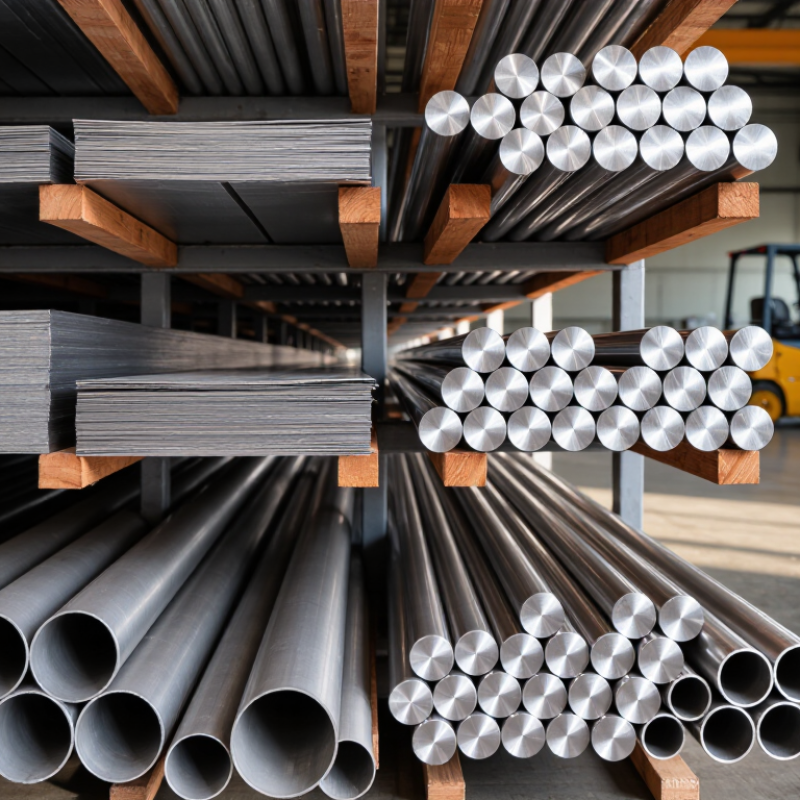
Comparing ten 316 stainless steel suppliers means looking beyond price lists. Their product ranges may include sheet, coil, plate, bar, pipe, and fittings, but available sizes and finishes vary. A buyer needing thin, brushed sheet may value a different supplier than one ordering heavy plate for fabrication. Ask for clear tolerances and product specifications. Small details matter.

Quality is easier to assess when documentation matches the shipment. Check whether material test reports identify the grade and heat number, and whether packaging protects edges from dents or moisture. Service also differs: some suppliers provide technical guidance and regular production updates, while others mainly process orders. Response time matters when a shipment date is tight. So does honest notice of delays.

A careful comparison should include sample approval, inspection options, minimum order quantities, and delivery terms. Ask how a supplier handles a discrepancy, not just how it describes quality. Claims can sound polished; records are more useful. One awkward point: quoted lead times may not reflect changing freight or production schedules. Keep that uncertainty in view, and compare written commitments rather than assumptions.

How to Verify Suppliers and Plan International Procurement

Top 10 316 Stainless Steel Suppliers for Global Buyers

How to Verify Suppliers and Plan International Procurement

A supplier’s quotation is only a starting point. Ask for a material test certificate that identifies the 316 grade, heat number, chemical composition, and mechanical properties. Match the heat number on the certificate to the markings on the material and shipping documents. Check the stated dimensions, tolerances, finish, and quantity against your purchase specification. Small gaps matter.

Request recent inspection records and clarify whether testing covers the actual production batch. For critical applications, arrange an independent inspection before shipment, with agreed sampling and acceptance criteria. A video call can show the warehouse and packaging, but it cannot replace verifiable records. Confirm production capacity, lead times, and how the supplier handles shortages or rejected goods. I have seen buyers focus on unit price and overlook costly rework.

Plan freight before placing the order. Confirm packing protects sheets, coils, or bars from moisture and surface damage, then agree on shipment terms, documents, insurance, and destination charges in writing. Check that invoice descriptions and product details match across the paperwork. Build in time for port delays and incoming inspection. Do not rush. Even a well-prepared checklist can miss a detail, so have a technical colleague review the final specification.

Request a Quote

To learn more about any of the products and services provided by Abbott Ball Company, Inc., simply complete the form below.