Understanding the Key Properties of 304 Stainless Steel in China
In the world of materials, 304 stainless steel stands out for its versatility and reliability. Renowned metallurgist Dr. Jane Liu emphasizes, "The 304 stainless steel properties make it a staple in various industries." This statement reflects the alloy's rich composition and unique characteristics.
The excellent corrosion resistance of 304 stainless steel plays a crucial role in maintaining structural integrity. Industries such as food processing and construction heavily depend on these qualities. However, some users overlook the importance of proper maintenance and selection. Environmental factors can significantly impact the performance of 304 stainless steel.
Another notable aspect is its balance between strength and ductility. Designers often appreciate its ease of fabrication. Yet, manufacturers must remain vigilant about specifications. Understanding the complexities of 304 stainless steel properties helps ensure optimal use and longevity in applications.

Overview of 304 Stainless Steel and Its Composition
304 stainless steel is one of the most widely used grades of stainless steel. Its composition typically includes 18% chromium and 8% nickel, providing excellent corrosion resistance. This alloy is renowned for its versatility and is often utilized in diverse applications, from kitchenware to industrial equipment.
The durability of 304 stainless steel is significant. Research indicates it can withstand high temperatures up to 870°C (1,600°F) without losing structural integrity. This property makes it ideal for processing food and drinks, enhancing both safety and performance. However, it is important to note that while 304 is resistant to many corrosive environments, it may still be susceptible to chloride-induced corrosion.
Tip: Always consider the environment in which 304 stainless steel will be used. In marine applications, for instance, a higher grade like 316 might be necessary.
One challenge with 304 stainless steel is its workability. While it can be easily formed and welded, improper techniques can lead to defects such as warping or cracking. Awareness of these potential issues is essential when fabricating components. Regular inspections and following best practices in manufacturing can help mitigate these risks.
Tip: Keep in mind that proper maintenance, such as regular cleaning and avoiding harsh chemicals, can significantly extend the life of 304 stainless steel products.
Physical Properties of 304 Stainless Steel Applicable in China
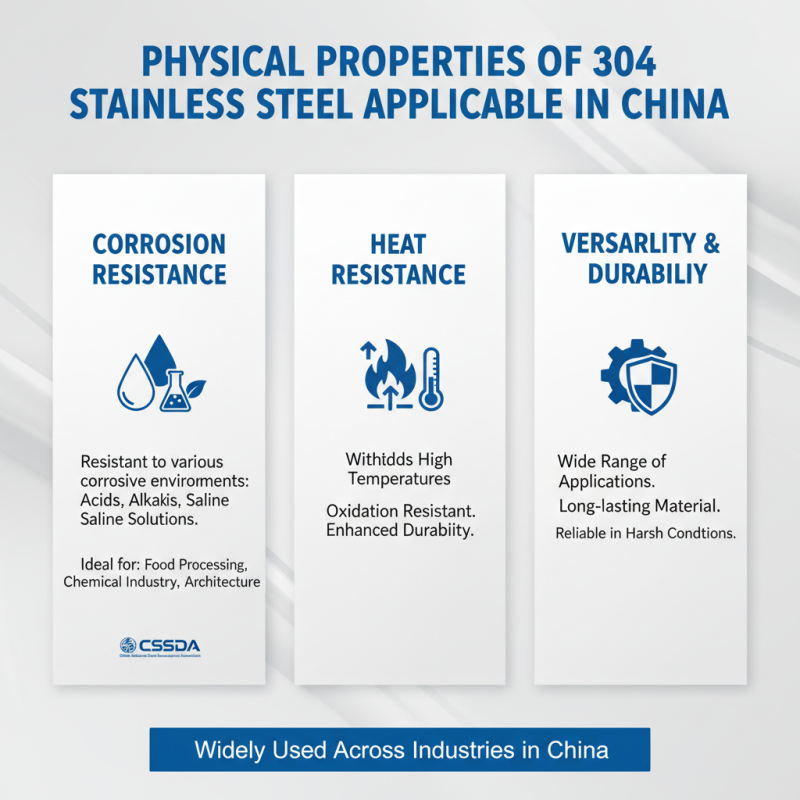
304 stainless steel is widely utilized in various industries in China due to its remarkable physical properties. One key feature is its excellent corrosion resistance. According to a report by the China Stainless Steel Development Association (CSSDA), 304 steel can withstand various corrosive environments, making it suitable for food processing, chemical industries, and architectural applications. Its ability to resist oxidation at high temperatures also enhances its durability in harsh conditions.
Another important property is its mechanical strength. The yield strength of 304 stainless steel typically ranges around 215 MPa, while its tensile strength can reach up to 750 MPa. This makes it strong enough for structural applications but still malleable for fabrication. However, it's essential to note that its work hardening rate is relatively low, which may lead to difficulties in manufacturing complex shapes. Designers must be aware of this when planning their projects.
Finally, the thermal conductivity of 304 stainless steel is relatively moderate at about 16 W/m·K. This property can be beneficial in applications where heat management is crucial. Nevertheless, the limitations in thermal properties could pose challenges in high-heat environments, requiring careful consideration. Understanding these properties allows industries to optimize their operations in a competitive environment.
Corrosion Resistance and Durability of 304 Stainless Steel
304 stainless steel is known for its excellent corrosion resistance. This property makes it a popular choice in various industries, especially in China. The alloy contains chromium and nickel, which enhance its durability. These elements offer resistance against rust and oxidation in many environments.
In coastal areas, 304 stainless steel performs well against saltwater corrosion. However, it's essential to note that extreme environments may still pose challenges. For example, prolonged exposure to chloride solutions can cause pitting corrosion. This is a concern for projects near the sea. Despite its strong properties, some users report issues with staining and surface blemishes. Regular maintenance is crucial to preserve its appearance and function.
Durability is another advantage of 304 stainless steel. It withstands high temperatures and harsh conditions. This makes it suitable for a range of applications, from kitchen equipment to chemical processing. Proper selection and care are vital to ensure longevity. Understanding its limitations can help in making informed choices for various uses.
Applications of 304 Stainless Steel in Various Industries
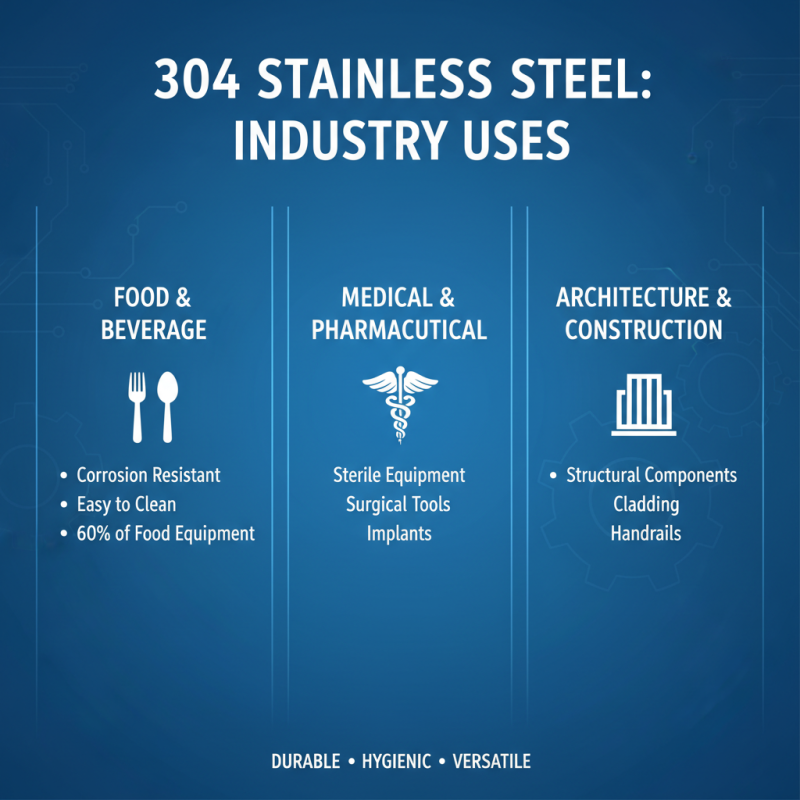
304 stainless steel is widely used across various industries due to its excellent properties. In the food and beverage sector, this material is favored for its resistance to corrosion and ease of cleaning. According to a report by Smithers, nearly 60% of food processing equipment utilizes stainless steel, making it a staple for hygiene and durability.
In construction, 304 stainless steel's strength and aesthetic appeal make it a popular choice for architectural applications. Its ability to withstand harsh weather conditions is another reason for its selection. A study from the American Institute of Steel Construction found that over 40% of structural applications use stainless steel grades for their exceptional longevity and low maintenance needs.
However, challenges remain. The cost of 304 stainless steel can be higher than other materials, potentially limiting its use in budget-constrained projects. Additionally, while it resists rust, it may still suffer from pitting in certain environments. These limitations should be considered when choosing materials for specific applications.
Comparative Analysis with Other Stainless Steel Grades in the Market
304 stainless steel is among the most commonly used grades in various applications. Its corrosion resistance and ease of fabrication make it popular. However, it's essential to compare it with other stainless steel grades to understand its unique properties.
For instance, 316 stainless steel offers better corrosion resistance, especially in marine environments. This could make it more suitable in certain scenarios, albeit at a higher cost. The presence of molybdenum in 316 enhances its durability. In contrast, while 304 is versatile, it may not be ideal for harsher conditions.
Another interesting comparison features 430 stainless steel. This grade contains less nickel, resulting in a lower price point. However, it sacrifices some corrosion resistance. Thus, in environments like kitchens or food processing, 304 remains the reliable choice. Awareness of these distinctions helps in making informed decisions about material selection for specific applications.
Comparative Analysis of Key Properties of 304 Stainless Steel and Other Grades