MON - FRI 8AM - 5PM

10 Best 316 Stainless Steel Properties You Need to Know?

Choosing stainless steel by appearance alone can create expensive mistakes. Grade 316 may look similar to 304, yet its performance differs in saltwater, chemicals, heat, and welded areas. Understanding 316 stainless steel properties helps engineers, buyers, and fabricators select the right material for real working conditions.

J. Charles Lippold, a respected stainless steel welding metallurgist, has stated, “Stainless steel is not a single material, but a family of alloys designed for different environments.” This principle matters with 316 stainless steel. Its molybdenum content improves resistance to pitting and crevice corrosion, especially where chlorides are present. A marine handrail, pharmaceutical tank, or coastal fastener may benefit from that added protection. However, no grade is completely corrosion-proof.

This guide examines ten practical properties, including chemical composition, corrosion resistance, strength, weldability, temperature behavior, magnetism, formability, and surface finish. It also considers details that product brochures often simplify. Weld discoloration can reduce surface performance if cleaning is neglected. Chloride deposits may still attack exposed edges. Poor fabrication can undermine an otherwise suitable alloy.

The best material decision comes from evidence, not habit. Review mill certificates, inspect the finished surface, and consider the actual service environment. Testing may still be necessary. That is the imperfect part: laboratory data cannot reproduce every site condition. Even experienced professionals can overlook stagnant water, trapped debris, or aggressive cleaning chemicals. A careful comparison of 316 stainless steel properties makes those risks easier to identify before failure occurs.

10 Best 316 Stainless Steel Properties You Need to Know?

What Is 316 Stainless Steel and How Is It Made?

316 stainless steel is an austenitic stainless alloy valued for corrosion resistance and reliable forming. Its composition usually includes 16–18% chromium, 10–14% nickel, and 2–3% molybdenum. That molybdenum is important. It improves resistance to chlorides, salt spray, and many industrial chemicals. However, 316 is not corrosion-proof. Harsh acids, stagnant moisture, and poor maintenance can still cause damage.

Manufacturing begins with carefully measured raw materials. Electric furnaces melt iron, chromium, nickel, molybdenum, and other controlled additions. Refining reduces unwanted elements and adjusts the chemistry. The molten steel is cast into slabs, billets, or other semi-finished shapes. Hot rolling then reduces thickness and develops the required form. Cold rolling may follow when tighter dimensions and a smoother surface are needed.

Heat treatment is also significant. Annealing restores ductility and dissolves unwanted carbide formations after rolling. The steel is then rapidly cooled. Pickling removes heat scale from the surface, while passivation helps rebuild its protective chromium-oxide layer. In practical fabrication, surface cleaning often matters as much as the alloy itself. A small iron contaminant can create rust-like staining. It is an easy detail to overlook. 316L contains less carbon and often performs better after welding. Still, weld quality, drainage, and service conditions must be checked before selecting the grade.

How 316 Stainless Steel Resists Corrosion and Harsh Chemicals

How 316 Stainless Steel Resists Corrosion and Harsh Chemicals

316 stainless steel is designed for demanding environments. Its typical chemistry includes 16–18% chromium, 10–14% nickel, and 2–3% molybdenum, according to ASTM A240 material requirements. Chromium forms a thin passive film that blocks oxygen and moisture. Molybdenum strengthens this protection against chloride pitting. That matters near seawater, salt spray, and chemical-processing equipment.

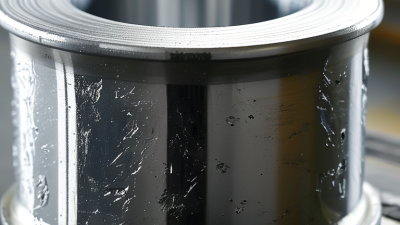
The International Molybdenum Association identifies molybdenum as a key alloying element for improving localized corrosion resistance. In practical inspections, 316 often performs better than 304 stainless steel around coastal air and cleaning chemicals. However, it is not corrosion-proof. Warm chloride solutions can still create small pits beneath deposits, weld discoloration, or trapped moisture. Chlorine bleach is especially aggressive. A smooth, clean surface usually performs better than a rough one.

Tips: Rinse salt deposits with fresh water, then dry the surface. Avoid steel wool and chloride-based cleaners. For welded parts, specify low-carbon 316L and remove heat tint after fabrication. ASTM G48 testing can compare pitting resistance under controlled ferric chloride conditions, but field exposure may differ. This is where real judgment matters. A laboratory pass does not guarantee service-life performance. Inspect crevices, fasteners, and welds regularly, especially when temperatures rise or chemicals become concentrated. PMC technical guidance also notes that crevice geometry can undermine otherwise strong alloy performance.

What Are the Key Mechanical and Physical Properties of 316 Steel?

316 stainless steel is valued for strength, corrosion resistance, and stable performance in demanding environments. According to ASTM A240/A240M requirements, annealed 316 plate typically provides a minimum tensile strength of 515 MPa and yield strength of 205 MPa. Its required elongation is commonly 40%, showing useful ductility during forming. Hardness usually remains below 217 HB.

Its physical properties also influence design choices. The ASM Handbook reports a density near 7.99 g/cm³, an elastic modulus around 193 GPa, and thermal conductivity near 16 W/m·K at room temperature. Electrical resistivity is approximately 0.74 μΩ·m. Thermal expansion is about 15.9 μm/m·K between 20°C and 100°C. These values explain why 316 feels heavy, transfers heat slowly, and expands noticeably during welding. Actual results can change with thickness, heat treatment, and product form. A perfect number rarely survives real fabrication.

Tips: Check the material certificate against ASTM A240/A240M before machining or welding. Use measured properties when tolerances are tight. Do not assume 316L behaves identically; its lower carbon content improves weldability, but its mechanical minimums may differ. Surface contamination can also reduce corrosion performance, even when the alloy itself is correctly specified.

How Do Heat, Welding, and Fabrication Affect 316 Stainless Steel?

Heat changes 316 stainless steel more than its polished surface suggests. Between roughly 425 and 815°C, chromium carbides may form at grain boundaries, reducing local corrosion resistance. The risk increases with prolonged exposure and slow cooling. Short heating cycles are safer, but not automatically harmless. Heavily formed parts may need solution annealing around 1,040–1,120°C. Rapid cooling follows when specifications permit. Temperature records matter.

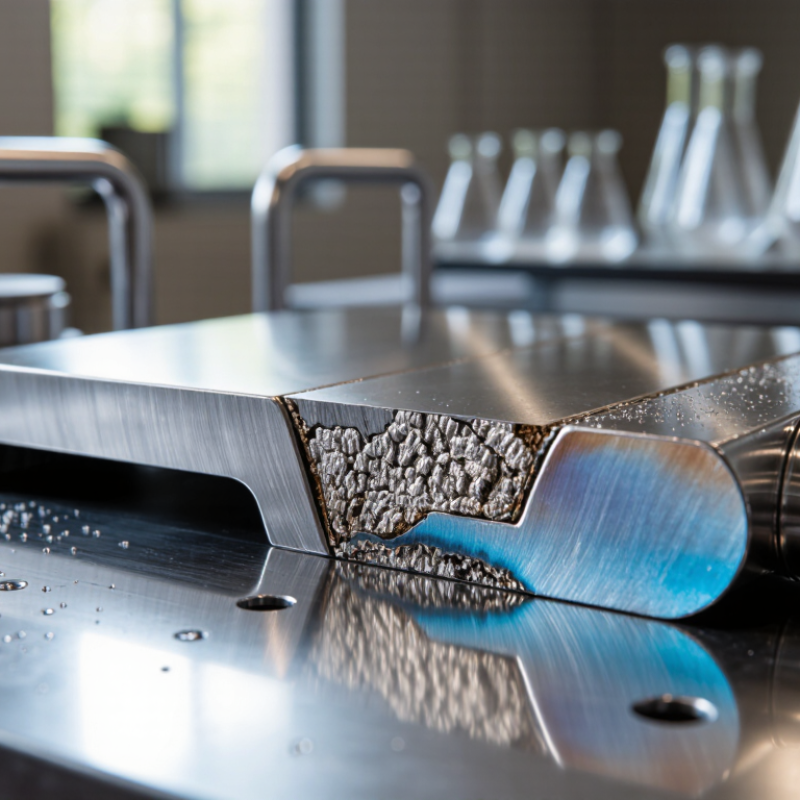
Welding concentrates heat in a narrow zone. Use clean, dedicated tools, controlled heat input, and suitable shielding gas around the molten pool. 316L filler is commonly selected because its low carbon content limits sensitization. Control interpass temperatures carefully. Remove heat tint after welding when corrosion performance matters. A gray or blue surface is not merely cosmetic. It can signal a damaged passive layer.

Fabrication introduces another issue: work hardening. Bending, punching, and rolling can increase strength while reducing ductility. 316 stainless steel can spring back unexpectedly. Use generous bend radii and verify the material condition before forming. Tool marks and iron contamination deserve inspection. I would not rely on appearance alone. Roughness, weld penetration, and cleaning quality often decide service life. Small process shortcuts can become large maintenance problems.

10 Best 316 Stainless Steel Properties You Need to Know? - How Do Heat, Welding, and Fabrication Affect 316 Stainless Steel?

No. Property or Characteristic Typical Data for 316 Stainless Steel Effect of Heat Welding and Fabrication Considerations
1 Chemical Composition Chromium: 16–18%
Nickel: 10–14%
Molybdenum: 2–3%
Carbon: maximum 0.08%
Molybdenum improves resistance to chloride-related pitting and crevice corrosion. Prolonged heating in the sensitization range can promote chromium carbide precipitation at grain boundaries. Use 316L, with maximum carbon content of 0.03%, when welded corrosion resistance is important. Keep surfaces clean and avoid carbon-steel contamination during fabrication.
2 Corrosion Resistance Excellent general corrosion resistance; better chloride resistance than 304 stainless steel. Typical PREN is approximately 24–26. Exposure to approximately 425–815°C can cause sensitization in standard 316, reducing corrosion resistance near welds. Heating does not make 316 immune to chloride attack. Remove heat tint, oxide scale, and embedded iron after welding or hot forming by suitable cleaning and, where required, pickling and passivation.
3 Tensile Strength Minimum tensile strength for annealed plate and sheet is commonly about 515 MPa, depending on the applicable product standard. Strength decreases as service temperature rises. Solution annealing restores the soft, annealed condition but does not increase strength through precipitation hardening. Avoid excessive heat input and distortion. Final design values should be taken from the governing material specification and temperature-dependent design code.
4 Yield Strength and Work Hardening Typical minimum yield strength is about 205 MPa in the annealed condition. Cold working can substantially increase strength and hardness. Localized welding heat can soften cold-worked areas. 316 cannot be hardened by conventional heat treatment. Expect rapid work hardening during machining, bending, and forming. Use sharp tools, rigid setups, and sufficient feed to prevent rubbing and excessive tool wear.
5 Ductility and Formability Minimum elongation is commonly about 40% for annealed plate and sheet. The alloy has good deep-drawing and bending capability. Hot forming is generally performed around 870–1230°C, followed by rapid cooling when restoration of corrosion resistance is required. Cold forming increases hardness and residual stress. Allow for springback, use clean forming tools, and consider intermediate annealing for severe forming operations.
6 Thermal Conductivity Approximately 14.6 W/m·K at 20°C, which is relatively low compared with carbon steel. Heat is conducted away slowly, producing a concentrated heat-affected zone and increasing the risk of distortion and burn-through in thin sections. Use controlled heat input, balanced weld sequencing, suitable fixturing, and short weld segments where practical. Avoid excessive preheating.
7 Thermal Expansion Mean coefficient of thermal expansion is approximately 15.9 × 10⁻⁶/K from 20–100°C. Repeated heating and cooling can create dimensional changes, residual stresses, and warping. Plan weld sequence and restraint carefully. Use temporary fixtures or tack welds while allowing controlled contraction to reduce distortion.
8 Melting Range Approximately 1370–1400°C, depending on the exact chemical composition. Localized temperatures near the melting range can cause burn-through, excessive penetration, oxidation, and loss of dimensional control. Use appropriate current, travel speed, shielding gas, and joint fit-up. For thin material, select a process and parameters that limit heat input.
9 Weldability Generally very good weldability using TIG, MIG, resistance, and other qualified stainless-steel welding processes. Excessive time in the sensitization range can reduce corrosion resistance. High restraint and rapid thermal cycling may contribute to distortion or cracking risks. 316L filler metal is commonly selected for 316L base metal. Use clean, dry shielding gas, adequate gas coverage, low spatter, and qualified welding procedures.
10 Solution Annealing A common solution-annealing range is approximately 1010–1120°C, followed by rapid cooling, subject to the applicable specification. Solution annealing dissolves many chromium carbides and restores a more uniform austenitic structure. It also removes most cold-work strengthening. Use a controlled furnace atmosphere when surface quality matters. After heat treatment, clean, descale, and passivate the surface as required.

Note: Values are typical reference values for annealed 316 stainless steel and may vary with product form, thickness, temperature, manufacturing standard, and heat treatment.

Where Is 316 Stainless Steel Used, and How Should It Be Maintained?

316 stainless steel is widely used where ordinary stainless steel may face chlorides, moisture, or chemical exposure. Its typical composition includes 16–18% chromium, 10–14% nickel, and 2–3% molybdenum, according to ASTM A240 requirements. That molybdenum improves resistance to pitting, especially near seawater, coastal air, and de-icing salts. The International Stainless Steel Forum reported global crude stainless steel production of about 58.4 million tonnes in 2023, showing the material’s continuing industrial importance.

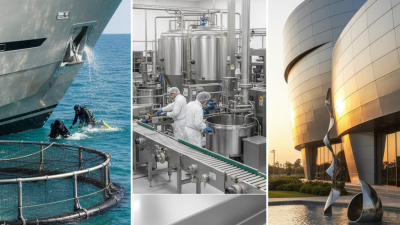
Its applications are practical and demanding. Marine fittings, food-processing equipment, pharmaceutical vessels, heat exchangers, surgical instruments, and coastal architectural parts commonly use 316 or 316L stainless steel. In a processing room, smooth welds and sealed joints reduce places where residue can collect. In real service, however, 316 is not maintenance-free. Chloride deposits can still create small pits beneath damp dust.

Maintenance should begin with regular freshwater rinsing, especially after salt exposure. Use a soft cloth and a mild, chloride-free cleaner. Avoid steel wool, carbon-steel brushes, and hydrochloric acid products. They can leave iron contamination or damage the passive surface. Drying matters too. Trapped water behind clamps, gaskets, or support brackets often causes hidden staining. Maintenance intervals should follow exposure conditions, not a fixed calendar. That judgment is imperfect, but visual checks and documented inspections usually reveal problems earlier. Surface scratches, tea-colored marks, and rough weld zones deserve prompt attention.

Request a Quote

To learn more about any of the products and services provided by Abbott Ball Company, Inc., simply complete the form below.