MON - FRI 8AM - 5PM

8 Tips for Buying 8mm Ball Bearings

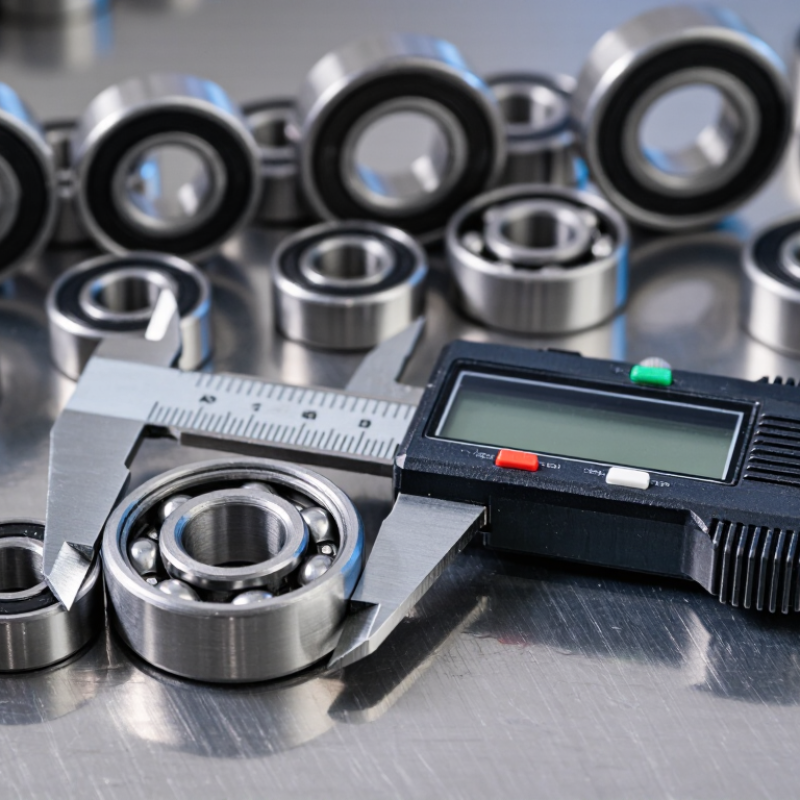
An 8mm bore sounds like a precise starting point. It is not a complete specification. Before buying 8mm ball bearings, confirm the inner diameter, outer diameter, and width against your housing and shaft. A digital caliper helps; a ruler does not. A bearing that looks close may still wobble, bind, or refuse to fit.

The technical details matter. ISO 281:2007 explains how dynamic load ratings and rating life are assessed, while ISO 492:2023 covers dimensional and running tolerances for radial bearings. These standards do not choose a bearing for you, but they help make supplier specifications comparable. The U.S. Department of Energy’s 2014 Improving Motor and Drive System Performance sourcebook reports that motor-driven systems account for about 68% of electricity use in U.S. manufacturing. That figure concerns whole systems, not bearings alone, yet it shows why friction, alignment, and maintenance deserve attention in equipment selection.

Look beyond price and bore size. Check load direction, operating speed, temperature, lubrication, seals, clearance, and material. Ask for a datasheet that states these values, rather than relying on a vague “high-speed” label. This is easy to overlook. I would also question claims that promise a universal fit; real machines vary, and catalog details can be incomplete. The eight tips ahead focus on practical checks you can make before ordering, from measuring the shaft to confirming the bearing’s duty and source. A careful match may prevent noise, excess heat, and an avoidable replacement.
8 Tips for Buying 8mm Ball Bearings

Understanding 8mm Ball Bearing Specifications and Applications

8 Tips for Buying 8mm Ball Bearings
Understanding 8mm Ball Bearing Specifications and Applications

An 8mm bearing usually refers to its bore, the opening that fits over a shaft. Check the full dimensions: bore, outside diameter, and width. Measure the shaft with calipers; a small mismatch can cause wobble or make installation difficult. Measure twice. Do not assume every listing uses the same shorthand.

Match the bearing’s load rating to the job. A small motor, sliding roller, and hobby tool place different demands on a bearing. Check whether the load is mostly radial or includes thrust. Review the tolerance class when smooth, consistent rotation matters. A tighter tolerance is not automatically better; the application and shaft fit matter more. Material also counts: steel suits many general uses, while stainless steel can help where moisture is a concern.

Consider seals or shields if dust, splashes, or debris may reach the bearing. Contact seals can offer more protection, while shields may suit applications where lower friction is preferred. Check the rated speed and lubrication guidance before installing it in a fast-spinning assembly. One easy detail to overlook is alignment: even a correctly sized bearing may run poorly on a bent or poorly supported shaft. I would not choose by bore size alone; the surrounding assembly deserves a closer look.

8 Tips for Buying 8mm Ball Bearings - Understanding 8mm Ball Bearing Specifications and Applications

Tip Specification or feature What to check Typical application or use
1. Confirm all three dimensions Bore × outside diameter × width, in millimetres An 8 mm bore alone does not identify a bearing. For example, a 608 is 8 × 22 × 7 mm; a 688 is 8 × 16 × 5 mm. Use the equipment drawing or measure the available housing and shaft space before ordering.
2. Match the bearing series Series determines outside diameter, width, and internal design Compare the full designation and dimensions, not just “8 mm.” A 608 and a 688 have the same bore but different outside diameters and widths. Compact mechanisms may need a thinner bearing; a replacement should match the original envelope.
3. Check load and operating conditions Radial and axial load ratings, speed, shock, and temperature limits Compare the manufacturer’s dynamic and static load ratings with the application. Ratings vary by bearing design and construction. Small motors, rollers, and rotating assemblies may have different load and speed requirements.
4. Choose the right closure Open, shielded, or sealed construction Metal shields (often marked ZZ or 2Z) help limit debris entry; contact seals (often marked 2RS) provide stronger contaminant protection but can add friction. Use the application’s speed, dust, moisture, and maintenance needs to guide the choice.
5. Select material for the environment Bearing steel or stainless steel; other material options depend on design Standard bearing steel is common for general-purpose use. Stainless steel can offer better corrosion resistance, but its load capacity may differ. Consider stainless construction for damp or corrosion-prone conditions, and verify suitability for the actual exposure.
6. Consider internal clearance and fit Normal clearance or increased clearance such as C3; shaft and housing fits C3 indicates greater-than-normal internal clearance; it is not automatically an upgrade. Fit, temperature, and operating conditions affect the required clearance. Follow the equipment specification or bearing supplier’s fit guidance, especially for tight or heated assemblies.
7. Verify precision and noise requirements Dimensional tolerance, running accuracy, vibration, and noise class ABEC ratings describe selected dimensional and running tolerances; they do not, by themselves, indicate load capacity, durability, or overall quality. Higher precision may be relevant for equipment with specific speed or runout requirements; use the machine specification.
8. Check lubrication and maintenance needs Factory grease, oil lubrication, relubrication options, and service life Confirm lubricant type and operating-temperature range. Sealed, pre-lubricated bearings are generally not intended for routine relubrication. Choose a maintenance approach that fits accessibility, operating speed, temperature, and contamination exposure.

Dimensions and suffix conventions can vary by standard and manufacturer. Confirm the exact drawing, tolerances, and operating ratings before purchase.

Choosing the Right Bearing Material and Construction

For an 8 mm bearing, check what “8 mm” describes: bore, outside diameter, or ball size. Small listings can be unclear. Material choice should match load, speed, moisture, and cleaning conditions. Through-hardened bearing steel suits many high-load applications; stainless steel can help where moisture is present, though corrosion resistance does not make a bearing maintenance-free. Silicon nitride is much lighter: ASM International’s Engineered Materials Handbook reports a density near 3.2 g/cm³, compared with roughly 7.8 g/cm³ for bearing steel. That can reduce rotating mass, but ceramic components may cost more and need compatible races.

Construction matters just as much. A hybrid bearing pairs ceramic balls with steel races; a full-ceramic design uses ceramic for both. For dusty settings, shields or contact seals can limit contamination, while seals may add friction. Open bearings are easier to inspect, but need cleaner surroundings. Not always a simple trade-off. For load checks, ISO 281 defines basic rating life; for ball bearings, L10 is based on (C/P)³ million revolutions, where C is dynamic load rating and P is equivalent dynamic load. Treat that as a calculation, not a service-life promise. Check dimensions, load ratings, temperature limits, and sealing details before choosing.

Checking Load Capacity, Speed, and Operating Conditions

An 8 mm bore describes the shaft fit, not the bearing’s full capacity. Check the load ratings for the exact bearing type and size. The dynamic rating applies to a bearing in motion; the static rating matters when it is stationary or exposed to shocks. Compare both with the expected radial and axial forces. A small wheel, for example, may put more load on the bearing during a hard landing than during steady rolling. Small bearings are unforgiving. Leave a sensible margin rather than choosing a rating that barely matches your estimate.

Speed limits depend on more than the number printed in a catalogue. Lubrication, seals, fit, and heat all affect safe operation. I would not treat a catalogue speed as a promise under every setup. Check the stated limit for the lubrication method you plan to use, then consider whether the housing can shed heat. Operating conditions matter just as much. Dust can wear a bearing quickly, while moisture or frequent temperature changes may affect materials and lubricant. That matters. Think about the actual installation: a warm motor housing, a dusty workshop, or a shaft that is slightly misaligned. It is tempting to focus on bore size and speed alone; that can leave important details unexamined. Verify the supplier’s technical data, and recheck the fit and operating temperature after installation.

Comparing Seals, Lubrication, and Corrosion Resistance

When choosing an 8 mm ball bearing, compare its seals with the dirt and moisture it will actually face. Metal shields help block larger particles, but they are not fully watertight. Contact seals offer stronger protection against fine dust and splashes, though their rubbing lips can add drag. For a small wheel that spins quickly, that extra resistance may matter. No seal is perfect.

Lubrication deserves equal attention. Many sealed bearings arrive greased and are not designed for routine relubrication. Check the stated operating temperature and speed range; grease that works in a slow hinge may perform poorly in a fast-running assembly. Avoid mixing lubricants unless compatibility is confirmed. More grease is not always better. Excess can increase heat and resistance.

Corrosion resistance depends on both material and exposure. Stainless steel can suit damp equipment, but its performance varies by grade and conditions. Coated steel may be adequate in a dry indoor machine, yet scratches can expose the surface beneath. Consider condensation, cleaning fluids, and occasional splashes—not just the room’s average humidity. A bearing near a wet window, for example, may need more protection than one used in a clean cabinet. It is easy to focus on the seal label and overlook how the assembly will be stored between uses.

Verifying Quality, Fit, and Supplier Reliability

An 8 mm bore is only one part of the fit. Confirm the bearing’s outside diameter, width, tolerance class, and shaft and housing tolerances against your drawing. ISO 492:2023 specifies tolerance classes for radial bearings, so request the class and actual inspection results, not just “precision grade.” Small checks matter. A caliper can catch a gross mismatch, but it cannot verify tight tolerances reliably. Use suitable measuring equipment or a documented inspection report.

Quality claims need traceable evidence. Ask for lot identification, dimensional inspection records, material documentation, and lubricant details. Check that the packaging protects the bearing from dust and moisture, and compare the markings with the paperwork. ISO 281:2007 defines basic L10 rating life at 90% reliability; this is a standardized rating, not a promise of service life in a dirty, misaligned assembly. Load, speed, lubrication, and installation still matter. Supplier reliability shows up in consistent records and clear answers. One imperfect detail worth questioning: a certificate may describe a sample, not every piece in the lot. Ask how sampling is performed and what happens when a dimension falls outside specification.

8 Tips for Buying 8mm Ball Bearings: Verify Quality, Fit & Supplier Reliability

Nominal Dimensions of Common 8mm-Bore Deep-Groove Bearings

All three bearing types have an 8 mm bore, but their outside diameters and widths differ. Check the required dimensions and tolerances before ordering; confirm material, seals, load rating, and supplier documentation as well.

Request a Quote

To learn more about any of the products and services provided by Abbott Ball Company, Inc., simply complete the form below.