MON - FRI 8AM - 5PM

2026 Best 8mm Ball Bearings for Global Buyers

Choosing the right 8mm ball bearings can influence machine life, operating noise, and maintenance costs. For global buyers, the decision involves more than matching an 8mm bore. Bearing material, outer diameter, width, load rating, clearance, seals, and lubrication must fit the application.

Small details matter.

A bearing used in a 3D printer may need quiet rotation and low friction. A conveyor roller may require stronger shields, better grease retention, and longer running hours. Stainless steel can offer improved corrosion resistance in humid environments, while chrome steel often provides a practical balance between hardness, accuracy, and price. Ceramic options may reduce friction, but their higher cost is not justified for every project.

This guide examines eight widely considered 8mm ball bearings for international purchasing teams, maintenance engineers, and equipment manufacturers. It focuses on measurable specifications, supplier documentation, quality consistency, packaging, and realistic application limits. Buyers should verify ABEC or equivalent accuracy claims, radial play, seal type, temperature range, and dynamic load ratings before placing volume orders. Product naming can be inconsistent across markets. Confirm the complete bearing code.

Manufacturer experience also matters. Reliable suppliers should provide inspection records, material information, batch traceability, and clear export packaging details. Samples should be tested under actual speed, load, temperature, and contamination conditions whenever possible. A catalog rating is not a guarantee of field performance.

Even experienced buyers can overlook fit or lubrication. That mistake is expensive. The best choice is not always the cheapest bearing or the highest-rated model. It is the one that consistently matches the equipment, environment, service interval, and purchasing requirements.
2026 Best 8mm Ball Bearings for Global Buyers

What Are 8mm Ball Bearings and How Are They Measured?

An 8mm ball bearing has a nominal 8mm bore, where the shaft enters. The number does not define its outside diameter or width. For example, two bearings may share an 8mm bore but require different housings. ISO 15:2017 classifies boundary dimensions, while ISO 492:2014 defines dimensional tolerances. These standards matter when a shaft feels tight by hand but still appears correct.

Measure the inner diameter, outside diameter, and width separately. Clean the bearing first. Dirt can add several micrometres. Use a three-point bore gauge for the bore, a micrometer for the outside diameter, and a caliper for a quick width check. A caliper is not enough for final verification. I would recheck each dimension at about 20°C, the reference temperature used in ISO dimensional practice. Measure without pressing the seals or loading the rings. Small pressure can distort the reading.

The designation “8mm” is only a starting point. Buyers should also confirm radial clearance, seal type, material, load rating, and tolerance class. ISO 281 provides the bearing-life calculation method, but real life changes with contamination, alignment, speed, and lubrication. A 2024 Grand View Research market report estimated the global ball-bearing market at more than US$20 billion in 2023, showing why specification errors can affect large purchasing programs. The uncomfortable detail is simple: a cheap measurement can create an expensive fit problem.
Which 8mm Ball Bearing Types Suit Different Applications?

2026 Best 8mm Ball Bearings for Global Buyers

Which 8mm Ball Bearing Types Suit Different Applications?

An 8mm bore does not define one universal bearing choice. Deep-groove bearings suit small motors, 3D printers, rollers, and general machinery. They handle radial loads and moderate axial loads in both directions. Shielded versions reduce dust entry, while sealed versions retain grease better in humid workshops. For higher speed, choose low-friction seals and accurate clearance. ISO 281:2007 evaluates bearing life through load, speed, and material factors, not bore size alone.

Flanged 8mm bearings simplify mounting inside thin panels or pulley housings. Their flange resists axial movement during vibration. Stainless-steel versions fit washdown equipment and outdoor mechanisms, but they may sacrifice some load capacity. Ceramic-hybrid types reduce electrical damage risks in high-speed motors, although their cost needs careful justification. A 2024 Grand View Research bearing-market report identifies automation, electric mobility, and energy equipment as major demand drivers. These sectors usually need tighter noise, heat, and reliability control. Still, market reports vary. Treat forecasts as direction, not proof.

Tips: Check shaft fit, housing tolerance, operating temperature, and expected speed before ordering. Measure actual noise after installation. A catalog match can still fail. In dusty conveyors, test sealing performance under real contamination. For long service, compare ISO 281 life calculations with field inspection results, because lubrication errors often matter more than the bearing type.

2026 Best 8mm Ball Bearings for Global Buyers - Which 8mm Ball Bearing Types Suit Different Applications?

8 mm Bearing Type Nominal Dimensions
(Bore × Outside Diameter × Width)
Typical Bearing Structure Typical Dynamic Load Rating
(C)
Typical Static Load Rating
(C₀)
Primary Load Direction Common Seal or Shield Options Best-Suited Applications Main Advantages Important Selection Considerations
618/8 Extra-Thin Deep-Groove Ball Bearing 8 × 16 × 4 mm Single-row radial deep-groove bearing Approximately 1.8–2.3 kN Approximately 0.9–1.2 kN Primarily radial; limited axial load in both directions Open, metal-shielded, or contact-sealed versions Compact instruments, small fans, optical equipment, miniature gear mechanisms, and low-load electric motors Very small radial section, low friction, and reduced installation space Lower load capacity than wider 8 mm bore bearings; verify shaft and housing rigidity
688 Deep-Groove Ball Bearing 8 × 16 × 5 mm Single-row radial deep-groove ball bearing Approximately 1.3–1.7 kN Approximately 0.6–0.8 kN Primarily radial; moderate axial load in both directions Open, ZZ or 2Z metal shields, and 2RS contact seals Small rollers, compact robotics, model mechanisms, office equipment, and low-torque assemblies Widely available miniature size with low running resistance Not intended for heavy radial loads or severe shock loading; sealing increases friction
698 Deep-Groove Ball Bearing 8 × 19 × 6 mm Single-row radial deep-groove ball bearing Approximately 2.4–2.9 kN Approximately 1.1–1.4 kN Radial and light-to-moderate axial loads Open, metal-shielded, or rubber-sealed versions Small electric motors, belt tensioners, compact pumps, laboratory devices, and light-duty wheels Good balance between compact size and load capacity Use a wider bearing only when additional load capacity or axial stiffness is required
619/8 Extra-Thin Deep-Groove Ball Bearing 8 × 19 × 6 mm Single-row radial deep-groove ball bearing Approximately 2.4–3.0 kN Approximately 1.1–1.5 kN Radial; limited axial load in both directions Open, metal-shielded, or contact-sealed versions High-speed compact spindles, sensors, small fans, precision instruments, and space-limited machinery Thin cross-section and generally low friction at elevated speed Thin rings can be more sensitive to housing distortion and excessive preload
6000 Standard Deep-Groove Ball Bearing 8 × 22 × 7 mm Single-row radial deep-groove ball bearing Approximately 5.0–6.0 kN Approximately 2.3–3.0 kN Radial and axial loads in both directions Open, ZZ or 2Z metal shields, and 2RS contact seals General machinery, small conveyors, gearboxes, electric motors, pumps, and industrial rollers Strong general-purpose choice with good availability and higher load capacity Requires more radial space than 688, 698, or other thin-section types
638/8 Wide-Section Deep-Groove Ball Bearing 8 × 28 × 9 mm Single-row radial deep-groove ball bearing with a wider outside diameter Approximately 8.5–10.5 kN Approximately 4.5–5.8 kN High radial load; moderate axial load in both directions Open, metal-shielded, or rubber-sealed versions Heavy-duty compact rollers, high-load guide wheels, industrial mechanisms, and low-speed support assemblies Highest radial load capacity among the listed standard 8 mm bore options Large outside diameter and wider envelope may not fit compact housings; check shoulder dimensions
Flanged 688 or 698 Variant Usually 8 mm bore; outside diameter and flange geometry depend on the selected base series Deep-groove bearing with an integral locating flange on one ring Usually similar to the corresponding non-flanged bearing, subject to flange design Usually similar to the corresponding non-flanged bearing, subject to flange design Radial; limited axial load Open, shielded, or sealed versions Small pulleys, printed equipment, guide rollers, compact linear mechanisms, and housings without a separate shoulder Axial locating function can simplify housing design and assembly Confirm flange side, flange diameter, flange thickness, and available clearance before ordering
8 mm Bore Miniature Thrust Ball Bearing Common miniature configurations vary; one frequently used form is approximately 8 × 16 × 5 mm Axial thrust bearing with grooved washers and balls Application and design dependent; generally lower radial capacity than a radial bearing Application and design dependent Axial load in one or both directions, depending on the bearing arrangement Normally open; shields and seals are less common than on radial bearings Screw mechanisms, rotary indexing devices, hand controls, low-speed turntables, and axial positioning systems Designed specifically for axial load with low rotational resistance Should not be used as a substitute for a radial bearing when meaningful radial load is present
Stainless-Steel 8 mm Bore Deep-Groove Bearing Uses the dimensions of the selected 688, 698, 6000, or other base size Corrosion-resistant radial deep-groove bearing Typically lower than an equivalent chrome-steel bearing of the same size Typically lower than an equivalent chrome-steel bearing of the same size Radial and limited axial loads Open, stainless shields, or elastomer contact seals Food-processing equipment, humid environments, medical devices, outdoor mechanisms, and washdown-prone assemblies Improved corrosion resistance and easier maintenance in damp environments Check the specific stainless grade, load rating, temperature range, and chemical compatibility
Hybrid Ceramic 8 mm Bore Deep-Groove Bearing Uses the dimensions of the selected standard bearing series Steel rings with ceramic balls, commonly silicon nitride Depends on the ring material, internal design, and manufacturer specification Depends on the ring material, internal design, and manufacturer specification Radial and limited axial loads Open, shielded, or sealed versions High-speed spindles, low-current electric motors, precision instruments, and electrically insulated rotating assemblies Low density, electrical insulation through the rolling elements, and good high-speed performance potential Higher purchase cost; confirm preload, lubrication, cage material, and speed limits
Selection note: Load-rating figures are indicative ranges for common standardized geometries and can vary with internal clearance, material, cage design, seal type, and manufacturing specification. For final selection, compare the required radial and axial loads with the supplier's published dynamic rating (C), static rating (C₀), limiting speed, operating temperature, lubrication, shaft tolerance, housing tolerance, and expected service life. Dimensions are nominal and should be verified against the exact bearing drawing before purchase.

How to Compare Materials, Seals, Loads, and Operating Speeds

For global buyers, “8mm ball bearing” must be clarified first. It may describe an 8mm bore, not an 8mm ball diameter. Request the inner diameter, outer diameter, and width drawing. ISO 281 rates bearing fatigue life through the L10 value, meaning 90% of identical bearings should reach the calculated life. That figure is useful, but contamination, poor alignment, and shock loads can reduce it sharply.

Material changes both durability and price. Chrome steel generally supports high loads and stable dimensions. Stainless steel offers better corrosion resistance, but its load capacity may be lower. Ceramic-hybrid designs can reduce friction at high speed, although their cost needs justification. ANSI/ABMA load-rating methods and ISO 76 static-load guidance help buyers compare figures fairly. Do not compare a dynamic rating from one supplier with a static rating from another.

Seals deserve practical testing. Rubber contact seals protect against dust and water but create more drag. Metal shields usually run faster, yet they are less protective in dirty equipment. Speed claims should include lubricant type, temperature, cage design, and load. A catalogue maximum is not an operating recommendation. The U.S. Department of Energy’s motor-system assessments repeatedly identify friction and maintenance as important efficiency factors, but bearing efficiency is application-specific. I would test samples at the actual shaft speed, temperature, and contamination level. A small oversight remains possible. Data sheets are not field experience.

What Standards and Quality Factors Should Global Buyers Check?

For global buyers, an 8 mm ball bearing should be judged by more than its unit price. Confirm the bore diameter, outside diameter, width, radial clearance, and tolerance class. ISO 492 provides a useful reference for dimensional accuracy. ISO 76 and ISO 281 support static load and rating-life evaluations. Ask for current inspection reports, not generic certificates. A drawing must match the delivered part. Small differences matter.

Material selection depends on moisture, speed, load, and operating temperature. Hardened bearing steel suits many general applications. Corrosion-resistant steel may perform better in damp environments. Check hardness, cleanliness, raceway finish, and ball roundness. Seals should match the lubricant and operating speed. Grease quantity also matters. Too much grease can raise temperature. Too little can shorten service life. Request dynamic load ratings, calculated L10 life, noise data, and starting torque. Not always.

Reliable suppliers should provide lot traceability, heat-treatment records, calibration evidence, and sampling plans. Independent testing can verify dimensions, vibration, and rotational smoothness. Packaging deserves attention. Sealed bags, dry protection, and clear batch labels reduce transit damage. Check whether documents identify the exact 8 mm bearing, not an entire product family. A polished certificate is not proof of consistent production. Test a small sample before approving volume orders. This step costs time, but it can reveal clearance variation or seal drag. Specifications may look complete while missing the application’s real duty cycle.

How to Choose Reliable Suppliers and Manage International Orders?

2026 Best 8mm Ball Bearings for Global Buyers

Choosing a reliable 8mm ball bearing supplier requires more than comparing prices. Confirm the 8mm bore, outside diameter, width, material, seal type, and operating speed. Ask for inspection reports, material certificates, and consistent tolerance data. Samples reveal problems. Test several pieces under your actual load, temperature, and rotation conditions. A bearing that feels smooth by hand may still produce noise at higher speed.

Supplier communication matters during international orders. Request a clear quotation with quantity breaks, production time, packaging details, shipping terms, and payment conditions. Check whether the supplier can provide batch traceability and replacement procedures. Ask for evidence. Use video inspections or independent quality checks when the order is large. Wooden cases, moisture protection, and labeled inner boxes can prevent damage during long transport. Customs documents must match the invoice and packing list exactly.

Tips: Do not choose only by unit price. Compare total landed cost, including freight, duties, inspection, storage, and possible rework. Keep a written specification sheet. It reduces misunderstandings. Confirm whether “8mm” means the bore size, not the shaft tolerance. Allow extra time for production and customs clearance. I have found that even careful plans can fail when delivery promises are too optimistic, so build a practical buffer.

2026 Best 8mm Ball Bearings for Global Buyers

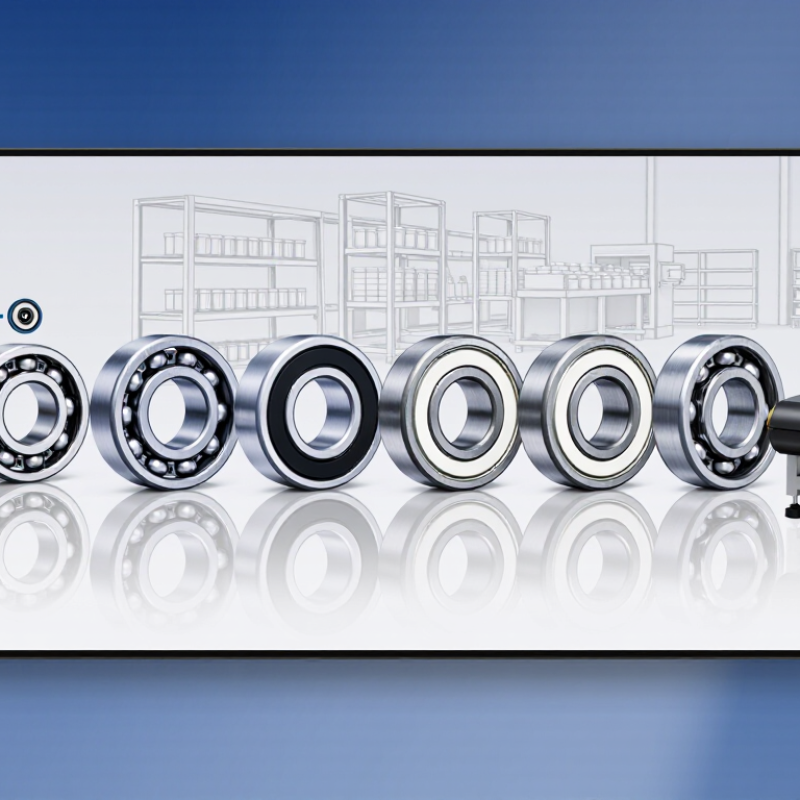
Common bearing sizes with an 8 mm bore, compared by nominal outside diameter and width. Use the dimensions to match shaft clearance, housing space, load requirements, and shipping specifications when evaluating international suppliers.

How to read this chart: Bearing dimensions are shown as bore × outside diameter × width in millimeters. Confirm tolerances, seals, clearance class, material, certifications, packaging, lead time, and export documentation with the supplier before placing an international order.

Request a Quote

To learn more about any of the products and services provided by Abbott Ball Company, Inc., simply complete the form below.