MON - FRI 8AM - 5PM

What Are Tungsten Ball Bearings Used For?

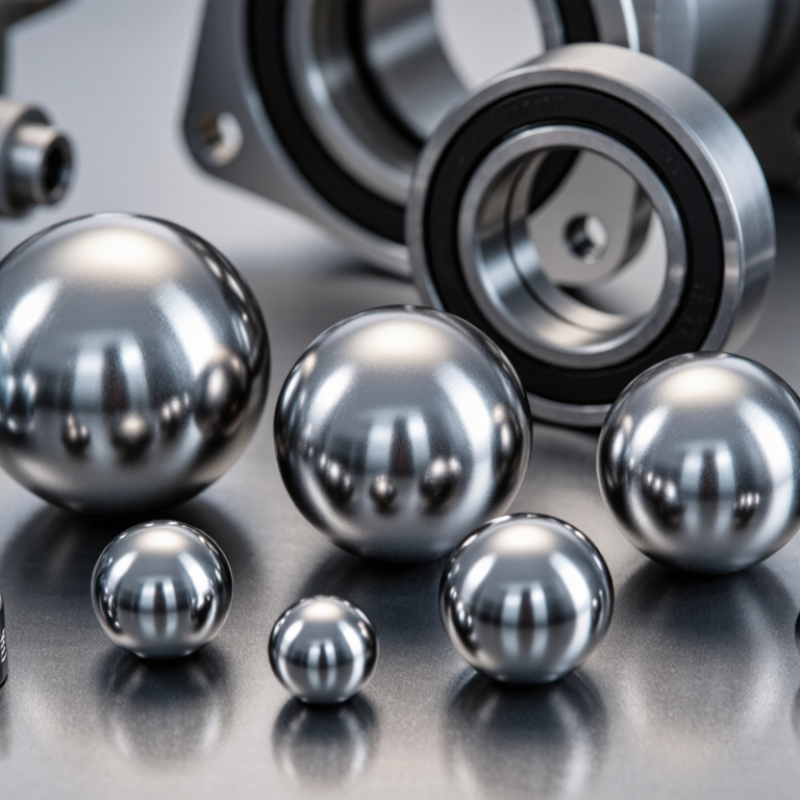
Tungsten ball bearings are used where ordinary steel balls may wear too quickly, deform under contact, or fail to provide the needed density. The name usually refers to tungsten carbide balls, not balls made from pure tungsten. That distinction matters. Material grade, binder composition, surface finish, and ball diameter can all affect performance.

You may find these balls in precision bearing assemblies, check valves, flow meters, pumps, and industrial equipment exposed to abrasion. Their hardness helps them resist surface wear, while their high density can support designs that need substantial mass in a compact space. In a valve, for example, a small ball may repeatedly seat against a narrow opening. A rough finish or poorly matched grade can still cause leakage or premature damage. Toughness is not the same as hardness.

This article explores what tungsten ball bearings do, where they are commonly used, and why engineers specify them. It also considers their limits. Tungsten carbide can be brittle under sharp impact, and it may cost more than steel. The right choice depends on load, speed, lubrication, operating temperature, and the surrounding components. There is no universal winner. Understanding those details makes it easier to judge whether tungsten ball bearings solve a real wear or performance problem—or simply add cost without enough benefit.
What Are Tungsten Ball Bearings Used For?

Material Properties and Design of Tungsten Ball Bearings

Tungsten ball bearings are commonly made from tungsten carbide, not pure tungsten. The distinction matters. Tungsten carbide combines very high hardness with substantial density, helping balls resist surface wear and indentation under heavy contact loads. Their compact size can also provide useful mass where a component needs a dense, stable moving element. But hard does not mean indestructible. Tungsten carbide can chip under sharp impacts, and its toughness depends partly on the binder used in the material. That trade-off deserves attention.

Bearing performance depends on more than the ball material. Designers specify diameter, roundness, surface finish, and clearance to suit the load and operating speed. A smooth, closely controlled ball can reduce uneven contact, but poor alignment may still cause noise or premature wear. Races, lubrication, and the surrounding housing matter just as much. Tungsten carbide balls are used in demanding precision components, including some valves and flow-control devices, where wear resistance is valuable. They are not automatically the best choice for every bearing. Cost, impact exposure, and compatibility with the race material should be checked before selection.
What Are Tungsten Ball Bearings Used For?

Representative material densities show why tungsten carbide balls are chosen when compact size and high mass are useful. Tungsten carbide is commonly used for precision balls in demanding applications; it is not the same material as pure tungsten.

Tungsten carbide’s high density can benefit compact inertial components and applications that require a heavy ball. Bearing material selection also depends on hardness, wear resistance, corrosion conditions, load, and operating speed. Values are representative; actual density varies by material grade.

How Tungsten Ball Bearings Differ from Other Bearing Materials

Tungsten ball bearings usually contain tungsten carbide, not pure tungsten. That distinction matters. Carbide balls are much denser than common bearing materials, giving them greater inertia in compact assemblies. ASM International’s materials-property data place tungsten carbide grades around 14–16 g/cm³, compared with roughly 7.8 g/cm³ for bearing steel and 3.2 g/cm³ for silicon nitride. Exact values vary with binder content and grade. The heavier ball can help maintain momentum in some mechanisms, but it also increases load on the cage and raceway.

That trade-off suits specialized applications. Tungsten carbide balls are used in high-load valves, precision gauges, pump components, and equipment exposed to abrasive particles. Their high hardness helps resist wear, while ceramic balls are lighter and electrically insulating. Steel remains a practical choice where toughness, cost, and established lubrication methods matter. A heavier ball is not automatically better. It may demand stronger supports and careful lubrication, details that product descriptions sometimes underplay. ASTM and ISO bearing standards define material and dimensional requirements, but they do not make every tungsten-carbide grade behave identically. For selection, engineers should check the grade, ball diameter, operating speed, and contact load—not just the material name.

Industrial and Engineering Uses of Tungsten Ball Bearings

Tungsten ball bearings are used in industrial equipment that needs hard, wear-resistant rolling elements. Many are made from tungsten carbide rather than pure tungsten. The distinction matters. Carbide balls can handle heavy contact loads and resist abrasion in demanding assemblies.

In precision valves and flow meters, a smooth ball can help control fluid movement while tolerating repeated contact. Pumps and machine tools may use them where ordinary steel balls wear too quickly. Their high density can also help in compact mechanisms that need substantial mass in a small space. But more weight is not always better. At high speeds, added inertia can increase demands on the bearing cage and surrounding parts.

Engineers consider more than hardness when specifying these bearings. Tungsten carbide is stiff, but it can be less forgiving of sharp impacts or poor alignment than steel. A chipped ball may damage a raceway, so installation and lubrication still matter. In a workshop, a clean seat and careful assembly can make a real difference. The material is not a universal upgrade; load, speed, temperature, and impact conditions should guide the choice. Sometimes steel is the more sensible option.

Performance Benefits in High-Load and Harsh Environments

Tungsten ball bearings are often made from tungsten carbide, a very hard material suited to demanding loads. In a pump or compact drive, that hardness can help resist dents and wear where repeated force presses balls against raceways. Less surface damage can mean steadier rotation over time. Not indestructible, though.

In abrasive settings, such as equipment exposed to fine mineral dust, durable balls may retain their shape better than softer alternatives. Their high density can also support applications needing compact, heavy components. But density brings a trade-off: greater mass can increase rotational inertia, especially in fast-starting mechanisms. Small design details matter.

Harsh environments demand more than a hard ball. The raceway must be strong enough to handle concentrated contact stress, and lubrication must suit the operating temperature and speed. Some carbide grades contain metallic binders, so corrosion resistance varies; it should not be assumed from the word “tungsten” alone. A careful material specification is worthwhile. I would also question whether the load is steady or includes sharp impacts, since brittle materials can chip under shock. That distinction is easy to overlook.

Factors to Consider When Selecting Tungsten Ball Bearings

What Are Tungsten Ball Bearings Used For?
Factors to Consider When Selecting Tungsten Ball Bearings

Tungsten balls are chosen for demanding applications where high density, wear resistance, or compact mass matters. In bearings, “tungsten” often means tungsten carbide, not pure tungsten. These materials behave differently. NIST lists tungsten’s density at about 19.3 g/cm³, but carbide grades vary with their binder content. That distinction is easy to miss. Match the ball material to the raceways, lubricant, operating temperature, and expected load. A very hard ball can still damage a softer raceway.

Check dimensions, roundness, surface finish, speed, and impact exposure before comparing prices. A tiny diameter mismatch can change contact stress and bearing clearance. Tungsten carbide may suit abrasive environments, while its brittleness can be a drawback under sharp impacts. I would not select by hardness alone. Supply matters, too: the USGS Mineral Commodity Summaries 2025 estimates 2024 global tungsten mine production at 81,000 metric tons, including 67,000 from China. This concentration makes traceable sourcing and lead times worth checking. Ask suppliers for material composition, ball-grade tolerances, inspection records, and application-specific load data. Test a sample under realistic lubrication and temperature; catalog figures may not reflect your assembly.

What Are Tungsten Ball Bearings Used For? — Factors to Consider When Selecting Tungsten Ball Bearings

Application or Selection Factor Typical Use or Role Why Tungsten Carbide May Be Considered What to Check Before Selecting
Precision bearings and bearing assemblies Rolling elements in specialized bearings exposed to high wear, heavy contact loads, or demanding operating conditions. Tungsten carbide is very hard and wear-resistant, which can help maintain a ball’s shape and surface under abrasive or high-contact-stress conditions. Confirm ball diameter and tolerance, load type, operating speed, lubrication, raceway material, and whether the complete bearing is designed for carbide balls.
Check valves and pump components Valve balls that open and close against a seat to control fluid flow in pumps and other fluid-handling equipment. Its hardness and wear resistance can be useful where repeated seating, abrasive particles, or a demanding fluid environment would wear softer materials. Check fluid chemistry, pressure, temperature, seat material, impact conditions, and the manufacturer’s compatibility guidance for the selected carbide grade.
Flow measurement and metering equipment Precision balls used in some flow meters and related mechanisms where consistent dimensions and wear resistance are important. Good dimensional stability and resistance to wear can support repeatable operation in suitable designs. Verify the required diameter, roundness, surface finish, calibration requirements, fluid compatibility, and allowable operating range.
High-wear or abrasive environments Specialized moving or rolling contacts exposed to particles or repeated mechanical abrasion. Carbide’s high hardness can reduce wear compared with many conventional bearing-ball materials, depending on the application and mating surfaces. Assess particle size and concentration, impact risk, lubrication, sealing, and the possibility of damaging the opposing race or contact surface.
Material composition and grade Selection of the carbide composition for the ball and its intended operating environment. Tungsten carbide balls commonly contain a binder, such as cobalt or nickel; grade and binder content influence properties including hardness, toughness, and corrosion behavior. Request the grade specification and material data. Do not assume all tungsten carbide balls have identical properties or corrosion resistance.
Size, tolerance, and surface finish Matching the ball to the bearing, valve, meter, or other precision component. Correct geometry and finish help the ball fit and function as intended; the material alone cannot compensate for an incorrect fit. Specify nominal diameter, dimensional tolerance, roundness, surface finish, and inspection requirements using the equipment drawing or applicable standard.
Load, speed, and impact Evaluation of the forces and motion the ball will experience in service. Carbide offers high hardness and compressive strength, but it is less tolerant of sharp impact than tougher materials in some designs. Distinguish steady loads from shock or impact loads. Check speed, contact stress, alignment, and the bearing or component designer’s limits.
Corrosion, temperature, and lubrication Matching the ball and its binder to the fluid, ambient conditions, and operating cycle. Performance depends on the specific carbide grade and operating conditions; a hard material is not automatically suitable for every chemical or temperature. Check chemical exposure, temperature range, lubrication method, and any corrosion data for the exact grade. Confirm compatibility with all contacting parts.
Weight and cost Comparison with steel, ceramic, or other available ball materials. Tungsten carbide is substantially denser than steel and is generally a premium material, so it may not be appropriate where low mass or low cost is the priority. Compare the complete system’s performance, mass limits, service life, replacement costs, and availability—not just the ball’s purchase price.

Material note: In bearing applications, “tungsten ball” commonly refers to a tungsten carbide ball rather than a ball made from pure tungsten. Confirm the exact material and grade, since properties vary by composition and design.

Request a Quote

To learn more about any of the products and services provided by Abbott Ball Company, Inc., simply complete the form below.