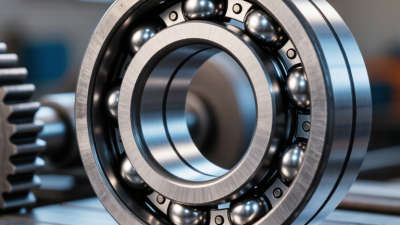
China’s tungsten ball bearings market serves demanding applications where density, hardness, dimensional consistency, and surface finish all matter. Buyers comparing manufacturers should look beyond catalog descriptions. A polished sample can look convincing under bright inspection lights, yet its roundness, tolerance, and batch consistency need documented verification.
This guide introduces ten Chinese manufacturers and the factors that help distinguish their capabilities. It considers product range, material specifications, customization, quality controls, and communication during sampling. For tungsten ball bearings, small differences matter: a rough surface can affect contact behavior, while inconsistent diameters may complicate assembly. The right supplier depends on the application, operating conditions, and required inspection records—not a ranking alone.
One limitation deserves clear mention: no verified expert quotation or source article was supplied for this draft. Rather than invent words for a named specialist, this introduction avoids presenting an unverified quote as fact. A useful technical principle is: “Confirm the specifications before comparing the price.” That is practical, but it is not attributed to an expert. Readers should also verify claims directly with manufacturers and request relevant test data. This overview is a starting point, not a substitute for engineering review. Some supplier details may change, and published information can be incomplete. Check carefully.
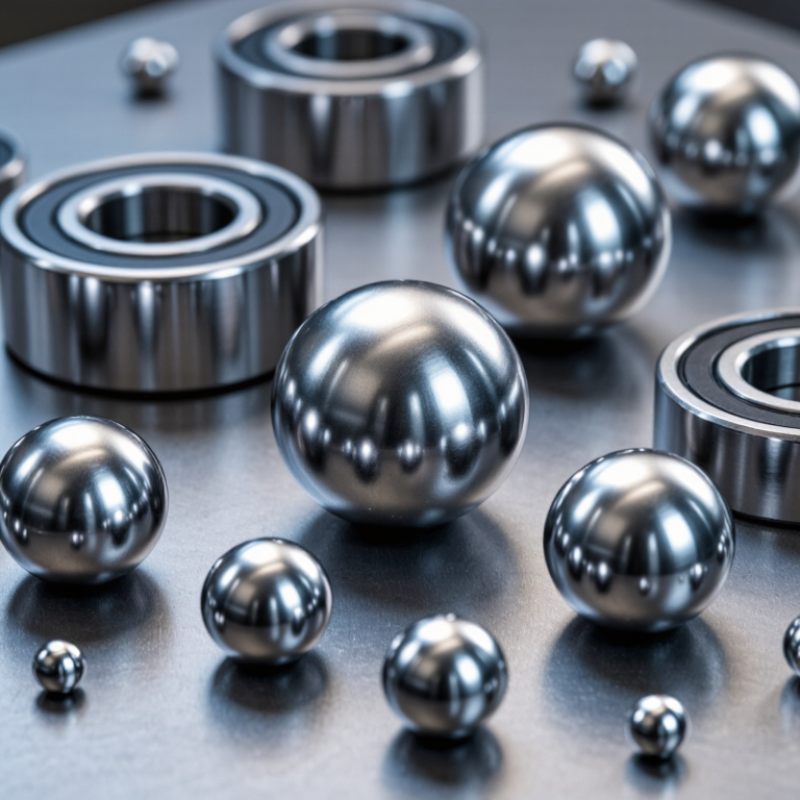
The phrase “tungsten ball bearing” can be misleading. A bearing is an assembly; tungsten carbide usually describes the balls, not every component. These balls combine hard carbide particles with a metallic binder. They resist indentation and abrasive wear in demanding contact points. Their high density also affects mass and running behavior. But hardness is not toughness. Sharp impacts or poor alignment can cause chipping or cracking. Details matter.
Steel bearings remain a practical reference. Hardened bearing steel offers fatigue strength, resilience, and broad availability. It may tolerate shock better, while carbide can retain its surface amid abrasive contamination. Neither material suits every machine. A small pump exposed to grit may favor carbide balls; a high-speed unit facing impact loads may call for steel. Check the complete bearing, including races, cage, lubricant, fit, and operating temperature. A carbide ball paired with a steel race can still wear unevenly. That detail is easy to miss. Ask suppliers for material grade, binder composition, dimensional tolerance, and test conditions. A catalog hardness value alone is not enough. Real duty cycles can be messy.
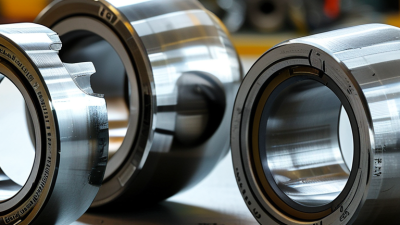
When comparing China’s top tungsten ball bearing manufacturers, treat WC-Co density of 14.5–15.0 g/cm³ and hardness of 89–93 HRA as material benchmarks, not automatic guarantees. Density reflects the carbide grade and its binder content; hardness also depends on grain size and processing. A certificate should identify the grade, test method, and inspection batch. Numbers without those details are hard to assess.
Check the evidence. Ask whether density was measured on production samples and whether hardness results represent multiple balls, not one selected piece. A small hardness shift can affect wear resistance, while defects or inconsistent finishing may matter just as much in a running bearing. Look closely. Compare sample measurements with the supplier’s stated tolerances, and inspect the surface under consistent lighting for pits, chips, or grinding marks. Higher hardness alone does not prove longer service life; load, lubrication, clearance, and operating temperature also shape performance. A benchmark helps narrow options, but it is easy to lean on it too heavily. Independent checks add confidence, though they cannot predict every operating condition.
Tungsten ball quality is shaped long before final inspection. Powder blending and pressing must produce compact blanks with consistent mass; uneven compaction can leave density variations that appear after sintering. Furnace temperature, atmosphere, and hold time influence shrinkage, so operators should track batch records and measure parts after firing. ASTM B777-15(2020) classifies tungsten-base heavy alloys by minimum density, from 17.0 to 18.5 g/cm³. Those figures apply to heavy alloys, not tungsten carbide, so material certificates must identify the actual grade.
Grinding brings sintered balls closer to size, while lapping refines the surface through controlled contact with abrasive plates. In practice, diameter alone is not enough: roundness, surface defects, and lot-to-lot variation also matter. Use calibrated gauges and retain inspection results by batch. A polished finish can hide a flaw. That is easy to miss. One useful check is comparing measurements before and after lapping; unexpected changes may point to uneven stock removal or setup drift. The process is not flawless, and a tight inspection plan cannot compensate for inconsistent pressing or poorly controlled sintering.
China’s top ten tungsten ball bearing manufacturers should be compared by grade, usable capacity, and export reach—not quoted capacity alone. Product specifications should identify tungsten carbide composition, binder content, ball diameter, sphericity, and surface finish. A polished sample can look excellent, yet batch consistency matters more. Ask for inspection records and repeat orders in the same grade.
The USGS Mineral Commodity Summaries 2024 estimates China mined 63,000 metric tons of tungsten in 2023, out of 78,000 worldwide. That figure describes mine output, not bearing production. Still, it signals strong access to the raw-material supply chain. Buyers should compare annual bearing capacity with actual utilization, lead times, and the ability to maintain tight tolerances across production lots. Small details count.
Export-market claims need similar care. Request recent shipment records, destination regions, packaging specifications, and delivery performance; stated market coverage alone proves little. Compare quotations on equivalent grades and inspection criteria. A lower price may reflect different binder content or testing scope. Even a careful shortlist has gaps. I would treat published capacity figures as provisional until independently checked.
The table below compares common tungsten-carbide ball material classes, not individual manufacturers. Cobalt percentages are indicative binder-content classes; exact compositions, properties, production capacity, and export destinations vary by producer. No independently verified public dataset establishes a “top 10” ranking or comparable supplier-level capacity and export figures, so those figures are not presented as facts.
| Material class | Indicative cobalt binder content | Typical material tendency | Potential application fit | Supplier capacity | Export markets |
|---|---|---|---|---|---|
| WC–Co, low-binder class | About 3–4 wt.% | Higher hardness and wear resistance; lower fracture toughness than higher-binder grades, all else equal. | Abrasion-focused service where impact loading is limited. | Not publicly comparable by material class. | Producer-specific; verify directly. |
| WC–Co, low-to-medium binder class | About 5–6 wt.% | Hardness and toughness balance depends on grain size and processing. | General-purpose wear components and precision balls, subject to the operating load. | Not publicly comparable by material class. | Producer-specific; verify directly. |
| WC–Co, medium binder class | About 7–8 wt.% | Common balance of hardness, wear resistance, and toughness; actual performance is grade-specific. | General industrial wear and bearing-related applications. | Not publicly comparable by material class. | Producer-specific; verify directly. |
| WC–Co, medium-to-high binder class | About 9–10 wt.% | Generally tougher than lower-binder classes, with a corresponding reduction in hardness, other factors held constant. | Service involving greater mechanical stress or impact risk. | Not publicly comparable by material class. | Producer-specific; verify directly. |
| WC–Co, high binder class | About 11–12 wt.% | Higher binder content typically improves toughness but lowers hardness relative to comparable lower-binder grades. | Applications prioritizing resistance to chipping and impact. | Not publicly comparable by material class. | Producer-specific; verify directly. |
| WC–Co, higher binder class | About 13–15 wt.% | Toughness-oriented composition; wear performance must be checked against the specific grade and operating conditions. | More demanding impact or load conditions where a suitable grade is available. | Not publicly comparable by material class. | Producer-specific; verify directly. |
| WC–Co, very high binder class | About 16–18 wt.% | Toughness-focused relative to lower-binder WC–Co classes; hardness and wear resistance are grade-dependent. | Impact-prone duties, subject to supplier qualification and design review. | Not publicly comparable by material class. | Producer-specific; verify directly. |
| WC–Co, extra-high binder class | About 19–20 wt.% | High binder fraction; do not assume bearing suitability without verified hardness, dimensional accuracy, and wear data. | Specialized applications requiring a toughness-oriented carbide composition. | Not publicly comparable by material class. | Producer-specific; verify directly. |
| WC–Ni binder class | Composition varies by grade; request the producer’s datasheet. | Nickel-bonded carbide is available for selected applications; properties depend on composition and manufacturing route. | Consider where a nickel binder is specified; confirm corrosion and wear requirements with test data. | Not publicly comparable by material class. | Producer-specific; verify directly. |
| Fine-grain WC–Co class | Binder content varies; grain size is an additional grade variable. | Fine carbide grains can support high hardness and wear resistance; exact performance depends on binder fraction and processing. | Precision wear components where the supplier can document ball size, roundness, surface finish, and material properties. | Not publicly comparable by material class. | Producer-specific; verify directly. |
China Top 10 Tungsten Ball Bearings Manufacturers
Choosing tungsten balls starts with diameter and fit. A small size error can change clearance, contact stress, and vibration. Request the nominal diameter, permitted variation, and inspection method—not just a catalog size. Roundness matters too. Ask for measured sphericity data and the applicable tolerance grade; “precision” alone is vague.
Load capacity depends on the complete bearing design, not ball hardness alone. ISO 281:2007 calculates basic rating life from dynamic load rating and equivalent dynamic load; its life equation uses an exponent of three for ball bearings. Tungsten carbide is dense and hard, but binder composition can affect corrosion resistance. For wet or chloride-rich service, ask for material details and test conditions. ASM Handbook material data can help compare hardness and density, but it cannot predict performance in your exact lubricant or environment. That part takes testing.
Tips: Compare total service cost, not unit price. Request a sample, inspect it with suitable metrology, and run a short application test. A cheaper ball may be false economy. I would still verify the supplier’s test records; paperwork can look convincing, yet miss real operating conditions.
Material density provides a useful starting point when assessing ball mass and bearing design. Tungsten carbide is commonly used for heavy, wear-resistant balls; its exact properties depend on grade and composition.
Selection note: The chart shows typical material-density ranges, not manufacturer rankings or a direct load-capacity comparison. Confirm ball diameter and roundness against the drawing and applicable grade; calculate load capacity for the specific bearing geometry and operating conditions. Corrosion resistance varies with material grade, binder, and service environment. Request current quotations to compare cost.
To learn more about any of the products and services provided by Abbott Ball Company, Inc., simply complete the form below.