MON - FRI 8AM - 5PM

10 Tips for Buying SS304 Stainless Steel

Buying ss304 stainless steel can seem straightforward until you compare grades, finishes, thicknesses, and supplier claims. This widely used stainless steel offers useful corrosion resistance, strength, and formability for many everyday and industrial applications. Yet it is not immune to rust or surface damage. Conditions matter. Salt, chemicals, poor cleaning, and contact with other metals can all affect performance.

A sound buying decision begins with the intended use. A kitchen component, outdoor fitting, and fabricated tank may need different finishes or dimensions. Ask for material test documentation and confirm that the stated grade matches the product being sold. Check thickness, sheet or bar dimensions, surface condition, and available tolerances. Looks convincing. That alone is not proof. A polished surface cannot confirm the steel’s composition, and a low price may leave important specifications unclear.

The ten tips in this guide focus on practical checks buyers can make before placing an order. They cover grade verification, product sizing, finish selection, supplier questions, and the details that affect fabrication and service life. Compare quotations carefully, including packaging, delivery, and documentation. If the application faces harsh or unusual conditions, consult a qualified materials professional before choosing. Even with careful research, some uncertainty remains when supplier information is incomplete. That is worth acknowledging. Clear specifications and independent verification can reduce the risk of an expensive mismatch.
10 Tips for Buying SS304 Stainless Steel

Understanding SS304 Stainless Steel and Its Common Uses

SS304, commonly called 304, is an austenitic stainless steel valued for corrosion resistance and fabrication flexibility. ASTM A240/A240M specifies chromium and nickel ranges that help distinguish 304 from other grades. Its chromium-rich surface film helps resist everyday moisture and many food-related acids. It is not immune to corrosion. Salt, bleach, and stagnant water can still cause staining or pitting. A sink corner with trapped water shows why surface condition and cleaning matter.

Common uses include kitchen sinks, food-processing equipment, storage tanks, piping, and architectural trim. These applications need cleanable surfaces and parts that can be formed or welded. World Stainless reported global stainless-steel production of 58.4 million tonnes in 2023 in Stainless Steel in Figures 2024. That broad figure shows the material’s industrial scale, but it does not measure 304 use alone. Buyers should check the mill test certificate, thickness, finish, and grade marking rather than relying on a supplier’s description. A shiny sample can look convincing. It may not reveal the exact grade, and that is easy to overlook. For coastal or chloride-heavy settings, consider whether 316 or another suitable grade better fits the exposure.

SS304 Stainless Steel: Typical Chemical Composition Limits

Composition limits for Type 304 stainless steel under ASTM A240/A240M, shown as percentage by weight (wt%).

Chromium and nickel have specified ranges. For the other elements, the bars show the maximum permitted amount; the standard does not specify a minimum. When buying SS304, compare the material test certificate with the applicable product standard and grade requirements.

Defining the Grade, Dimensions, Form, and Finish You Need

Before requesting a quote, define exactly what “SS304” means for your application. Grade 304 is commonly specified for its balance of corrosion resistance, formability, and weldability, but confirm the applicable material standard and required documentation. Ask for a material test certificate linked to the heat number. That paperwork matters. Specify thickness, width, length, and tolerances in measurable units; nominal dimensions alone can leave room for costly surprises. If parts will be laser-cut or bent, check whether the supplied dimensions include enough allowance for fabrication. Sheet, plate, coil, bar, and tube are not interchangeable choices. Match the form to the part and the processing equipment.

Finish deserves equal attention. Common sheet finishes include 2B, a smooth mill finish, and No. 4, a brushed surface with visible grain. BA has a brighter, reflective appearance. State the finish on the order, and indicate the grain direction when appearance or bending matters. A polished sample can look different under workshop lighting. Touch a sample. Surface finish does not make 304 immune to staining, especially around salt or chloride exposure. For demanding environments, ask a qualified materials professional whether another grade is more suitable. One detail buyers sometimes overlook is cleaning: a finish that hides fingerprints may still need careful maintenance. Recheck your specifications before approval; I would not assume a familiar grade name answers every practical question.

10 Tips for Buying SS304 Stainless Steel - Defining the Grade, Dimensions, Form, and Finish You Need

Tip What to Specify Useful Details What to Verify
1. Name the grade clearly Request Type 304 (UNS S30400), commonly called SS304. For ASTM A240 product, typical limits include chromium 18.0–20.0%, nickel 8.0–10.5%, and carbon no more than 0.08% by mass. Identify the governing product standard and request a material test certificate. Do not rely on “18/8” alone as a full specification.
2. Distinguish 304 from 304L State whether standard 304 or low-carbon 304L is required. 304L has a maximum carbon content of 0.03% under common ASTM product specifications. It is often selected where welding-related sensitization is a concern. Check the certificate’s grade designation and chemistry against the purchase specification; do not assume the two grades are interchangeable for every code or application.
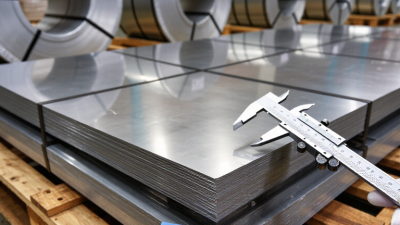
3. Define thickness and tolerances Give the required thickness in millimetres or inches, plus the allowable tolerance. Common sheet thicknesses include 0.5 mm, 1.0 mm, 1.5 mm, 2.0 mm, and 3.0 mm; actual availability depends on product form and supplier stock. Specify the applicable dimensional standard and how thickness is to be measured. Do not assume nominal thickness means the same tolerance in every standard.
4. Provide length and width For cut sheet or plate, list width × length and any squareness or flatness requirements. Common stock sheet sizes include 1219 × 2438 mm (4 × 8 ft) and 1524 × 3048 mm (5 × 10 ft), but stock sizes are not universal. Confirm whether dimensions are supplied as cut sizes or mill sizes, and account for cutting allowance and edge condition.
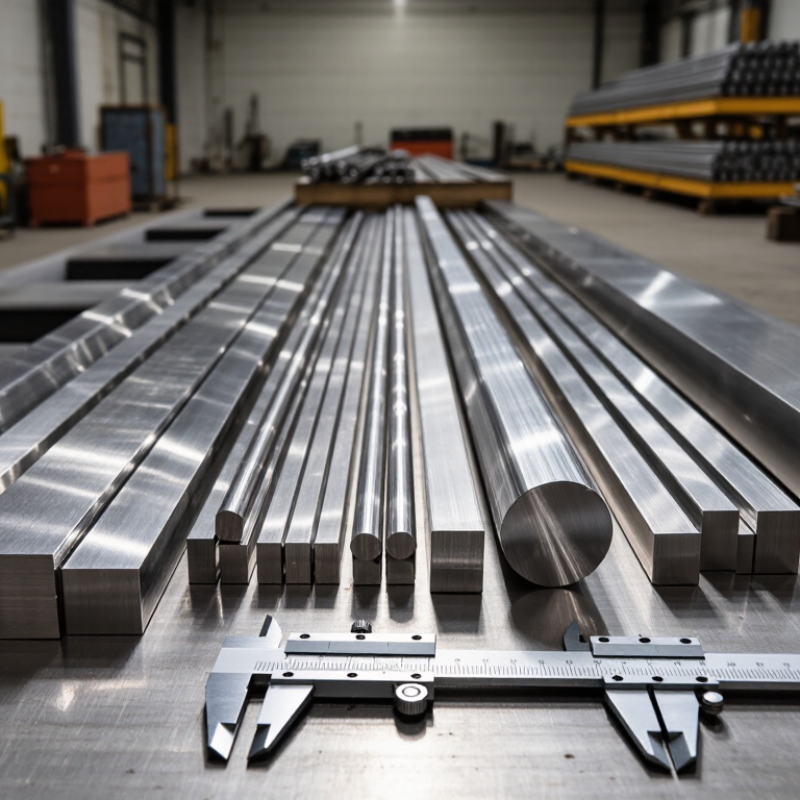
5. Choose the product form Specify sheet, plate, coil, strip, bar, tube, or pipe. Product standards vary by form; for example, ASTM A240 covers stainless plate, sheet, and strip, while ASTM A312 covers stainless pipe. Confirm the product standard, manufacturing route, and inspection requirements match the intended use and applicable design code.
6. Clarify tube versus pipe For tube, specify outside diameter and wall thickness; for pipe, specify nominal pipe size and schedule or wall thickness. Tube is commonly ordered by actual outside diameter and wall. Pipe is commonly designated by nominal pipe size, with actual dimensions set by the relevant standard. State the applicable standard and dimensional series. Do not treat nominal pipe size as the measured outside diameter.
7. Select the surface finish Name the finish on the required face or faces, such as 2B, No. 1, BA, or No. 4. 2B is a common smooth, reflective cold-rolled finish; No. 1 is a rougher hot-rolled, annealed, and pickled finish; BA is bright annealed; No. 4 has a directional brushed appearance. Request a finish sample or agreed reference where appearance matters. Finish names do not guarantee identical appearance across producers or thicknesses.
8. State edge and protection needs Specify mill edge or slit edge, deburring needs, and whether protective film is required. Coil and sheet edges can be supplied in different conditions. Protective film can help reduce handling marks on decorative surfaces. Confirm which side is protected, film removal requirements, packaging method, and acceptable edge condition.
9. Match the grade to the environment Describe exposure to moisture, chlorides, chemicals, temperature, and cleaning agents. 304 offers useful general corrosion resistance, but chloride-rich or marine environments can cause pitting or crevice corrosion. A more corrosion-resistant grade may be needed for some service conditions. Base material selection on the actual environment and relevant engineering guidance; “stainless” does not mean corrosion-proof.
10. Verify documents and handling Request traceable certification, heat identification, and agreed inspection or testing documentation. An EN 10204 Type 3.1 inspection certificate is a common option when specified. Magnetic response may vary because cold working can make 304 somewhat magnetic. Match heat numbers on the certificate to the supplied material. Do not use a magnet test alone to identify or reject 304.

Verifying Material Certifications and Quality Standards

SS304 is commonly specified for its corrosion resistance and formability, but the grade name alone is not proof of quality. Request a material test certificate that lists the chemical composition and mechanical properties. Check the product form and applicable standard, since requirements can differ for sheet, bar, and pipe. Match the certificate’s heat number to the number marked on the material or its packaging. Paperwork matters.

Tip: Compare the reported chromium and nickel values with the specification you ordered. Confirm that the certificate identifies the actual batch, not just a generic grade. If the documents seem incomplete, ask the supplier to clarify before shipment. A portable XRF analyzer can help identify alloy composition, but it does not reliably measure carbon. It should not replace document review or suitable laboratory testing.

Quality checks should also cover thickness, surface condition, and dimensions. Look for dents, deep scratches, or inconsistent finish under good lighting. For critical applications, consider independent testing and agree on acceptance criteria in writing. I would not rely on a polished appearance alone; it can hide problems. Still, extra tests may be unnecessary for low-risk parts. Choose checks that fit the application, and keep the records with the purchase order.

Comparing Suppliers, Pricing, and Delivery Requirements

Buying SS304 is less about finding the lowest line-item price than matching documented material to your job. The World Stainless Association reported 58.4 million tonnes of global stainless crude-steel production in 2023, up 4.6% year over year. That scale does not guarantee every sheet or coil has the same finish, tolerance, or traceability. Ask suppliers for a mill test certificate, dimensions, surface finish, and confirmation that the material meets your specification. Check bundle tags against the paperwork; documents alone can be wrong.

Tip: Compare fairly. Request a written quote showing grade, thickness, finish, minimum order, packing, payment terms, and quote validity. Separate material, cutting, and freight costs. A lower price may exclude protective film or export packing. No quote is complete.

Delivery deserves its own check. Drewry’s World Container Index reached $5,901 per 40-foot container on June 27, 2024, 233% above a year earlier. This is a freight benchmark, not a steel surcharge, but it shows why landed costs can shift quickly. Confirm dispatch dates, transit estimates, insurance, and responsibility for port delays. For urgent work, ask whether stock is physically available and request a dated shipping plan. One caveat: exchange rates and cut-to-size fees can still distort comparisons.

Inspecting the Product Before Accepting Your Purchase

10 Tips for Buying SS304 Stainless Steel

Inspecting the Product Before Accepting Your Purchase

Before signing for SS304 stainless steel, compare the delivered material with your purchase order. Check the stated grade, product form, thickness, dimensions, and quantity. A label alone is not proof of composition. Ask for the material test certificate and confirm that its heat number matches the markings on the product. If the numbers do not match, pause acceptance and request clarification.

Examine the surface under bright, even light. Look for deep scratches, dents, rust spots, pitting, and discoloration that may signal handling or processing problems. Check the edges. On sheets or plates, run a tape measure across several points; small variations can matter when parts must fit a drawing. For pipes, inspect the ends for crushing, uneven cuts, and visible defects inside the bore. Photograph any concerns beside a ruler, and record them on the delivery paperwork before the driver leaves.

Do not guess. A magnet is not a reliable grade test: cold working can make some SS304 surfaces slightly magnetic. If identification remains uncertain, request appropriate material verification before fabrication. A rushed check can miss details, and paperwork may be incomplete; that is worth admitting. Keep the certificates, photos, and written notes together, then agree with the supplier on how any discrepancy will be resolved before using the material.

Request a Quote

To learn more about any of the products and services provided by Abbott Ball Company, Inc., simply complete the form below.