Why Are 304 Stainless Steel Properties Essential for Modern Manufacturing?
304 stainless steel properties play a crucial role in modern manufacturing. This widely used alloy offers an excellent balance of strength and corrosion resistance. These features make it suitable for various applications, from kitchen equipment to industrial machinery.
In manufacturing, the versatility of 304 stainless steel is unmatched. It can withstand high temperatures and harsh environments. This makes it an ideal choice for food processing and chemical industries. Furthermore, its aesthetic appeal contributes to its popularity in architecture and design.
However, reliance on this material is not without challenges. Understanding the specific properties of 304 stainless steel is essential for optimizing its use. Manufacturers must consider factors like tensile strength and weldability. This knowledge ensures safe and effective applications, ultimately enhancing the overall production process.
Overview of 304 Stainless Steel Composition and Structure
304 stainless steel is a popular choice in modern manufacturing due to its unique composition and structure. This alloy, primarily made up of iron, chromium (18%), and nickel (8%), offers excellent corrosion resistance and durability. The high chromium content forms a passive layer that protects against rust. The nickel enhances its toughness, making it ideal for various applications, including food processing and kitchen appliances.
When examining its microstructure, 304 stainless steel exhibits an austenitic structure. This face-centered cubic structure contributes to its formability and weldability. According to industry reports, it accounts for over 50% of stainless steel usage globally. This high demand stems from its ability to withstand extreme temperatures while maintaining its strength. Its non-magnetic nature is another factor in its widespread use in sensitive environments.
Tip: When selecting materials for specific applications, consider the environment. For instance, if exposed to aggressive chemicals, alternative alloys may be more suitable. It’s also wise to regularly evaluate the performance of materials in real-world conditions to ensure they meet long-term needs.
The versatility of 304 stainless steel is noteworthy, but users must be aware of its limitations. Under certain conditions, such as chloride exposure, it may suffer from pitting corrosion. Continuous testing and monitoring can help identify such risks early on. Remember, while 304 stainless steel has its strengths, no material is perfect for every application.
Key Mechanical Properties of 304 Stainless Steel in Manufacturing
304 stainless steel is a popular choice in modern manufacturing due to its impressive mechanical properties. Known for its excellent corrosion resistance, it ensures long-lasting durability in various conditions. Its ability to withstand high temperatures also makes it suitable for applications in the food and beverage industry and pharmaceuticals.
One key mechanical property of 304 stainless steel is its tensile strength. It possesses a tensile strength of around 520 MPa, which allows it to handle heavy loads without deforming. This property is crucial when manufacturing components that need to endure stress. Another important feature is its ductility. This means it can be easily formed and shaped, making it versatile.
Tips: When selecting 304 stainless steel, consider the environment and potential exposure to harsh conditions. Conduct tests and analyses to ensure it meets your specifications. Remember, good material choice can lead to safer, more efficient production processes. It is vital to refine your selection based on project requirements, as not all applications are the same.
Why Are 304 Stainless Steel Properties Essential for Modern Manufacturing? - Key Mechanical Properties of 304 Stainless Steel in Manufacturing
| Property |
Value |
Importance in Manufacturing |
| Tensile Strength |
505 MPa |
Ensures durability and resistance to deformation. |
| Yield Strength |
215 MPa |
Critical for maintaining structural integrity under stress. |
| Elongation at Break |
50% |
Indicates ductility and ability to withstand deformation. |
| Hardness |
Rockwell B70 |
Affects wear resistance and surface durability. |
| Corrosion Resistance |
Excellent |
Vital for longevity in various environments. |
| Thermal Conductivity |
16 W/m·K |
Important for processes requiring heat transfer. |
| Density |
8.0 g/cm³ |
Affects weight and stability of components. |
Corrosion Resistance and Durability of 304 Stainless Steel
304 stainless steel is widely recognized for its corrosion resistance. This essential property makes it suitable for various applications. The alloy contains chromium and nickel, which form a protective layer. This layer prevents rust and corrosive damage, ensuring long-lasting performance.
Durability is another hallmark feature of 304 stainless steel. It withstands extreme temperatures and harsh environments. This steel can handle both high and low temperatures without losing its integrity. This stability is crucial in manufacturing processes that require robust materials. The ability to resist wear and tear further enhances its longevity.
However, not all environments are ideal for 304 stainless steel. Certain chlorides can still cause pitting corrosion. This limitation prompts manufacturers to consider specific conditions before selecting materials. Some may find the cost of 304 stainless steel challenging compared to alternatives. These factors necessitate careful evaluation and planning.
Corrosion Resistance and Durability of 304 Stainless Steel
Applications of 304 Stainless Steel in Modern Manufacturing Industries
304 stainless steel is widely used in various modern manufacturing industries due to its exceptional properties. This material boasts excellent corrosion resistance, high strength, and good formability. According to a report by the International Stainless Steel Forum, 304 stainless steel accounts for over 60% of the total stainless steel production. This dominance underscores its essential role in manufacturing.
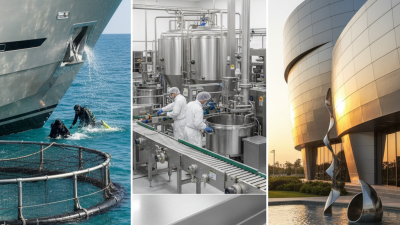
In the food processing industry, 304 stainless steel is favored for its hygienic properties. It withstands high temperatures and is easy to clean, making it ideal for equipment and storage facilities. A recent study highlighted that facilities using 304 stainless steel reported a 30% reduction in contamination risks. The beverage industry also benefits, as the material can handle the rigorous demands of brewing and bottling processes.
The automotive sector employs 304 stainless steel for exhaust systems and underbody components. Its durability helps improve vehicle longevity. Yet, challenges exist. While 304 stainless steel is robust, it may be vulnerable to pitting in chloride-rich environments. This limitation cannot be overlooked when considering applications in coastal areas or chemical-processing plants. Manufacturers must constantly evaluate these factors to ensure optimal performance.
Economic Advantages of Using 304 Stainless Steel for Production Processes
304 stainless steel is a popular choice in manufacturing due to its unique properties. It strikes a balance between cost, strength, and corrosion resistance. Economic studies indicate that using 304 stainless steel can reduce maintenance costs by up to 40%. This is particularly beneficial for industries like food processing and pharmaceuticals, where cleanliness is critical.
Manufacturers appreciate the versatility of 304 stainless steel. It can be easily molded into various shapes, which cuts down on production time. Reports show that components made from 304 stainless steel often last longer. These savings may not seem significant initially but accumulate over time. Additionally, employing 304 stainless steel contributes to energy efficiency during the production process.
However, reliance on a singular material like 304 stainless steel has its drawbacks. It may not be suitable for extreme conditions, leading to potential failures. Engineers need to assess specific applications carefully. Some projects might require alternative materials for enhanced performance in specific environments. Understanding the limitations of 304 stainless steel is essential for making informed decisions.