Why Choose 430 Stainless Steel for Your Next Project?
Choosing the right materials for your project can significantly impact its success and durability. One popular option is 430 stainless steel. This alloy is known for its excellent corrosion resistance and affordability. According to Dr. Emily Carter, a renowned materials scientist, "430 stainless steel balances cost and performance effectively, making it an ideal choice for numerous applications."
Many industries benefit from the use of 430 stainless steel. Its attractive finish and ease of fabrication make it suitable for both aesthetic and functional purposes. However, it’s essential to consider its limitations. While 430 stainless steel performs well in many environments, it may not be ideal for high-stress or high-temperature applications. Understanding these nuances can help you make more informed decisions.
Incorporating 430 stainless steel into your next project could enhance its overall quality. The material provides a viable solution for those seeking durability without overwhelming costs. Nonetheless, evaluating your specific needs remains crucial. Balancing strengths and weaknesses will lead to better outcomes, and recognizing the unique attributes of this alloy can drive your project forward.
Benefits of 430 Stainless Steel in Industrial Applications
When it comes to selecting materials for industrial projects,
430 stainless steel stands out.
This alloy provides a balance of strength, resistance to corrosion, and affordability.
Particularly popular in the automotive and appliance industries,
430 offers excellent thermal conductivity and is less brittle compared to other stainless types.
According to industry reports, its cost-effectiveness makes it a top choice for many manufacturers.
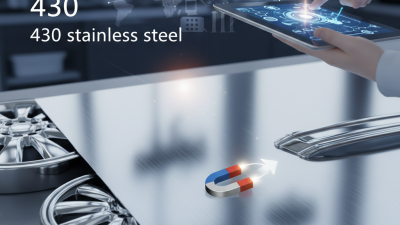
Moreover, 430 stainless steel is magnetic, which can be advantageous in certain applications.
It performs well under various environmental conditions.
Research indicates that this alloy effectively resists oxidation, enhancing its lifespan.
However, it is crucial to acknowledge that while it holds many benefits,
430 stainless steel may not be suitable for high-temperature environments or chloride-exposed areas.
Tips for optimizing the use of 430 stainless steel include evaluating the specific environmental conditions your project will face.
Proper surface treatment and finishing can improve performance.
Additionally, always consider the required strength and ductility for your applications.
Understanding these factors helps ensure the longevity and reliability of your project.
Key Properties of 430 Stainless Steel for Project Suitability
Choosing the right material is crucial for any project.
430 stainless steel presents unique properties that can enhance your design.
This alloy is known for its excellent corrosion resistance. Its ability to withstand oxidation makes it suitable for various applications.
For example, kitchen appliances often use 430 stainless steel due to its durability.
Another key feature is its magnetism. This property can be beneficial in specific projects where magnetic attachment is needed.
Additionally, 430 stainless steel offers good formability. It can be easily shaped and manipulated without compromising strength.
This flexibility can help in creating intricate designs, but it’s essential to be cautious.
Overworking this material can lead to unintended imperfections.
Cost-effectiveness is a significant advantage of 430 stainless steel.
This alloy is generally more affordable than others. However, its lower nickel content may affect its shine compared to higher-grade stainless steels.
The balance between performance and cost is a critical factor.
Choosing 430 stainless steel requires careful consideration of project requirements and desired outcomes.
Comparative Analysis: 430 Stainless Steel vs. Other Stainless Steels
When considering stainless steel for construction, 430 stainless steel stands out for specific applications. This alloy contains a higher chromium content than many other stainless steels, providing excellent corrosion resistance. According to industry reports, 430 stainless steel exhibits a corrosion resistance of 60% against corrosive environments when compared to 304 stainless steel, making it ideal for indoor applications such as kitchenware and automotive trim.
However, it is important to recognize its limitations. While 430 stainless steel performs well in lower-temperature environments, it lacks the same strength and durability as certain austenitic grades, such as 316 stainless steel. This can lead to potential failures in high-stress applications. Analysts have noted that the tensile strength of 430 is approximately 30% lower than that of 316, prompting engineers to carefully evaluate the specific demands of their projects.
The aesthetic appeal of 430 stainless steel also warrants consideration. Its smooth finish and slight sheen can enhance product appearance. Yet, its magnetic properties may not suit all designs, particularly in modern architectural applications where non-magnetic materials are preferred. Professionals need to balance aesthetic and functional requirements when selecting the appropriate stainless steel grade for their needs.
Why Choose 430 Stainless Steel for Your Next Project?
This bar chart compares 430 stainless steel with 304 and 316 stainless steel across various dimensions such as corrosion resistance, heat resistance, cost, formability, and strength. It highlights the relative advantages of 430 stainless steel, making it a suitable choice for specific applications.
Cost-Effectiveness of Using 430 Stainless Steel in Manufacturing
When considering materials for manufacturing, 430 stainless steel stands out for its cost-effectiveness. This alloy offers a lower price point compared to other stainless steels, making it attractive for various projects. The affordability does not compromise quality. It provides good corrosion resistance and is durable for many applications, from kitchen equipment to automotive parts.
Using 430 stainless steel can lead to significant savings. Companies benefit from reduced material costs, allowing budget allocation for other project areas. Its relatively light weight also means lower shipping expenses. However, it is crucial to weigh these benefits against its limitations. While it resists oxidation, it may not perform well in chloride environments.
Manufacturers might overlook 430's potential due to misconceptions. It lacks the same strength as higher-grade stainless steels, which can lead to underestimating its viability. This invites a critical evaluation; companies should assess project requirements before opting for 430. Overall, 430 stainless steel remains a reliable choice for many scenarios, balancing cost and functionality effectively.
Common Applications and Industries Utilizing 430 Stainless Steel
430 stainless steel is widely favored across various industries due to its unique properties.
This alloy is mainly known for its excellent corrosion resistance and moderate strength.
It's magnetic, which can be an advantage in specific applications.
You'll often find it in automotive and appliance manufacturing, helping to make durable products.
In the kitchenware sector, 430 stainless steel is common for utensils and cookware.
Its ability to resist rust makes it ideal for food contact surfaces.
Restaurants and catering businesses benefit from this material, ensuring hygiene and longevity in their tools.
Even in the architecture field, 430 stainless steel finds its use in decorative elements.
It brings a modern look while providing durability. However, it's essential to remember that 430 is less resistant to corrosion compared to other stainless steel grades. In humid environments, careful selection is necessary to avoid potential issues.
Balancing these factors is crucial for making the right choice in projects.