Why Are Ball Bearings Used in Industrial Applications?
Ball bearings are easy to overlook—until a conveyor stalls or a motor begins to vibrate. Inside a small steel raceway, rolling elements carry loads while reducing sliding contact between moving parts. That simple action supports high rotational speeds, steadier motion, and dependable operation across motors, pumps, machine tools, and vehicle systems. The details matter: a contaminated lubricant or a misaligned shaft can quickly undermine a carefully selected bearing.
The market reflects the breadth of this role. Grand View Research estimated the global ball bearing market at approximately $6.7 billion in 2023 and forecast continued growth through 2030. This figure is an industry estimate, not a measure of bearing performance, but it signals sustained demand across manufacturing and transportation. SKF’s technical guidance likewise stresses that bearing selection depends on operating load, speed, lubrication, sealing, and mounting conditions. A bearing is not a universal fix.
Bearing failures also offer a practical lesson. Tribologist and bearing specialist Robert Errichello’s published failure-analysis work emphasizes the importance of lubrication and operating conditions. Put plainly, a good bearing can still fail in a poor environment. That is worth remembering. A dusty factory floor, a hot pump housing, or a shaft installed slightly off-center can change the outcome. This introduction examines why ball bearings are widely used in industrial applications, what advantages they provide, and where their limits deserve attention. The engineering is compact. The consequences are not.
How Rolling Contact Lets Ball Bearings Reduce Friction
A ball bearing reduces friction by replacing much of the sliding between a shaft and its housing with rolling contact. The balls run along carefully shaped raceways, so less force is lost as heat. Picture a loaded conveyor roller: it turns under pressure instead of scraping across the frame. Small contact. Real bearings still deform slightly, and lubricant shear, seals, and misalignment add drag. Rolling is not friction-free.
The energy stakes are broad. A 2017 study by Holmberg and Erdemir in the journal Friction estimated that friction consumes about 23% of global energy use across applications; this is not a bearing-specific figure, but it shows why reducing mechanical losses matters. In practice, the result depends on load, speed, lubrication, and installation. Too little lubricant can increase wear, while excess lubricant can raise resistance. ISO 281 defines basic rating life using a 90% reliability basis for a group of apparently identical bearings under specified conditions. That benchmark helps engineers compare designs, but it cannot predict every machine’s actual service life. A misaligned shaft can undo careful bearing selection.
The Main Components: Rings, Balls, Cage, and Seals
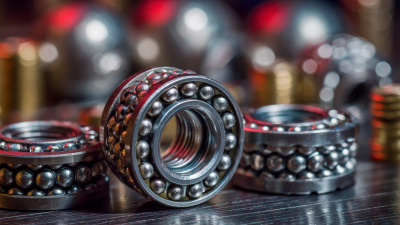
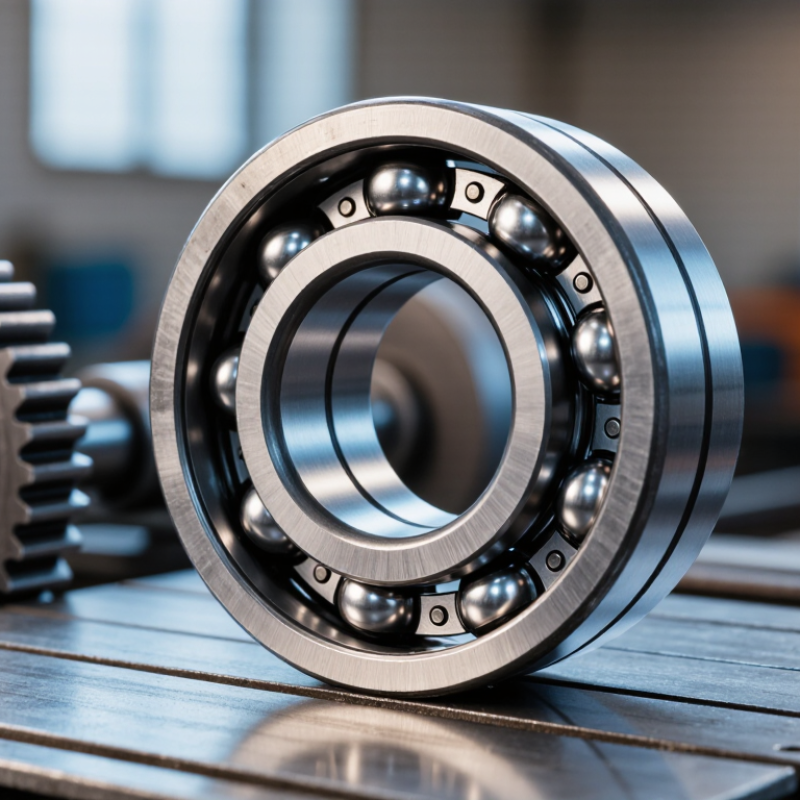
Industrial ball bearings support rotating shafts by reducing friction, but their performance depends on several parts working together. The inner and outer rings contain precision raceways. The inner ring usually turns with the shaft, while the outer ring fits inside a housing. Hardened balls roll between these tracks and carry radial loads; some designs also accommodate axial loads. A poor fit or damaged raceway can cause vibration, heat, and premature wear. Small details matter.
The cage keeps the balls evenly spaced and guides their movement. It is easy to focus only on the balls, but a damaged cage can disrupt smooth rotation. Seals help retain lubricant and limit the entry of dust or moisture. They are not always airtight: contact seals generally block contaminants more effectively, while non-contact seals can reduce friction at higher speeds. Each choice has trade-offs. During inspection, technicians may look for grease loss, rough rotation, discoloration, or pitting. These signs do not identify every fault, and operating conditions matter. A bearing that runs hot may need more than a new seal; alignment, load, and lubrication deserve a closer look.
Radial and Axial Loads: How Bearings Support Industrial Shafts
Why Are Ball Bearings Used in Industrial Applications?
Radial and Axial Loads: How Bearings Support Industrial Shafts
An industrial shaft rarely carries just one kind of load. Radial force acts across the shaft, while axial force pushes along its length. The direction matters. On a conveyor motor, belt tension creates radial load; a helical gear can also produce axial thrust. Ball bearings transfer these forces from the rotating shaft to the machine housing while helping limit friction.
A deep-groove ball bearing can handle radial loads and some axial load in either direction. Angular-contact designs are suited to greater axial forces, but their capacity depends on the arrangement and mounting. Bearing choice should reflect the actual load, speed, temperature, and shaft fit—not just the shaft diameter. A small mismatch can cause noise, heat, or premature wear.
Real installations are less tidy than engineering drawings suggest. A slightly misaligned housing or uneven belt tension may change how the load reaches the bearing. That detail is easy to miss. Regular checks for vibration, unusual warmth, and lubricant condition can reveal trouble early, though these signs alone do not identify the cause. Correct alignment and a suitable bearing arrangement matter as much as the bearing itself.
ISO 281 Service-Life Rating: L10 = (C/P)³ Million Revolutions
Why Are Ball Bearings Used in Industrial Applications?
A bearing’s service-life estimate helps engineers compare designs before a machine reaches the shop floor. ISO 281:2007 defines the basic rating life for ball bearings as L10 = (C/P)³ million revolutions. C is the bearing’s basic dynamic load rating; P is its equivalent dynamic load. Both values must use the same units. L10 represents the life that 90% of a sufficiently large group of identical bearings may reach under stated conditions. It is a statistical estimate, not a promise. That distinction matters.
For example, if C/P equals 3, the calculated L10 is 27 million revolutions. At 1,800 rpm, that is about 250 operating hours. A real bearing may last less if grease runs dry, dust enters the housing, or misalignment raises the load. ISO 281 also provides life-modification methods for factors such as reliability and operating conditions. ISO 15243:2017 classifies damage modes, including rolling-contact fatigue and wear, which can help technicians investigate failures. The equation is useful, but it leaves out messy details. I would treat it as a planning tool, then verify it against actual load, lubrication, temperature, and maintenance records.
Why Are Ball Bearings Used in Industrial Applications?
ISO 281 Basic Rating Life: L10 = (C/P)3 million revolutions
The chart illustrates the ISO 281 relationship between a bearing’s basic dynamic load rating (C) and equivalent dynamic bearing load (P). As C/P increases, calculated L10 life rises by the cube of the ratio. L10 is the rating life that 90% of a sufficiently large group of apparently identical bearings are expected to reach or exceed under the specified conditions; actual service life can vary with lubrication, contamination, installation, and operating conditions.
Industrial Uses in Motors, Pumps, Gearboxes, and Conveyors
Why Are Ball Bearings Used in Industrial Applications?
In electric motors, ball bearings support the rotating shaft while keeping friction low. This helps the rotor turn smoothly, even during long operating shifts. A faint increase in vibration can signal wear, poor alignment, or insufficient lubrication. Small details matter. In pumps, bearings help maintain shaft position as the impeller moves fluid. They must handle radial loads and, depending on the design, some axial force. Moisture or fine particles can shorten service life, so seals and inspection routines deserve attention.
Gearboxes use bearings to support shafts and help gears stay properly engaged. Excessive clearance may cause noise or uneven tooth contact. On conveyors, bearings carry rollers and pulleys through repeated starts, stops, and changing loads. Dust near a loading point can work into a bearing; a clean-looking housing does not always mean the inside is clean.
Bearing selection depends on speed, load, temperature, and operating conditions. No single type suits every machine, and maintenance choices sometimes need revision after real operating data comes in.
Tips: Check for unusual heat, noise, or vibration during routine inspections. Follow the equipment maker’s lubrication guidance, and avoid adding grease simply because a bearing sounds rough. Record recurring failures; patterns may reveal misalignment or contamination.