
Choosing an Mcb Assembly Robot can help manufacturers improve consistency, manage repetitive tasks, and support higher production volumes. In a typical assembly cell, the robot may position components, tighten fasteners, or transfer finished units between stations. These steps demand repeatable motion. Small variations can lead to rework or inspection delays. A well-planned system can reduce those variations, but results depend on the product, tooling, and process design.
The value is practical. Operators can spend less time on repetitive handling and more time monitoring quality or resolving exceptions. Sensors and inspection cameras may also help verify component presence and orientation. Yet automation is not a cure-all. Poorly organized parts, frequent product changes, or unclear quality criteria can limit performance. Fit matters.
Before investing, manufacturers should review cycle-time targets, floor space, safety requirements, maintenance capacity, and integration with existing equipment. Ask for measured trial results using representative parts, not ideal samples alone. Also consider changeover time and access to replacement components. A robot that runs quickly but stops often may not improve total output. That is easy to overlook.
This guide explores why an Mcb Assembly Robot may suit a production line, what benefits are realistic, and which trade-offs deserve attention. The right decision comes from process data, supplier evidence, and a clear view of daily operating needs. Some uncertainty will remain. Careful testing helps make it manageable.
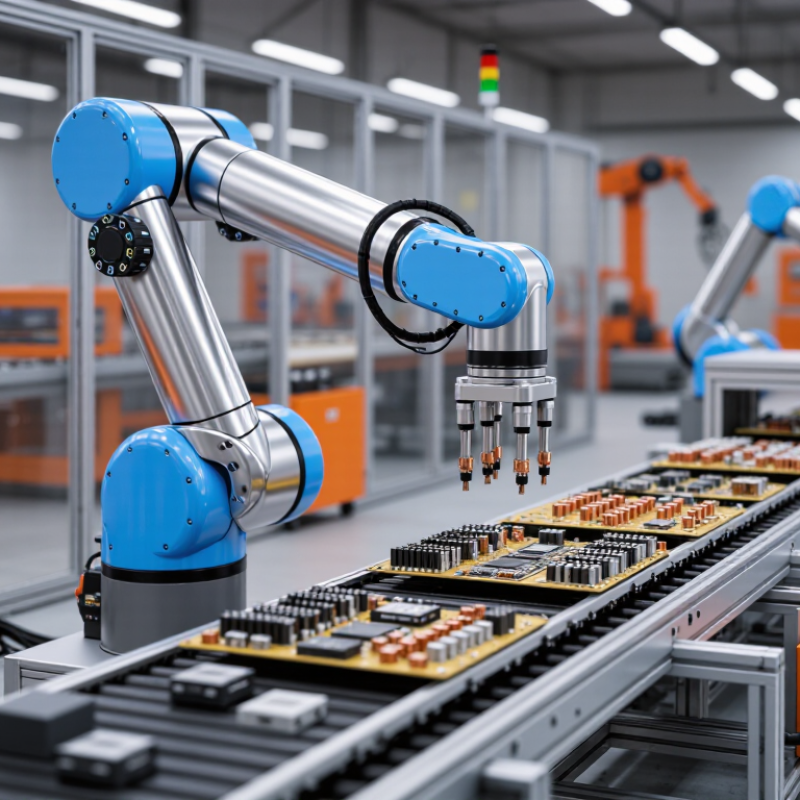
An MCB assembly robot handles repeatable tasks along the miniature circuit breaker production line. It can pick molded housings from a feeder, position internal contacts, and place springs or trip components into precise cavities. A gripper holds each part steady while the robot moves it between stations. Small details matter: a spring sitting slightly out of position can affect the next assembly step.
The system may combine robotic arms with cameras, feeders, screwdrivers, and sensors. Vision checks can confirm that a component is present and oriented correctly. Torque monitoring can flag a screw that is too loose or too tight. The robot can also transfer assembled breakers to electrical testing and marking stations, while production software records inspection results. These checks support consistency, but they do not replace qualified product testing.
The International Federation of Robotics reported 541,302 industrial robot installations worldwide in 2023 in its World Robotics 2024 report. That figure reflects broad factory automation, not MCB assembly alone. For breaker manufacturers, the practical value lies in matching automation to the real bottleneck: feeding tiny parts, maintaining placement accuracy, or reducing repetitive handling. A robot is not magic. Warped components, dust, or inconsistent feeding can still cause stoppages, so operators need clear alarms and access for adjustment. Automation works best when the process is stable—and when teams keep questioning what the robot misses.
An MCB assembly robot works best as one linked stage in the production process, not as a standalone shortcut. Components can be fed from trays or vibratory feeders, then positioned for contact installation, spring placement, screw fastening, and enclosure closing. Cameras can check orientation before assembly, while sensors monitor force and cycle completion. Small parts matter. A misseated spring or loose terminal can disrupt later testing, so the robot should pass clear process data to the next station.
After assembly, automated stations can measure electrical performance and trip response, reject units outside set limits, and record test results by production batch. This connects assembly to inspection and traceability without removing the need for maintenance or skilled process review. The International Federation of Robotics’ World Robotics 2024 report recorded 4.28 million industrial robots operating worldwide in 2023. That figure covers many industries, not MCB production specifically, but it shows how widely robotic equipment is used in manufacturing. Integration still takes careful tuning: feeder jams, part variation, and tool wear can interrupt a line. Automation helps most when those weak points are measured, not assumed away.
An MCB assembly robot can handle repeatable tasks such as component placement, fastening, and visual inspection. Consistent positioning helps reduce variation between units. That matters. A camera can check whether a part is seated correctly, while a torque sensor can flag fastening outside the set range. These checks give operators useful information before products move further down the line.
Production benefits also include steadier cycle times and less repetitive manual handling. Operators can focus on setup, quality review, and resolving interruptions instead of repeating the same small movements. When each station records results, teams can trace issues to a process step and adjust settings with clearer evidence. Actual gains depend on product design, line balance, and how well equipment is maintained.
There is a trade-off. A robot needs reliable component feeding, careful programming, and planned changeovers when product variants differ. A poorly tuned system may simply repeat a poor setup. Not every line benefits equally. Reviewing reject patterns and cycle-time data after installation helps reveal whether automation is improving the real bottleneck, or merely moving it elsewhere.
An MCB assembly robot can improve product consistency, but its quality features matter more than its speed. A vision system checks that contacts, springs, and housings are correctly positioned before the next operation. If a part sits at an angle, the system can flag it rather than letting the error travel down the line. Torque monitoring also helps confirm that each screw is tightened within a defined range. Small differences matter.
Reliable inspection needs more than a camera. Sensors can verify component presence, while end-of-line tests check key electrical and mechanical functions. Test results linked to production records make it easier to investigate a failed unit or a recurring defect. Still, automation is not magic. A lens can become dusty, and a poorly set threshold may miss a subtle flaw. Regular calibration and review by trained technicians remain important.
Safety features protect people working near the cell. Fixed guards, interlocked access doors, light curtains, and accessible emergency stops can reduce exposure to moving parts. The robot should pause safely when an operator opens a guarded area. Clear status lights help show whether the cell is running, waiting, or faulted. Real production is rarely perfect; operators may still need safe access for adjustments and maintenance. That practical detail deserves attention during system design.
Integrating an MCB assembly robot starts with the product range, not the machine. Document each breaker variant, terminal orientation, component tolerance, and required assembly sequence. Even a small change in housing geometry can affect gripping or screw alignment. Test real components, including samples near the edges of their specified tolerances. Do not rely only on ideal parts. A neat CAD layout can still be awkward on the shop floor.
Cell layout matters just as much as robot selection. Allow space for feeders, operator access, maintenance, and safe material replenishment. Define how the system will detect missing parts, confirm screw seating, and record inspection results. Camera checks can verify presence and orientation, while torque monitoring can flag a loose or over-tightened connection. Set realistic cycle-time targets using full production trials, not a short demonstration. Include time for model changeovers and fault recovery. That assumption can be wrong. Keep changeover steps clear, and train operators to recognize jams, worn grippers, and inconsistent feeding. During commissioning, track defects and stoppages by station. The data may reveal that a simple feeder adjustment matters more than a faster robot.
| Integration Factor | Why It Matters | What to Evaluate | Practical Integration Considerations |
|---|---|---|---|
| Product and process variation | MCBs are assembled from multiple components, and product variants may differ in dimensions, ratings, or component configurations. Variation affects feeding, positioning, and assembly sequences. | Product-family range, component tolerances, changeover frequency, and the number of distinct recipes required. | Confirm that tooling, feeders, fixtures, and robot programs can accommodate the intended product variants. Validate each configuration with representative production parts. |
| Assembly-task suitability | Robots can perform repeatable handling and positioning tasks, while operations such as fastening, riveting, spring placement, or calibration may require dedicated tooling and process controls. | Part orientation, insertion forces, access to assembly points, fastening or riveting requirements, and any manual or special-process steps. | Break the process into individual operations. Test delicate or force-sensitive steps with production-representative components before finalizing the cell design. |
| Cycle time and line balance | Robot speed alone does not determine output. Feeding, inspection, fastening, testing, and transfer times can become the actual production bottlenecks. | Required units per shift, operation time by station, changeover time, planned breaks, and the availability of upstream and downstream equipment. | Set the required takt time from the production plan, then validate the complete line under realistic operating conditions. Include replenishment and stoppage recovery in the assessment. |
| Component feeding and orientation | Automated assembly depends on consistently presented components. Poorly oriented, nested, or damaged parts can cause missed picks and line interruptions. | Part presentation method, allowable component variation, replenishment method, misfeed frequency, and recovery procedure. | Evaluate trays, magazines, bowls, or other suitable feeding methods using actual components. Provide detection and a defined response for empty, misoriented, or jammed feeders. |
| Quality checks and traceability | In-process checks can identify assembly errors before products proceed to later operations. Electrical protection performance must be verified using appropriate test equipment and procedures. | Required visual and dimensional checks, test results to retain, serial or batch identification, and links between product records and process data. | Define inspection points and acceptance criteria with the quality team. Keep robot handling separate from safety-critical electrical testing unless the cell is specifically engineered and validated for that test. |
| Machine safety and safeguarding | Robot cells introduce hazards such as moving equipment, pinch points, and unexpected startup. Risk reduction must be designed into the complete system. | Cell layout, operator access, loading and maintenance tasks, foreseeable hazards, and required safeguarding and safety functions. | Conduct a documented risk assessment and design safeguards for the full cell. Applicable requirements may include ISO 10218, ISO 13849-1, and IEC 60204-1, depending on the system and jurisdiction. |
| Factory-system integration | The cell needs to exchange status and production information with surrounding machines and factory systems to support coordinated operation and reporting. | Available machine interfaces, production recipes, fault signals, data fields, network requirements, and ownership of integration tasks. | Agree on signal definitions, communications, and fault-recovery behavior before installation. Verify start, stop, interlock, and product-changeover sequences with connected equipment. |
| Changeover and flexibility | Frequent product changes can reduce the value of automation if changeovers require extensive manual adjustment or specialist intervention. | Number of variants, changeover steps, tooling swaps, recipe controls, and the skills required to resume production. | Use controlled recipes and clearly identified tooling where appropriate. Measure changeover performance during trials rather than relying only on design estimates. |
| Maintenance and recovery | Unplanned downtime can offset productivity gains. Routine access, fault diagnosis, and availability of replacement parts affect long-term operation. | Common stoppage causes, diagnostic information, preventive-maintenance tasks, recovery time, and spare-part lead times. | Provide safe access for cleaning and maintenance, document recovery procedures, and train operators and maintenance staff before production handover. |
| Investment and return | The business case depends on total installed and operating costs, as well as the production capacity and quality improvements that can be demonstrated. | Equipment, integration, tooling, training, maintenance, floor space, labor allocation, and expected output or quality changes. | Compare the proposed cell with the current process using measured baseline data. Include commissioning, ramp-up, and ongoing support in the financial evaluation. |
Note: Required cycle times, quality limits, safety measures, and electrical tests depend on the product design, production plan, applicable regulations, and the validated manufacturing process. Confirm these requirements during the engineering and risk-assessment stages.
To learn more about any of the products and services provided by Abbott Ball Company, Inc., simply complete the form below.