
MON - FRI 8AM - 5PM

What Is a Handheld Infrared Sensor?

A Handheld Infrared Sensor detects infrared radiation and converts invisible thermal energy into measurable data. It does not “see heat” exactly. It measures emitted radiation, often within the 8–14 micrometre long-wave infrared band, then estimates surface temperature. Some devices provide a single temperature reading. Others create a thermal image for inspection.

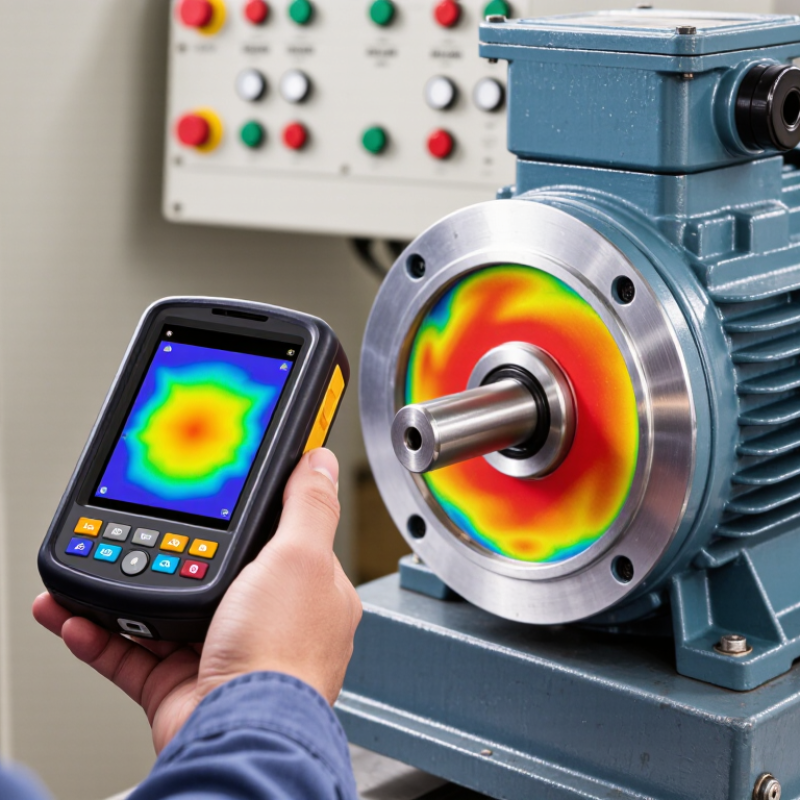
This distinction matters in the field. A maintenance technician may scan a motor bearing and notice a small hot spot before vibration becomes obvious. An electrician may compare three cable terminals under similar loads. A building inspector may trace missing insulation around a cold window frame. ISO 18434-1 identifies infrared thermography as a useful condition-monitoring method, but it also stresses correct measurement practice. Emissivity, reflected radiation, distance, focus, and viewing angle can alter results. The instrument is not always at fault.

Demand is linked to practical efficiency and safety needs. The International Energy Agency’s Energy Efficiency 2023 report states that buildings represent about 30% of global energy demand, making heat-loss detection commercially important. MarketsandMarkets’ 2024 Infrared Imaging Market analysis also identifies industrial inspection, predictive maintenance, and security as major application areas. These reports describe a growing market, not automatic accuracy. A low-cost device can still produce misleading readings.

That is the uncomfortable part.

This article explains what a Handheld Infrared Sensor is, how its detector and optics work, and where its readings can fail. It also considers calibration, operating limits, and real inspection habits. Used carefully, the sensor becomes a fast screening tool. It should not replace electrical testing, engineering judgment, or manufacturer instructions.
What Is a Handheld Infrared Sensor?

Definition and Basic Working Principle of a Handheld Infrared Sensor

What Is a Handheld Infrared Sensor?

Definition and Basic Working Principle of a Handheld Infrared Sensor

A handheld infrared sensor is a portable device that detects infrared energy from objects. Most models convert this invisible radiation into temperature, distance, or movement data. The sensor may use passive detection, active infrared light, or both.

Its basic working principle is straightforward. Every object emits infrared energy according to its temperature. A detector receives this energy through a small lens. Internal electronics then process the signal and display a measurement. In temperature testing, emissivity matters because painted metal, polished steel, and skin emit radiation differently. Distance, airflow, and nearby heat sources can also change the reading.

Practical testing requires more care than pointing and pressing. A clean lens improves consistency. The target should fill most of the sensing area. Operators should avoid measuring reflective surfaces without adjustment. That assumption is easy to miss. In field inspections, repeating the measurement from a slightly different angle can reveal unstable results. Readings should be compared with a known reference when accuracy matters. Handheld sensors are useful, but they are not perfect instruments.

Tips: Keep the sensor at a steady distance. Allow it to reach the surrounding temperature before testing. Record the target surface and environmental conditions. If two readings disagree, check reflection, distance, and calibration before blaming the device.

Main Components and Infrared Detection Methods

What Is a Handheld Infrared Sensor?

Main Components and Infrared Detection Methods

A handheld infrared sensor detects invisible radiation and converts it into a readable temperature or presence signal. Its sensing element may be a thermopile, photodiode, pyroelectric detector, or microbolometer. Each device responds to particular infrared wavelengths. A lens gathers radiation, while an optical filter blocks unwanted light. The signal then passes through an amplifier and analog-to-digital converter. A processor displays the result on a screen. Batteries, buttons, memory, and a protective housing support field use.

Small details affect accuracy. Emissivity settings matter because painted metal, skin, and polished surfaces radiate differently. A dirty lens can also distort readings. Distance matters. So does the viewing angle. Many handheld units use ambient-temperature compensation and internal reference measurements. These features reduce drift during changing conditions, but they cannot repair poor measurement technique.

Infrared detection usually follows two approaches. Passive sensors measure radiation naturally emitted by an object. Thermal imaging systems compare radiation across many detector elements to create a heat pattern. Single-point sensors measure one area and often provide faster readings. Active infrared systems send infrared energy toward a target, then analyze the reflected response. They can detect nearby objects, movement, or surface changes. Reflections from glass and shiny metal remain difficult. That shortcut is tempting, but it can mislead. In practical testing, I would record the target distance, surface condition, and ambient temperature beside every reading. Calibration checks should use a known reference, although real surfaces rarely behave perfectly.

What Is a Handheld Infrared Sensor?

Main components and representative infrared detection bands

A handheld infrared sensor typically combines an optical filter or lens, an infrared detector, signal-conditioning electronics, a processor, a display, and a power source. The chart shows representative center wavelengths for common infrared detection bands: near-infrared, short-wave infrared, mid-wave infrared, and long-wave infrared. Different detector materials are selected according to the wavelength range and measurement purpose.

Types of Handheld Infrared Sensors and Their Differences

What Is a Handheld Infrared Sensor?

A handheld infrared sensor detects invisible infrared radiation without touching the target. Its design determines what it can measure. An infrared thermometer reads surface temperature at one spot. It is quick and useful for checking motors, pipes, and electrical panels. A thermal imaging sensor creates a heat map, showing temperature patterns across a wider area. This helps reveal overheated connections, blocked insulation, or uneven heating.

Reflective infrared sensors work differently. They send infrared light toward an object and measure the returned signal. These sensors can detect position, movement, or surface contrast. Some models measure distance, while others identify nearby objects. Compared with thermal sensors, they do not mainly measure heat. Their performance depends on color, surface texture, viewing angle, and surrounding light. Shiny metal can produce misleading readings. Dark, matte surfaces are often easier to measure.

Tips: Check the sensing range and field of view before testing. Set emissivity correctly for temperature measurements. Keep the lens clean and allow the device to adjust to room conditions. Readings may drift near steam, strong reflections, or sudden temperature changes. A single measurement is not enough. Compare it with a known reference and inspect the surrounding area. No sensor is perfect. Even trained users can misread a small hot spot when distance changes. Record the surface, distance, temperature, and environmental conditions for more reliable decisions.

Common Applications in Industry, Maintenance, and Daily Life

What Is a Handheld Infrared Sensor?

A handheld infrared sensor detects thermal radiation and converts it into surface temperature readings. Technicians use it without touching energized equipment or moving machinery. In industrial plants, it can reveal overheated terminals, unbalanced motors, blocked bearings, and steam leaks. A 2023 report from the International Energy Agency states that industry consumed about 37% of global energy in 2022. Small thermal losses can therefore become expensive. Infrared inspections help maintenance teams find abnormal heat before failure spreads. One hot cable lug may indicate loose connections or excessive resistance.

The image is useful, but it is not a diagnosis.

Maintenance work benefits from repeated measurements under similar loads. Teams can compare a motor today with its earlier thermal pattern. The U.S. Department of Energy’s Operations and Maintenance Best Practices guide identifies predictive maintenance as a route to lower downtime and maintenance costs. Infrared checks also support HVAC inspections, electrical safety programs, and building envelope surveys. The IEA reports that buildings account for roughly 30% of global final energy consumption. At home, a handheld sensor can locate cold window edges, warm circuit outlets, or uneven floor heating. Daily life applications remain simple.

Surface conditions can mislead readings.

Shiny metal reflects nearby heat, while dust and moisture alter apparent temperature. Users should check emissivity settings and confirm unusual results with contact measurements. I have found that a clean lens matters more than expected. Even careful operators can miss a problem when viewing angles change. That limitation deserves attention.

Key Factors for Selecting and Using a Handheld Infrared Sensor

What Is a Handheld Infrared Sensor?

A handheld infrared sensor measures thermal radiation without touching the target surface. It converts infrared energy into a temperature reading on a screen. This makes it useful for checking motors, electrical panels, pipes, food equipment, and building surfaces. However, the displayed value is an estimate, not an unquestionable fact.

Key Factors for Selecting and Using a Handheld Infrared Sensor

Choose a sensor with a suitable temperature range and measurement accuracy. A narrow measurement spot helps when inspecting small components. Check the distance-to-spot ratio before buying. A sensor may read the background if it is held too far away. Surface emissivity also matters. Glossy metal can reflect nearby heat and produce misleading results. Matte paint usually gives more stable readings.

Use the sensor steadily, and keep the lens clean. Let the device adjust to the surrounding temperature before critical measurements. Compare similar surfaces under similar conditions. For equipment checks, record the location, distance, ambient temperature, and reading time. These details make later decisions more reliable. A single high reading needs context.

I have found that rushing creates avoidable errors. A perfect reading is rare. Reflections, airflow, dust, and sunlight can interfere. Confirm unusual results with another method when safety or maintenance decisions depend on them. Even experienced users can miss a small change in surface condition. Calibration records and periodic verification support dependable work.

What Is a Handheld Infrared Sensor? - Key Factors for Selecting and Using a Handheld Infrared Sensor

Selection Dimension Typical Data or Range Why It Matters Practical Selection Guidance
Measurement Principle Measures infrared radiation emitted by an object without physical contact. The sensor estimates surface temperature from emitted radiation rather than directly measuring the internal temperature. Use it for fast surface checks, preventive maintenance, process monitoring, and safety inspections.
Common Spectral Band Approximately 8–14 µm for many general-purpose temperature sensors and thermal imaging devices. This long-wave infrared band is useful for measuring ordinary industrial, electrical, mechanical, and building surfaces. Confirm that the sensor’s wavelength range matches the material, temperature range, and environmental conditions.
Measurement Temperature Range Common handheld models cover approximately −50°C to 550°C; specialized models may extend beyond 1,000°C. A sensor can become inaccurate or unsafe when the target temperature exceeds its rated range. Choose a range that includes the highest expected temperature with a reasonable operating margin.
Accuracy Typical handheld infrared thermometers: about ±1°C to ±2°C, or approximately ±1% to ±2% of the reading, depending on conditions. Accuracy is affected by emissivity, distance, ambient temperature, optics, and target size. Select a device based on the required measurement tolerance, not only its maximum temperature range.
Repeatability Many practical handheld instruments provide repeatability within approximately ±0.5°C to ±1°C under stable conditions. Repeatability indicates how consistently the sensor produces the same result when measuring the same target. Prioritize repeatability for trend monitoring and fault detection, even when absolute accuracy is less critical.
Distance-to-Spot Ratio Common ratios range from 8:1 to 50:1. A 12:1 ratio means a 120 mm distance measures an approximately 10 mm spot. The measured area becomes larger as the sensor moves farther from the target. Use a higher ratio for small or distant targets; ensure the measured spot is fully covered by the target.
Emissivity Adjustment Many devices offer an adjustable emissivity setting, commonly from about 0.10 to 1.00. Emissivity describes how efficiently a surface emits infrared energy. Shiny metals generally have lower emissivity than non-metallic surfaces. Set the emissivity to match the target surface or apply matte tape or paint when appropriate and safe.
Response Time Typical response times range from approximately 0.1 to 1 second. A shorter response time is useful when scanning moving objects or rapidly changing processes. Choose a faster sensor for production lines and rotating equipment; standard response times are usually sufficient for spot checks.
Thermal Resolution Single-point infrared thermometers provide one temperature value; handheld thermal imagers commonly use resolutions such as 160 × 120 or 320 × 240 pixels. Higher image resolution helps identify the location and shape of hot or cold areas. Use a single-point sensor for simple measurements and a thermal imager for fault localization and area surveys.
Thermal Sensitivity Many handheld thermal imagers provide a noise-equivalent temperature difference of approximately 40–100 mK. Lower thermal sensitivity values allow the device to distinguish smaller temperature differences. Select lower NETD when inspecting insulation, electronics, bearings, or other applications with subtle thermal variations.
Field of View Handheld thermal cameras often use lenses with a field of view of roughly 20°–45°. A wide field of view covers more area, while a narrow field of view provides better detail from a distance. Use a wide view for rooms and large equipment; use a narrow view for small or distant components.
Laser Targeting Single- or dual-laser pointers are common on handheld infrared thermometers. A laser indicates the approximate target direction but does not always define the complete measurement spot. Use the distance-to-spot specification together with the laser indicator to position the sensor correctly.
Environmental Protection Common enclosure ratings include IP54 or IP65, depending on the instrument design. The rating indicates resistance to dust and water ingress under defined test conditions. For dusty, damp, or outdoor work, select an appropriate IP rating and follow the operating limitations.
Ambient Operating Range Many handheld devices are designed for approximately 0°C to 50°C ambient operation, although specifications vary. Extreme ambient temperatures can affect detector stability, display performance, and measurement accuracy. Allow the instrument to acclimatize when moving between significantly different environments.
Calibration and Verification Calibration intervals commonly range from 12 to 24 months, depending on use, risk, and quality requirements. Periodic calibration helps verify that readings remain traceable and within the required tolerance. Use a documented calibration program and verify performance with a suitable reference source before critical measurements.
Battery and Runtime Handheld instruments commonly use replaceable or rechargeable batteries and may operate for several hours per charge. Battery capacity affects inspection time, portability, and downtime during field work. Choose replaceable batteries for remote work or a rechargeable system with spare power for extended inspections.
Data Recording Available functions may include maximum, minimum, average, alarm limits, image storage, USB transfer, and wireless export. Recorded data supports maintenance reports, trend analysis, and evidence of inspection results. Select only the data features needed for the workflow to avoid unnecessary complexity and cost.
Measurement Best Practice Keep the sensor perpendicular to the surface when possible, avoid obstructions, and ensure the target fills the measurement spot. Incorrect angle, reflections, steam, dust, or a partially filled spot can produce misleading readings. Repeat measurements from a consistent position and compare results with known conditions or reference measurements.

Note: The specifications shown are representative ranges for handheld infrared instruments. Actual performance depends on sensor design, calibration, target material, distance, ambient conditions, and measurement technique.

Request a Quote

To learn more about any of the products and services provided by Abbott Ball Company, Inc., simply complete the form below.