
MON - FRI 8AM - 5PM

Top Roll Filter Media Manufacturers for Global Buyers?

Global buyers comparing Roll Filter Media manufacturers face a practical challenge: the cheapest roll may not deliver the lowest operating cost. Media affects particle capture, airflow resistance, service life, and how often a filter system needs attention. Small details matter. A loose edge, uneven fiber density, or poorly controlled roll width can create problems during installation and use.

The UNEP Global Status Report for Buildings and Construction 2023 reports that buildings consumed 34% of global energy in 2022 and produced 37% of energy- and process-related CO₂ emissions. Those figures describe the wider building sector, not filter media alone. Still, they help explain why buyers should examine pressure drop and replacement intervals alongside filtration performance. Harvard healthy-buildings researcher Joseph Allen has consistently emphasized that ventilation and filtration need to work together. In practical terms, even capable media cannot compensate for poor system design or neglected maintenance.

A useful supplier review should check test methods, product consistency, available widths, technical documentation, and support after delivery. Ask for performance data tied to the intended application, not just a broad efficiency claim. Request sample rolls, too. See how the material unwinds and handles on your equipment. The uncomfortable truth? A polished specification sheet does not prove consistent production. Global buyers need evidence across batches, clear communication, and realistic lead times. This introduction sets the stage for comparing leading manufacturers—and for asking what their claims actually mean in daily operation.
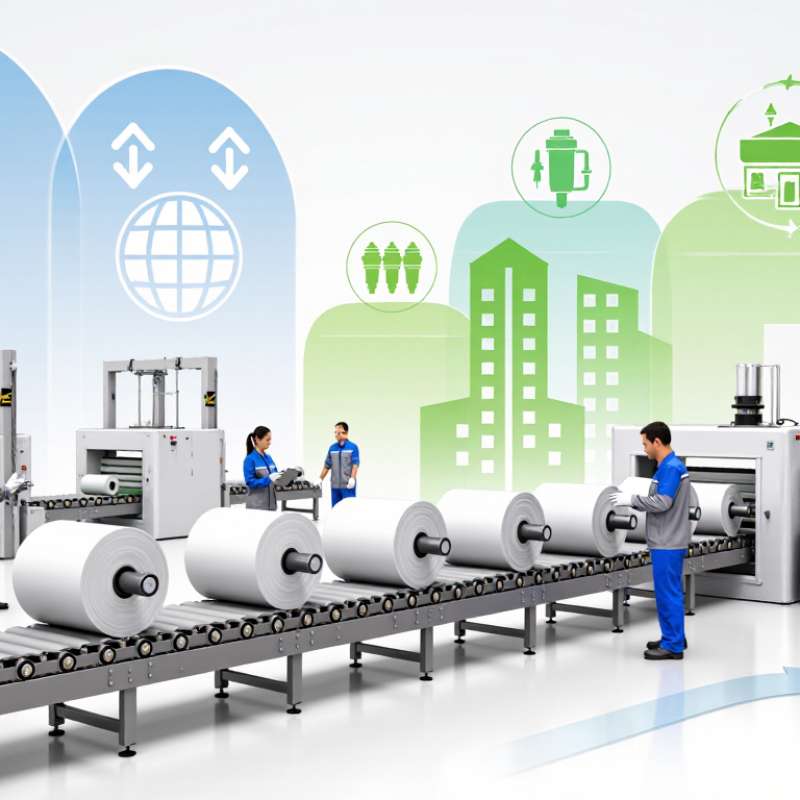
Top Roll Filter Media Manufacturers for Global Buyers?

What Is Roll Filter Media and Where Is It Used?

Roll filter media is a continuous sheet of porous material supplied in rolls, then cut to fit frames or equipment. It is commonly made from synthetic fibers, glass fibers, or blended layers. The structure traps airborne particles while allowing air to pass through. Simple in form. Not simple in performance. Fiber density, thickness, and pleating affect dust-holding capacity and airflow resistance.

Uses range from HVAC prefilters in offices and factories to intake filtration for turbines and spray booths. In building systems, the media can capture dust before it reaches finer filters or equipment coils. The International Energy Agency’s Energy Efficiency 2023 report estimates that buildings use about 30% of global energy. Filter selection matters because excessive airflow resistance can increase fan energy use. A roll can look right and still be wrong for the system.

Performance depends on the finished filter, not just the raw roll. ASHRAE Standard 52.2 tests particle removal across three size ranges: 0.3–1, 1–3, and 3–10 micrometers. Buyers should check test results, pressure drop, and replacement intervals for their actual operating conditions. A high capture rating alone may not suit a system with limited fan capacity. That trade-off is easy to overlook.

How Is Roll Filter Media Made and Classified?

Roll filter media is made by turning loose fibers into a continuous, controlled web. Depending on the design, fibers may be bonded with heat, resin, or mechanical pressure. Common processes include air laying, wet laying, spunbonding, and meltblowing. Each creates a different fiber structure, affecting airflow and dust capture. Some media also receive a treatment to improve moisture resistance or stiffness. The details matter. A small change in fiber blend or bonding can alter pressure drop across the roll.

Buyers and engineers commonly classify roll media by material, construction, thickness, weight, and filtration performance. Materials may include polyester, polypropylene, cellulose, or blended fibers. Construction can be layered or single-web, with gradients that capture larger particles near the surface and finer particles deeper inside. Performance should be assessed alongside airflow and pressure drop, not by efficiency claims alone. Test methods and conditions can differ, so figures are not always directly comparable. A neat product label can still hide useful details, such as roll width, core size, or whether the media is intended for dry or humid service. Those practical specifications affect handling and fit.

Top Roll Filter Media Manufacturers for Global Buyers? — How Is Roll Filter Media Made and Classified?

Media Type Common Materials How It Is Made Filtration Characteristics Typical Uses Buyer Checks
Spunbond nonwoven Polyester, polypropylene, or other thermoplastic polymers Continuous filaments are spun, laid onto a moving surface, and bonded, commonly by heat or pressure. Usually a durable, relatively open structure suited to support layers, prefiltration, or applications where strength and airflow matter. Air prefilters, HVAC components, equipment protection, and support layers in composite media. Check polymer type, basis weight, thickness, tensile strength, air permeability, and bonding consistency.
Meltblown nonwoven Commonly polypropylene; other polymers may be used for specific requirements Molten polymer is extruded through fine openings and attenuated by hot air into fine fibers, which collect as a web. Some grades receive electrostatic charging. Fine fibers can provide high particle capture in a compact web. Performance depends on fiber structure, web weight, charging, and test conditions. Fine-particle air filtration, face coverings, liquid prefiltration, and multilayer filter constructions. Confirm particle-size test method, efficiency, pressure drop, charge treatment, humidity conditioning, and whether performance is tested before or after aging.
Needle-punched nonwoven Polyester, polypropylene, acrylic, and other staple fibers Staple fibers are formed into a web and mechanically entangled with barbed needles; heat setting or other finishing may follow. Often thicker and mechanically robust. Filtration can occur through the depth of the web, with performance affected by fiber blend and density. Industrial dust collection, liquid filtration, and other applications requiring a durable felt-like medium. Review fiber composition, thickness, air permeability, tensile strength, operating temperature, and compatibility with the cleaning method.
Wet-laid cellulose filter paper Cellulose fibers, sometimes blended with synthetic fibers or additives Fibers are dispersed in water, formed into a sheet on a moving screen, then pressed and dried; treatments or resin binders may be added. Can be engineered for particle retention, liquid flow, and stiffness. Properties vary with fiber blend, pore structure, and treatment. Oil, fuel, hydraulic-fluid, and general liquid-filter elements; also selected air-filtration products. Check compatibility with the fluid, filtration rating and test method, flow resistance, wet strength, and temperature limits.
Glass-fiber media Fine glass fibers, often with a binder or supporting layers Glass fibers are dispersed and formed into a web, commonly by a wet-laid process, then dried and finished; some products are laminated with support layers. Fine fibers can deliver high particle capture. Efficiency, pressure drop, strength, and moisture behavior depend on construction and binder. High-efficiency air filtration, ventilation systems, and selected industrial filtration applications. Verify the applicable efficiency classification and test standard, pressure drop, binder details, humidity resistance, and handling requirements.
Activated-carbon composite media Activated carbon combined with a fiber web, fabric, or other carrier Carbon is bonded, impregnated, or laminated into a supporting medium; the exact construction varies by product. Can adsorb certain gases and odors while the carrier captures particles. Adsorption capacity depends on carbon type, loading, contaminant, humidity, and contact time. Odor and vapor control in ventilation, appliances, and industrial air-treatment systems. Ask for carbon loading, target contaminants, adsorption test conditions, airflow resistance, and whether particle filtration is also rated.
Composite or laminated media Combinations of spunbond, meltblown, cellulose, glass fiber, carbon, or support scrims Individual layers are bonded or laminated to combine functions such as particle capture, strength, support, or adsorption. Layer sequence and bonding affect efficiency, pressure drop, durability, and processability; the finished composite should be tested as a whole. Air and liquid filter elements that require multiple performance features. Confirm layer structure, bonding method, finished-roll properties, edge quality, and performance data for the complete laminate.

How roll filter media is generally made: Fibers or other functional materials are prepared, formed into a web or sheet, bonded or consolidated, finished, inspected, and wound into rolls. Classification may be based on material, web-forming process, filtration function, intended application, or a recognized performance test. Efficiency ratings are meaningful only when the test method and operating conditions are specified.

Which Manufacturers Supply Roll Filter Media Worldwide?

Roll filter media reaches global buyers through manufacturers in Asia, Europe, and North America, as well as regional converting companies. Some producers make nonwoven media directly; others slit, laminate, or package material sourced from mills. That distinction matters. A supplier may ship internationally without controlling every stage of production.

For buyers, the useful question is not simply which country a manufacturer serves, but what it can document. Request the media’s fiber composition, basis weight, roll width, filtration rating, and pressure-drop data. Ask for a current technical sheet and samples from the same grade quoted. A roll that looks uniform on a pallet may behave differently once installed in a high-airflow system. Small details count.

Export-ready manufacturers typically explain lead times, packaging, minimum order quantities, and shipping options before an order is placed. Confirm whether stated performance comes from standardized testing, and clarify how tolerances are handled across production runs. Distributors can offer local stock and support, while direct producers may provide more control over specifications. Neither route is automatically better. Documentation can still be incomplete, so compare evidence rather than polished claims.

How Can Buyers Compare Manufacturers and Product Specifications?

Comparing roll filter media manufacturers starts with your process, not a catalog headline. Record airflow, operating temperature, dust type, humidity, and required service life. Ask each supplier for media construction, roll width, length, thickness, basis weight, and pressure-drop data at a stated face velocity. Numbers without test conditions are hard to compare. Small detail, big difference.

Check the efficiency class and test method, but do not treat a rating as a complete performance promise. Request samples and evaluate them in the actual housing, where seals, loading patterns, and fan capacity affect results. Ask about batch consistency records, technical support response times, and lead-time ranges. A supplier should explain limitations clearly. If answers stay vague, pause.

Tips: Use one comparison sheet and keep units consistent. Ask whether quoted pressure drop is initial or final, and which dust-loading procedure was used. Confirm tolerances for roll dimensions and whether custom slitting changes delivery time. A datasheet cannot predict every line condition; pilot testing may expose surprises. We sometimes overlook installation fit. Measure twice.

What Should Global Buyers Check Before Placing an Order?

Before placing an order for roll filter media, define the operating conditions in writing. Record target particle size, airflow, temperature, humidity, and expected dust load. Ask suppliers to state the efficiency test method and pressure drop at a specified face velocity. A percentage alone is not enough; different test methods can make comparisons misleading. Request a current technical data sheet and a sample from the same production grade.

Check the roll’s width, length, thickness, and tolerance against your converting equipment. Confirm media composition, backing or scrim, winding direction, and core dimensions. Small differences matter. A roll that matches the specification on paper may still wrinkle or shed fibers during slitting. Ask about batch identification, storage conditions, packaging, and realistic lead times. For repeat orders, agree on change-notification procedures and retained samples. If a claim lacks a test report or clear measurement conditions, pause and ask. It can feel awkward. Better awkward now than a costly line stoppage later.

Tips: Send a one-page checklist with required values, test methods, acceptable tolerances, and sample approval criteria. Inspect a trial roll at normal production speed, then record pressure drop and visible defects. Do not rely on appearance alone. Media can behave differently after dust loading. Keep the checklist useful, and revise it when production reveals a missed detail.

Top Roll Filter Media Manufacturers: What Global Buyers Should Check Before Ordering

Use this checklist to compare suppliers before placing an order. Confirm the stated specifications, test methods, and commercial terms for the exact media grade you need.

Bars show the number of checks listed for each procurement area—not industry statistics, supplier ratings, or performance benchmarks.

Request a Quote

To learn more about any of the products and services provided by Abbott Ball Company, Inc., simply complete the form below.