
Choosing reliable Pvc Cooler Bag manufacturers in 2026 requires more than comparing factory prices. Global buyers need evidence of stable production, material knowledge, and responsible business practices. A cooler bag may look simple, yet its performance depends on insulation thickness, foil lining, zipper quality, handle strength, and seam construction. Small weaknesses can appear after repeated folding, heat exposure, or contact with melting ice.
This guide examines leading manufacturers serving international markets. It focuses on production experience, customization capability, quality control, and communication reliability. Buyers will find practical details about polyester and oxford fabrics, food-contact considerations, leak-resistant linings, logo printing, packaging, minimum order quantities, and delivery planning. Factory audits, sample testing, and clear inspection standards remain essential. Photos are useful. Physical samples are better.
A dependable supplier should explain test methods, material specifications, and corrective actions without avoiding difficult questions. Certifications can support confidence, but they should be verified against the actual factory and product. No manufacturer is perfect. Even experienced suppliers may face fabric shortages, color differences, or seasonal delays. That reality deserves attention, not polished promises.
The manufacturers discussed here are evaluated for commercial suitability, not merely impressive catalogs. Their strengths may differ. One factory may offer advanced insulation, while another provides flexible small-batch customization. Buyers should match supplier capabilities with market needs, climate conditions, sales channels, and target pricing. Careful comparison can reduce costly revisions and improve customer satisfaction. This is not a shortcut. It is a practical sourcing decision.
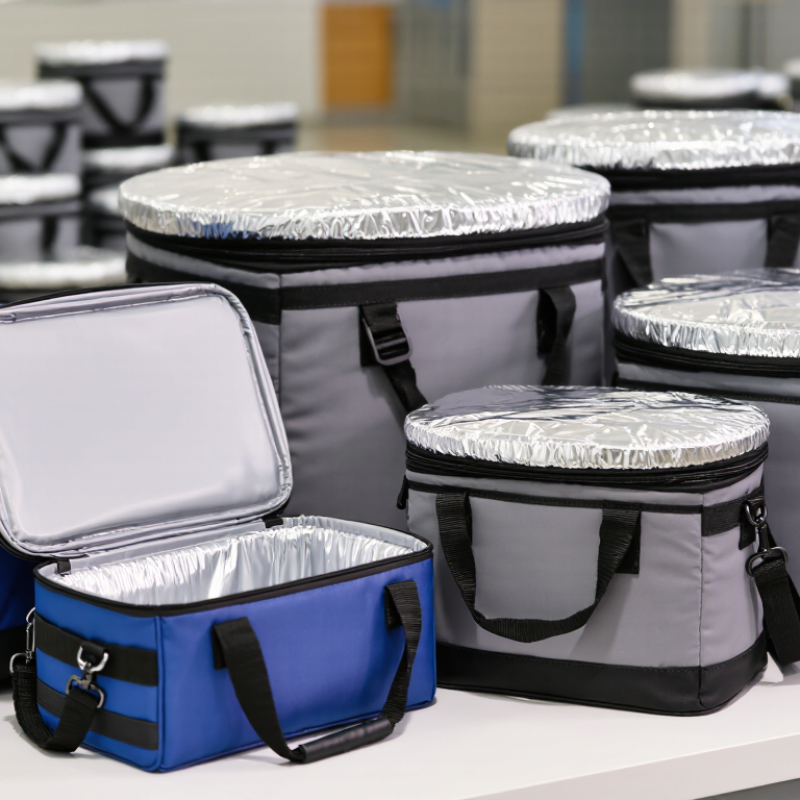
PVC cooler bags combine a flexible outer shell with insulation, lining, zipper, and carrying straps. PVC resists splashes, stains, and repeated wiping. Its smooth surface also supports printed graphics and bright seasonal colors. However, PVC is not automatically the best choice.
Grand View Research reported that the global insulated packaging market reached about USD 15.7 billion in 2023. It projects continued growth through 2030, driven by food delivery, healthcare, and temperature-sensitive distribution. Cooler bags serve daily grocery transport, outdoor catering, seafood delivery, and pharmaceutical support logistics. Their performance depends on more than appearance. A 6–8 mm insulation layer, sealed seams, and a tightly closing lid can reduce heat exchange during short trips. Testing matters.
Cold Chain Technologies’ industry guidance emphasizes thermal mapping and real-use testing for temperature-controlled packaging. Global buyers should request data from loaded tests, not empty-bag demonstrations. Interior volume, ice-pack placement, and ambient temperature change results significantly. PVC can feel durable, yet some coatings may crack after repeated folding or cold exposure. That detail is easy to miss. Responsible sourcing also requires checking material composition, odor, recyclability, and regional compliance documents. Market forecasts differ because reports classify soft coolers, insulated bags, and packaging differently. Buyers should treat headline numbers carefully and compare the definitions behind them.
| Product or Capability Area | Common Materials and Construction | Typical Features | Global Market Uses | Buyer Checks |
|---|---|---|---|---|
| Clear PVC tote cooler | Transparent PVC film or PVC-coated fabric outer; insulated lining commonly uses foam with a PEVA, PVC, or foil-laminated inner layer. | Wipe-clean exterior, visible contents, zip-top closure, and stitched or welded seams depending on construction. | Promotional programs, events, retail, and venues that require clear bags. | Confirm the venue’s clear-bag size and material rules. Ask for seam, handle-load, and closure testing. |
| PVC-coated polyester cooler | Polyester textile coated with PVC, paired with an insulating foam layer and a separate inner liner. | More opaque and fabric-like than clear film; can support printed designs, pockets, and multiple carrying styles. | Grocery shopping, picnics, travel, outdoor activities, and branded merchandise programs. | Specify fabric weight, coating quality, print method, zipper type, and how seams are sealed. |
| Insulation package | Flexible foam, often polyethylene foam, placed between the outer shell and inner liner. Thickness and density depend on the design. | Slows heat transfer but does not actively cool contents. Cooling performance depends on insulation, closure, starting temperature, and use of ice packs. | Short-duration transport of chilled food and drinks, lunch carrying, and recreational use. | Request a defined temperature-retention test protocol, including ambient temperature, fill load, and test duration. |
| Food-contact inner liner | May use PEVA, PVC, or laminated film. The liner is a separate component from the PVC outer material. | Smooth surfaces are generally easier to wipe clean; leak resistance depends on the liner and seam construction. | Food and beverage carrying, grocery delivery, catering, and consumer retail. | Identify the destination market and intended food contact. Request applicable test reports for the exact liner and finished product. |
| Leak-resistant construction | Inner liner joined by sewn, heat-sealed, or welded methods, according to material compatibility and product design. | Can help contain condensation or minor spills; performance is not guaranteed by the material name alone. | Commuting, road trips, beach use, and delivery of packaged chilled goods. | Ask whether the bag is designed to be leak-resistant or fully leakproof, and request a water-leak test result. |
| Printing and customization | Screen printing, transfer printing, or other processes selected for the PVC surface and artwork. | Supports logos, color panels, and promotional graphics; print durability depends on ink, surface preparation, and use conditions. | Promotional merchandise, retail collections, tourism, and event campaigns. | Approve a production sample and check color, adhesion, abrasion resistance, artwork placement, and approved materials. |
| Quality-control capability | Inspection can cover material identification, dimensions, stitching or welding, hardware, printing, and packaging. | Documented checks help buyers compare production batches and reduce variation in repeat orders. | Import programs serving multiple retailers, distributors, or regional markets. | Agree on an inspection plan, defect criteria, sample approval process, and batch traceability before production. |
| Regulatory and environmental review | PVC formulations and accessory materials can differ. Applicable requirements depend on the product, claims, and destination market. | Material declarations and test documentation can help buyers assess restricted substances and market-specific requirements. | International retail, promotional sourcing, and cross-border distribution. | Check current destination-market rules, including applicable chemical restrictions. Do not assume PVC or a liner is compliant without documentation. |
| Packaging and export readiness | Finished bags are commonly folded or packed in cartons; packaging configuration depends on size and shipping plan. | Carton marks, unit packaging, and packing quantities can be tailored to retail or bulk distribution needs. | Importers, wholesalers, e-commerce fulfillment, and retail supply chains. | Confirm packed dimensions, carton quantity, labeling, shipping marks, and any destination-specific packaging requirements. |
Note: PVC cooler bags are insulated carriers, not refrigeration appliances. Cooling duration varies with bag construction, load, ambient conditions, opening frequency, and the use of suitable ice packs. Always verify product specifications and compliance documents for the intended market.