China Top Industrial Mixing Machine Manufacturers?
Choosing among China’s top Industrial Mixing Machine manufacturers takes more than comparing prices or polished brochures. The right Industrial Mixing Machine must suit the material, batch size, viscosity, temperature, and cleaning routine. A powder blender that handles free-flowing granules may struggle with a sticky, heat-sensitive paste. Details matter.
Mixing researcher A. W. Nienow’s published work offers a useful selection principle, paraphrased here: “Choose the mixer for the process, not the catalog.” Buyers should examine impeller design, motor power, vessel geometry, seal construction, and control options. Ask manufacturers for test data using materials close to your own. A short trial can reveal dead zones, uneven blending, or excessive heat that a specification sheet will not show.
This guide compares Chinese manufacturers through practical criteria: product range, engineering support, customization, quality documentation, and after-sales service. It also considers whether a supplier can explain its design choices clearly, rather than simply promise a perfect result. No ranking is perfect. Performance depends on the application, and published claims deserve careful checking. Request drawings, operating limits, and references for comparable installations before committing. Even then, a good machine cannot fix an unclear process. That is worth remembering.
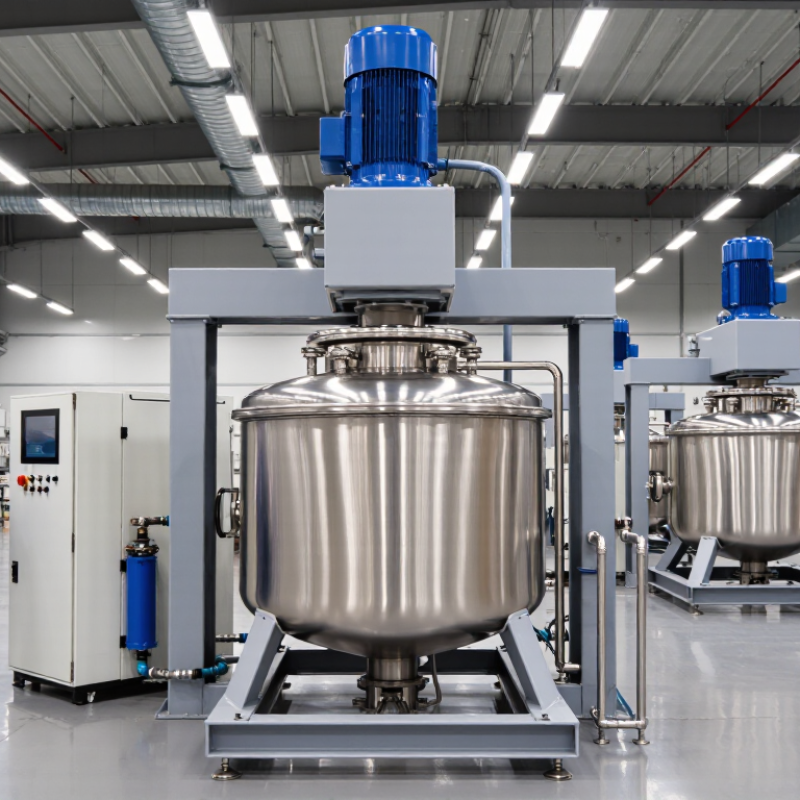
What Industrial Mixing Machines Are and How They Work
China Top Industrial Mixing Machine Manufacturers?
What Industrial Mixing Machines Are and How They Work
Industrial mixing machines combine liquids, powders, pastes, or suspended solids until a process reaches a required level of uniformity. They are used in food, chemical, water-treatment, and materials production, where each application needs different mixing conditions. A typical unit has a vessel, motor, shaft, and mixing element, such as an impeller, ribbon, or rotor-stator head. The motor turns the element, creating flow and shear that move material through the tank. Some machines process batches; others blend materials continuously. The distinction matters.
When choosing equipment, engineers consider viscosity, batch size, solids content, blend time, and cleaning access. A low-viscosity liquid may respond well to an axial-flow impeller. A thick paste may need slower, high-torque equipment. Baffles can reduce swirling, but excessive speed may trap air, raise product temperature, or harm shear-sensitive ingredients. Operators often sample material from different tank locations instead of trusting appearance alone. That check helps.
Real installations involve trade-offs: faster mixing can increase energy use, and stated capacity does not guarantee equal results with every formulation. Testing with the actual material can reveal problems a specification sheet misses.
Main Types of Industrial Mixing Machines Made in China
China Top Industrial Mixing Machine Manufacturers?
Industrial mixing machines made in China include several designs for different materials and production needs. Ribbon blenders move dry powders through a horizontal trough, using inner and outer helical ribbons. They are common for blends such as flour, mineral powders, and premixes. Paddle mixers use broad blades to handle fragile solids with less aggressive movement. For wet processing, high-shear mixers disperse powders into liquids, while tank agitators keep suspensions moving during storage or production.
Thick materials need different equipment. Planetary mixers rotate their blades around the bowl and along its inner wall, helping work dense pastes and compounds. Vacuum mixers remove trapped air, which can matter for creams, sealants, and other products where bubbles affect finish. Some units include heating or cooling jackets. Easy to miss. A jacket changes the process, not just the temperature: it can influence mixing time and product consistency.
When comparing machine types, match the design to viscosity, batch size, and cleaning requirements. Ask about contact-surface materials, shaft seals, motor power, and the usable speed range. A demo with a representative sample can reveal dead zones or powder buildup that a specification sheet may not show. The choice is not always obvious. Even a well-built mixer may perform poorly when its blade geometry or capacity does not suit the actual recipe.
Typical upper-end shaft speeds vary by design, scale, and application. These approximate reference values are for orientation only; shaft speed alone does not indicate mixing performance or suitability.
Leading Industrial Mixing Machine Manufacturers in China
Leading Industrial Mixing Machine Manufacturers in China
China’s industrial mixing machine manufacturers serve sectors that need consistent blending, dispersion, or emulsification. Their equipment ranges from compact laboratory units to production-scale systems. A suitable machine depends on the material, batch size, and required mixing result, not just motor power.
Details matter.
When comparing manufacturers, ask how they match impeller design and vessel geometry to your process. A thick paste may need a different mixing pattern than a thin liquid. Request material specifications for product-contact surfaces, operating limits, and maintenance intervals.
If possible, review a test using a sample close to your actual material. Watch for dead zones, temperature changes, and residue around seals.
Ask for evidence.
Reliable suppliers should explain lead times, installation needs, spare parts, and operator training in clear terms. Drawings, inspection records, and service procedures can help buyers assess whether a machine fits their production line. Sales claims alone are not enough.
I would also compare more than one quotation, though price comparisons can be imperfect when specifications differ. A clear technical discussion often reveals gaps before installation.
That takes time. A practical choice balances process performance, cleaning requirements, and long-term support.
Industries and Applications Served by Chinese Manufacturers
Chinese industrial mixing machine manufacturers serve a wide range of production environments, from food processing plants to construction-material workshops. Food and beverage operations often need tanks with smooth internal surfaces, controlled temperatures, and cleaning-friendly designs. A thick syrup behaves differently from a thin drink base. Small details matter.
Coatings and chemical producers use dispersers and agitators to blend pigments, resins, and liquids. The right impeller depends on viscosity, batch size, and the desired finish. Construction suppliers may need heavy-duty mixers for mortar, grout, or dry-blend preparation. Water-treatment facilities, meanwhile, use mixing equipment to keep treatment agents evenly distributed. Applications vary.
Selecting a machine takes more than matching a product category. Buyers should confirm the working volume, motor power, wetted materials, and cleaning method with the manufacturer. Pilot trials can reveal dead zones or excessive heat before equipment is installed. A tidy specification sheet cannot show everything. This is where assumptions creep in. Some published capacity figures describe ideal conditions, not a difficult real-world batch, so operating requirements should be checked carefully.
How to Evaluate and Select a Chinese Mixing Machine Manufacturer
China Top Industrial Mixing Machine Manufacturers?
Choosing a Chinese mixing machine manufacturer starts with your process, not a catalog. Grand View Research’s 2023 Industrial Mixer Market report estimated the global market at USD 2.53 billion in 2022, with projected growth of 5.3% annually from 2023 to 2030. That signals demand, not supplier quality. Numbers are not proof.
Ask how the supplier handles your material’s viscosity, batch size, temperature, and required shear. Request a factory audit, material certificates, equipment drawings, and a documented factory acceptance test using a representative recipe. Check weld finish, shaft alignment, seal access, and control settings in person or through clear inspection records. Confirm spare-part lead times and after-sales response in writing. ISO 9001 certification can indicate a quality system, but it cannot guarantee mixing performance. I would still want a trial with the actual material; substitutes may behave differently.
Tips: Send the same test brief to every candidate. Include target mixing time, uniformity criteria, and cleaning needs. Test the real batch. Keep the results, including any failed run, for comparison.