
Choosing a Lifting Cylinder supplier involves more than comparing prices. Buyers need to match bore, rod diameter, stroke, mounting style, and operating pressure to the machine’s real duty cycle. A cylinder that looks suitable on a drawing may perform poorly under shock loads, side forces, or frequent cycling. Small details matter.
For an engineering perspective, design engineer and author Henry Petroski offers a useful reminder: “Science is about knowing; engineering is about doing.” That idea fits supplier evaluation. Ask for dimensional drawings, material specifications, pressure-test records, seal options, and traceability for critical components. Check whether the supplier can explain its assumptions, not just send a catalog. Clear answers are a good sign.
Global sourcing adds practical questions. Confirm production lead times, export packaging, spare-part availability, and technical support across time zones. Compare suppliers using the same duty-cycle and environmental requirements; otherwise, quotations may not describe equivalent products. Look closely at corrosion protection if cylinders will face rain, salt, dust, or washdown. A polished brochure is not proof of reliable service. No checklist is perfect, and some claims still need verification. The guide ahead examines leading Lifting Cylinder suppliers, their capabilities, and the questions buyers should ask before placing an order.
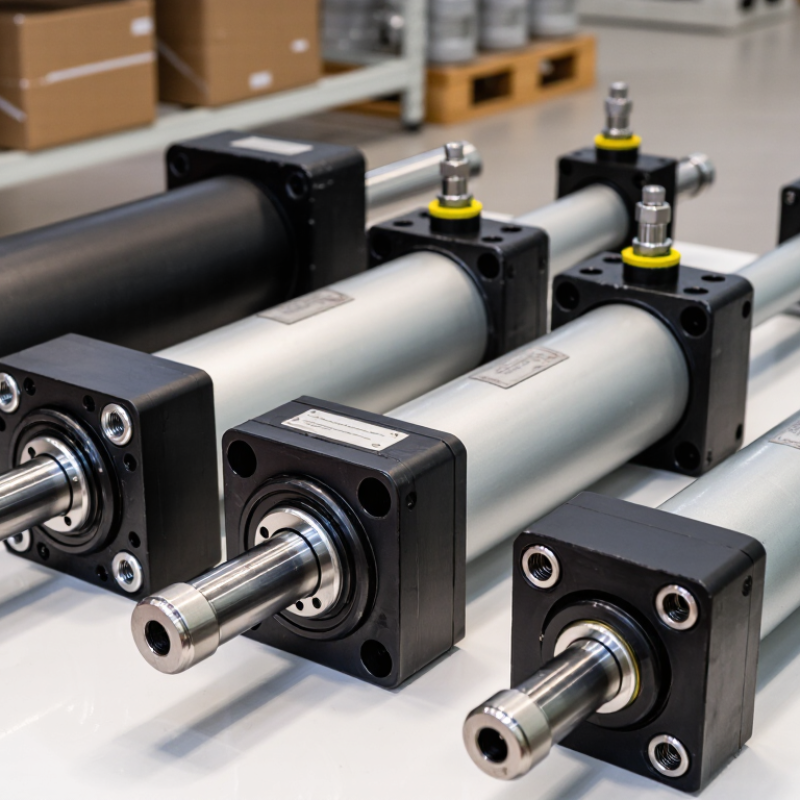
Lifting cylinders turn hydraulic pressure into straight-line force, raising or positioning heavy equipment with controlled movement. They are common in vehicle lifts, agricultural machinery, material-handling systems, and maintenance platforms. A cylinder’s bore, stroke, operating pressure, and mounting points all affect how it performs. For example, a long-stroke cylinder may suit a raised platform, while a compact unit can fit beneath a machine bed.
The application matters. On a workshop lift, cylinders must move evenly and keep the platform stable; suitable valves and mechanical supports may help manage load-holding risks. In a loader, changing loads and rough ground place different demands on the assembly. Small details matter. Hose routing, pin wear, contamination, and side loading can shorten service life or cause erratic movement. A practical inspection should check for leaks, damaged seals, unusual noise, and uneven travel. Capacity figures alone do not tell the whole story. Real installations can be awkward, and specifications may not reflect every contact point or operating condition. That gap deserves careful review.
A lifting cylinder supplier should prove more than machining capacity. Ask how engineers translate load, stroke, mounting geometry, duty cycle, and side load into a verified design. Grand View Research’s 2024 hydraulic-cylinder market report valued the global market at about US$14.4 billion in 2023, underscoring the scale of demand and the need for consistent quality. Market growth alone says nothing about a supplier’s reliability. Request material certificates, dimensional inspection records, pressure-test procedures, and clear traceability for each production batch. Small details matter.
Check how the supplier tests seals, rods, and welds under conditions close to your machine’s real duty cycle. Ask for test limits and acceptance criteria, not just a pass certificate. ISO 6020 and ISO 6022 provide relevant dimensional standards for certain hydraulic cylinders, but they do not replace application-specific validation. Review lead-time history, spare-part support, and the process for handling design changes. A capable supplier should explain failure risks plainly and respond with measurable corrective actions. Paperwork can still mislead. No checklist catches every failure, so pilot units and field feedback deserve a place in the purchasing decision.
| Capability to Assess | What to Verify | Useful Evidence | Why It Matters to Buyers |
|---|---|---|---|
| Application and load engineering | Ability to review load, stroke, mounting arrangement, operating pressure, speed, duty cycle, and side-load risks before recommending a design. | Documented sizing calculations, application questionnaire, and clearly stated design assumptions. | Correct sizing and mounting help reduce premature wear, instability, and failures caused by unsuitable operating conditions. |
| Design range and customization | Available bore and rod sizes, stroke lengths, end fittings, ports, cushions, sensors, and material or coating options. | Current technical datasheets, dimensional drawings, and a defined process for reviewing custom requirements. | Helps buyers match cylinders to equipment layouts and application-specific environmental or performance needs. |
| Standards and interface compatibility | Whether designs follow relevant dimensional or application standards where required, and whether interfaces match the buyer’s equipment. | Drawings identifying dimensions and tolerances; references to applicable standards, such as ISO 6020 or ISO 6022 for certain hydraulic cylinder dimensions. | Standardized dimensions can simplify replacement and integration, but the exact standard and configuration should be confirmed for each order. |
| Materials and corrosion protection | Tube, rod, seal, and fastener materials; rod surface treatment; and suitability for moisture, dust, chemicals, or outdoor exposure. | Material specifications, coating details, and application-specific corrosion or environmental recommendations. | Material and surface choices affect wear, corrosion resistance, service life, and maintenance requirements. |
| Manufacturing and quality control | Control of machining, welding where applicable, assembly, cleanliness, traceability, and inspection at defined production stages. | Quality procedures, inspection records, traceability information, and independently verifiable quality-system certificates when claimed. | Consistent production controls support repeatability and make quality issues easier to investigate. |
| Testing and documentation | Whether each cylinder is inspected and tested against agreed drawings and specifications, including pressure testing when required by the design. | Test reports, inspection criteria, serial or batch identification, and operating and maintenance documentation. | Clear acceptance criteria and records support incoming inspection, commissioning, and future maintenance. |
| Seals and fluid compatibility | Seal material suitability for the hydraulic fluid, temperature range, pressure, speed, and expected contamination conditions. | Seal and fluid compatibility guidance, temperature limits, and recommended filtration or maintenance conditions. | Incompatible fluids or operating conditions can cause seal damage, leakage, and reduced cylinder performance. |
| Delivery and global support | Production lead-time commitments, export packaging, shipping options, spare-parts availability, and technical support across time zones. | Written lead-time terms, packaging specifications, export documents, spare-parts lists, and support response procedures. | Reliable logistics and accessible support help reduce procurement delays and equipment downtime. |
| Warranty and lifecycle service | Warranty scope, exclusions, claim process, repair options, replacement-part support, and recommended service intervals. | Written warranty terms, service instructions, parts identification, and a documented process for handling nonconforming products. | Transparent after-sales arrangements help buyers plan maintenance and understand ownership costs. |
Major Types of Lifting Cylinder Suppliers Worldwide
Lifting-cylinder suppliers generally fall into three groups: cylinder manufacturers, hydraulic-system integrators, and regional distributors. Manufacturers build standard or custom cylinders, often offering bore, stroke, mounting, and pressure options. Integrators pair cylinders with pumps, valves, hoses, and controls. Distributors focus on local stock, replacement parts, and service access. Each serves a different need. A stocked cylinder may arrive quickly, but its seals or mounting points may not suit a demanding duty cycle.
Market context matters. Grand View Research estimated the global hydraulic-cylinder market at USD 14.67 billion in 2023 and forecast a 4.9% compound annual growth rate from 2024 to 2030. This broad market figure is not specific to lifting cylinders, but it signals sustained demand across equipment sectors. When comparing suppliers, check rated pressure, load guidance, test records, seal compatibility, and repair support. Ask how the supplier verifies performance under repeated lifting cycles. A polished catalog is not enough.
Tips: Share the load, stroke, operating pressure, and mounting dimensions before requesting a quote. Ask for drawings and inspection documents. Small omissions can cause delays.
A qualitative comparison of typical customization emphasis by supplier type.
Scale: 1 = lower typical emphasis, 5 = higher typical emphasis. Scores are indicative, not market-share data; actual capabilities vary by supplier and region.
Global buyers can compare lifting cylinder suppliers by matching technical details to the actual machine, not just comparing prices. Share the required load, stroke, operating pressure, mounting points, and duty cycle. A cylinder that looks suitable on paper may not fit the available space or repeated-use demands. Small details matter. Ask for dimensioned drawings and confirm port positions, pin sizes, and retracted length before approving a quotation.
Review how each supplier verifies performance. Request relevant test records, material specifications, and clear information about seals, coatings, and inspection steps. Check whether quoted tolerances and test conditions match your application; vague claims are difficult to compare. Also assess communication: do answers address the drawing, or repeat a standard sales message? Lead time, packaging, spare-part availability, and warranty terms affect the real purchase cost. A spreadsheet helps, but it can hide important differences. I would leave room for uncertainty, especially when comparing test methods or service support across regions. Ask practical questions, record the replies, and make sure the final specification reflects the conditions the cylinder will actually face.
A reliable lifting cylinder supplier should provide evidence, not just a polished catalogue. Request dimensional inspection results, pressure-test records, and material traceability for the cylinder barrel and rod. Check rod coating, weld quality, and seal compatibility against your operating fluid and temperature range. Ask how defects are recorded and corrected. Keep records.
Compliance depends on the cylinder’s destination and application. Confirm which standards, declarations, labels, and technical documents apply, then check that supplied documents match the exact model and configuration. A certificate alone does not prove suitability for your machine. Compare drawings and rated pressures with your system requirements, and clarify any differences before ordering.
After-sales support matters when a machine is idle. Ask for written warranty terms, typical response times, troubleshooting guidance, and availability of seals or other service parts. A practical supplier can explain how to identify a leak, what measurements to collect, and when a cylinder needs inspection. Test the support process before purchase with a specific technical question. Some details will still be uncertain until installation; plan for that, and make acceptance checks part of commissioning.
To learn more about any of the products and services provided by Abbott Ball Company, Inc., simply complete the form below.