
Choosing among the top Ftta Cable manufacturers requires more than comparing prices. Global buyers need evidence of performance, field experience, and supply reliability. Ericsson’s November 2024 Mobility Report estimated 2.3 billion global 5G subscriptions by the end of 2024. That growth increases pressure on antenna links, especially across dense urban rooftops, stadiums, tunnels, and remote sites. Every cable matters there. A failed connector can silence an entire radio sector.
Industry educator Jim Hayes, president of the Fiber Optic Association, has stated, “Fiber optics is the technology of using light to transmit information.” His point remains practical. A strong Ftta Cable must carry that information through heat, rain, vibration, and repeated installation work. Buyers should examine insertion loss, return loss, bend radius, jacket materials, connector sealing, and hybrid-power options. They should also verify factory testing and traceable quality records.
This guide reviews manufacturers serving international projects, not merely catalog claims. The best suppliers usually provide tested assemblies, clear drawings, installation training, and responsive technical support. Dell’Oro Group’s wireless infrastructure research continues to show sustained investment in 5G network expansion, but market growth does not guarantee equal product quality. That assumption deserves caution. Some specifications look impressive on paper, yet field performance may depend on workmanship and local conditions. A reliable comparison must consider total lifecycle cost, replacement access, delivery consistency, and documented experience with demanding FTTA deployments.
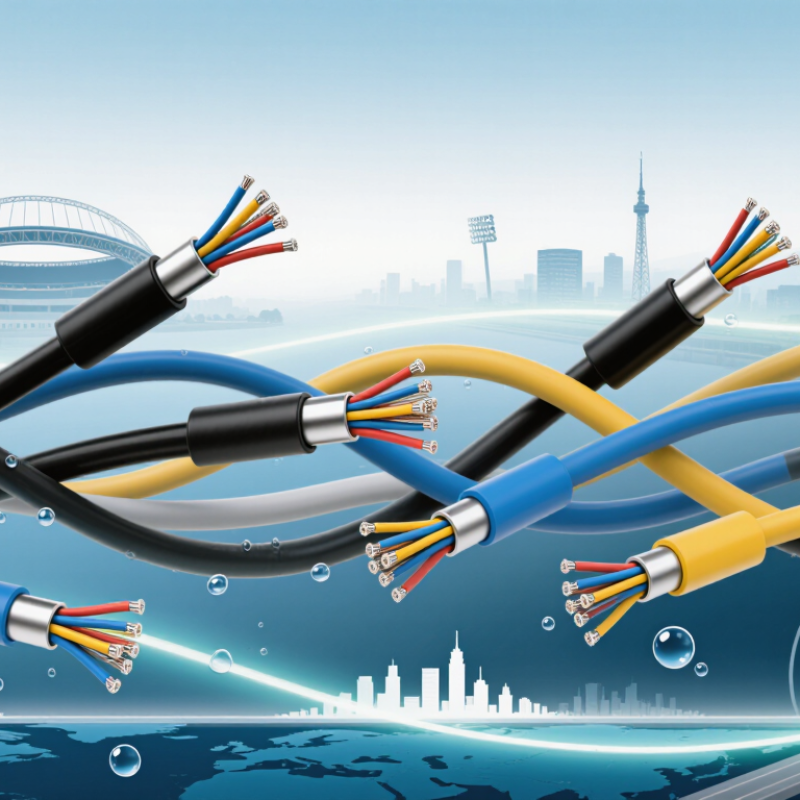
FTTA cable, or Fiber to the Antenna cable, connects remote radio units with baseband equipment in outdoor wireless networks. It commonly combines optical fibers, power conductors, and protective elements in one rugged assembly. This design reduces tower congestion and simplifies installation. In field work, cable weight matters more than many planning documents suggest. A heavy reel can slow a small crew quickly.
Performance starts with stable optical transmission. Low insertion loss, controlled return loss, and low polarization sensitivity support reliable signal delivery. The cable should also resist crushing, moisture, ultraviolet exposure, and temperature changes. Outdoor routes are rarely perfect. Wind moves them, and installers sometimes pull harder than intended. Adequate tensile strength, bend tolerance, and a clear minimum bend radius are essential.
The connectors deserve equal attention. Sealed interfaces help maintain protection against rain, dust, and condensation, while secure locking prevents movement on a vibrating tower. Hybrid designs need correctly rated power conductors and dependable grounding practices. Testing should include optical loss, continuity, insulation, and visual connector inspection before deployment. Small contamination can create large service problems. I have seen installation teams focus on fiber testing but overlook cable strain near the antenna. That weak point may not fail immediately. It can become expensive months later. Requirements also vary by climate and network design, so a standard specification should be reviewed rather than copied blindly.
| Evaluation Dimension | FTTA Cable Basics | Key Performance Requirements | Global Buyer Verification Points |
|---|---|---|---|
| Cable Construction | Fiber-to-the-antenna cables connect remote radio units, antennas, and outdoor base-station equipment. | The construction should match the installation method, connector arrangement, mechanical loading, and environmental exposure of the wireless site. | Confirm cable structure, outer diameter, weight, connector orientation, and compatibility with the radio and antenna interfaces. |
| Cable Architecture | Common configurations include duplex fiber cables, multi-fiber cables, hybrid power-and-fiber cables, and pre-terminated assemblies. | The number of optical fibers, power conductors, shielding elements, and breakout legs should support the intended radio deployment. | Request a cross-sectional drawing, fiber-count schedule, conductor details, and a complete assembly bill of materials. |
| Optical Fiber Type | Single-mode fiber is widely used for mobile access networks and long-distance links. | G.652.D fiber is suitable for general single-mode transmission; G.657.A1 or G.657.A2 fiber provides improved bend performance where routing space is limited. | Verify the fiber designation, attenuation data, cutoff wavelength, mode-field characteristics, and applicable optical-fiber standard. |
| Insertion Loss | Insertion loss indicates the optical power lost through connectors, splices, and the completed cable assembly. | Lower loss improves the available link budget. Acceptance limits should be defined for the complete assembly and tested at the required wavelength. | Specify maximum loss per connector pair and require test results at 1310 nm and 1550 nm, or at the wavelengths used by the network. |
| Return Loss | Return loss measures the amount of reflected optical power from connectors and other discontinuities. | Higher return loss generally indicates better connector mating and end-face quality, particularly for sensitive optical links. | Define the minimum return-loss value and request interferometer and optical test records for representative assemblies. |
| Bend Performance | FTTA routing often includes tight vertical runs, tower brackets, cabinets, and antenna entry points. | The cable must maintain optical performance after installation bends and repeated handling. The minimum bend radius depends on cable design and loading condition. | Confirm dynamic and static bend-radius values and verify attenuation after bend, flex, and torsion testing. |
| Mechanical Strength | Outdoor cables can experience pulling tension, wind-induced movement, vibration, crushing, and impact. | The design should include suitable strength members and specify tensile, crush, impact, and torsion performance without unacceptable optical degradation. | Review rated tensile load, short-term and long-term loading limits, crush resistance, and mechanical test methods. |
| Environmental Protection | FTTA assemblies are commonly exposed to rain, humidity, ultraviolet radiation, dust, temperature cycling, and icing conditions. | Outdoor-rated jackets, sealed interfaces, water-blocking features, and corrosion-resistant materials are required for exposed installations. | Confirm outdoor suitability, UV resistance, water penetration testing, salt-mist performance where applicable, and material compatibility. |
| Ingress Protection | Connectorized interfaces may require protection against dust and water during permanent outdoor service. | The specified IP rating applies to the complete mated interface or enclosure and should be evaluated under the intended installation conditions. | Check the applicable IEC 60529 IP rating, mating requirements, protective caps, sealing components, and test evidence. |
| Temperature Range | Base-station sites may experience substantial seasonal and daily temperature changes. | The operating and storage ranges should cover the project climate. Common outdoor designs are specified around a range near −40 °C to +70 °C, subject to the product design. | Separate operating, installation, and storage temperatures and request temperature-cycling test data. |
| Connector Compatibility | FTTA assemblies may use duplex, multi-fiber, ruggedized, or equipment-specific outdoor connector interfaces. | Connector keying, gender, polarity, fiber count, latch design, sealing, and mating cycles must match the radio and antenna equipment. | Provide interface drawings and confirm connector part specifications, polarity method, dust protection, and field-replacement procedure. |
| Connector End-Face Quality | Contamination or scratches on optical end faces can increase loss and reflection. | End-face geometry and cleanliness should comply with the relevant connector and fiber-connection requirements before shipment and installation. | Require inspection and cleaning instructions, end-face inspection records, and protective caps for all shipped connectors. |
| Flame and Jacket Properties | Cable jackets must suit the route, building-entry conditions, tower installation, and local fire regulations. | Material selection may include low-smoke, halogen-free, flame-retardant, UV-resistant, or thermoplastic elastomer options, depending on the application. | Specify jacket material, flame classification, smoke and halogen requirements, oil resistance, and local regulatory approvals. |
| Hybrid Cable Power Section | Hybrid FTTA cables combine optical fibers with copper conductors for selected remote-radio power architectures. | Conductor size, voltage rating, current capacity, temperature rise, insulation, shielding, and separation from the optical elements must be suitable for the power system. | Verify conductor cross-sectional area, voltage and current ratings, voltage drop, grounding method, and applicable electrical certifications. |
| Standards and Compliance | International projects require documented conformity to applicable optical, mechanical, environmental, and material requirements. | Relevant references may include IEC 60794 for optical-fiber cables, IEC 61754 for fiber-optic connector interfaces, IEC 60529 for ingress protection, and RoHS or REACH obligations where applicable. | Ask for declarations of conformity, material declarations, test reports, quality certificates, and country-specific compliance documents. |
| Testing and Quality Control | Pre-terminated assemblies should be tested before shipment because field repair and tower access can be costly. | Typical quality checks include continuity, polarity, insertion loss, return loss, geometry, dimensional inspection, tensile testing, and environmental validation. | Define factory acceptance criteria, sampling plan, calibration requirements, serial-number traceability, and required inspection reports. |
| Customization Capability | Wireless projects can require different lengths, breakout layouts, connector combinations, labels, and packaging formats. | A suitable supplier should control drawings, connector assembly processes, polarity configurations, bend protection, and engineering-change management. | Evaluate drawing approval workflow, sample-prototype capability, minimum order quantities, lead times, and change-control procedures. |
| Installation and Maintenance | Fast installation reduces tower time, while clear identification simplifies troubleshooting and replacement. | The assembly should include durable labeling, polarity identification, bend protection, pull-eye options where needed, and installation instructions. | Check label durability, reel or carton protection, connector caps, cable-length tolerance, field cleaning tools, and replacement availability. |
| Supply and Logistics | Global buyers need predictable delivery, consistent configuration, and packaging suitable for international transport. | Packaging should protect connectors and maintain cable bend limits. Production capacity should support repeat orders with consistent specifications. | Review production lead time, export packaging, shipping documentation, lot traceability, warranty terms, and after-sales support. |
| Total Cost of Ownership | The lowest purchase price may not provide the lowest installed cost. | Total cost includes cable, connectors, installation labor, tower access, testing, replacement risk, maintenance, and expected service life. | Compare complete assembly cost, installation time, failure rate, warranty coverage, spare strategy, and long-term compatibility. |