
Choosing the right tent manufacturer can shape product quality, delivery performance, and customer trust. This guide, “China Top 10 Outdoor Tent Manufacturers for Global Buyers,” introduces suppliers with practical experience in international production. It focuses on factories serving camping brands, distributors, event companies, and outdoor retailers.
A reliable manufacturer should offer more than attractive catalog photos. Buyers need to examine fabric specifications, seam construction, waterproof testing, frame strength, and packing methods. Factory visits, production samples, and third-party inspection reports can reveal details that online listings hide. A useful supplier should explain material choices clearly, from 210D Oxford fabric to aluminum poles and fire-retardant treatments. Communication matters too. Delayed replies often become delayed shipments.
This guide also considers production capacity, minimum order quantities, customization support, export experience, and after-sales service. Some manufacturers perform well with large seasonal orders but struggle with small trial runs. Others provide excellent samples but lack stable quality control during mass production. That difference deserves attention. Outdoor Tt buyers should compare written specifications, sample results, lead times, and compliance documents before signing a contract. Prices alone can mislead.
The listed companies are not presented as perfect choices for every project. Each has strengths, limitations, and possible areas for improvement. Buyers should verify current certifications, factory ownership, testing records, and shipping terms independently. Careful evaluation creates fewer surprises when containers leave China and arrive at warehouses worldwide.
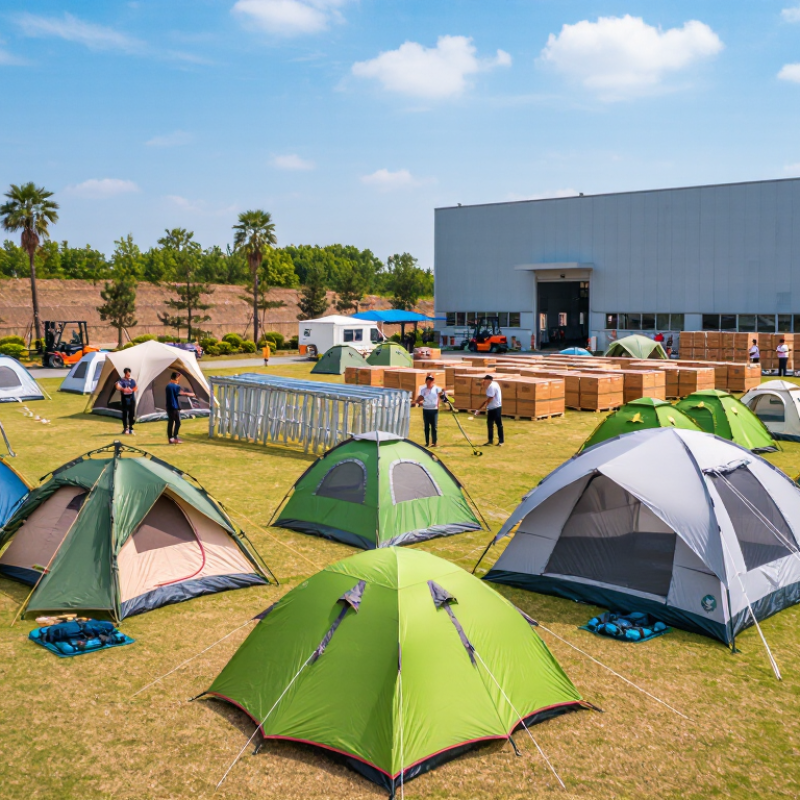
China Top 10 Outdoor Tent Manufacturers for Global Buyers
Evaluating China’s outdoor tent industry requires more than comparing factory prices. Grand View Research valued the global camping equipment market at about USD 22.9 billion in 2023. It also forecast continued growth through 2030. This demand attracts capable suppliers, but quality varies sharply between factories. A serious buyer should check production history, export records, material traceability, and monthly capacity. Factory visits remain useful. Photographs are not enough.
Material testing should come before negotiation. Ask for fabric weight, waterproof ratings, seam strength, UV resistance, and flame-retardant documentation where applicable. ISO 811 testing can verify hydrostatic pressure performance. EN ISO 5912 provides useful guidance for camping tent safety and performance. Independent laboratory reports are stronger than internal claims. Examine raw fabric rolls, welded seams, zippers, and packed samples. Small defects often appear at these points.
Cost analysis also needs discipline. Request a detailed quotation covering fabric, poles, packaging, tooling, inspections, and shipping terms. China’s manufacturing advantage often comes from integrated supply chains, not simply low labor costs. Still, the cheapest offer may hide thinner fabric or weaker poles. I have seen samples perform well while mass production differed. That risk deserves a written inspection plan, clear tolerances, and retained reference samples. Supplier rankings should be reviewed annually, because capacity, management, and compliance can change. Industry data offers direction, not certainty.
China’s top outdoor tent manufacturers offer more than large production capacity. They combine fabric selection, structural design, sampling, and quality control under one supply chain. Experienced factories understand how polyester coatings behave after repeated folding, rain exposure, and ultraviolet light. They can recommend suitable fabric weights, seam tapes, poles, zippers, and groundsheet materials for different markets. Small details matter.
Their engineering teams often develop digital patterns and full-size prototypes before mass production. They test waterproof performance, seam strength, wind resistance, and packing dimensions. Some facilities use rain rooms, tensile machines, and controlled aging equipment. These tests provide useful evidence, but buyers should request recent reports and sample results. A factory’s claim is not the same as verified performance.
Customization is another key capability. Manufacturers can adjust entrances, ventilation panels, windows, storage pockets, logos, colors, and carton packaging. They may also support different order volumes and mixed specifications. Reliable suppliers provide clear bills of materials, inspection checkpoints, and production photographs. Communication can still fail when drawings lack measurements or fabric codes. Careful buyers should approve a physical sample and review tolerances before production. Even strong factories sometimes miss a stitch or misread a revised file. Independent inspection remains sensible for large orders.
China’s Top 10 Outdoor Tent Manufacturers for Global Buyers deserve careful comparison, not quick online ranking. Experienced buyers inspect fabric weight, seam construction, pole strength, and factory capacity. A reliable supplier should provide clear product specifications, sample approval, and consistent quality records. Ask for test reports when weather resistance matters. Some manufacturers focus on family camping tents, while others produce trekking, rooftop, or event shelters.
Factory visits can reveal practical details that photos hide. Check cutting areas, stitching lines, waterproof testing, and warehouse conditions. Request a production sample before confirming a large order. Compare minimum order quantities, packaging methods, lead times, and communication speed. A capable export team should explain material changes without vague promises. Still, a polished factory may make mistakes. One sample cannot prove every shipment will match it.
Tips: Send drawings with exact dimensions, fabric requirements, color references, and hardware details. Ask how the factory handles failed inspections or delayed materials. Confirm carton size and loading efficiency before production. Keep written approval records for every change. Buyers should also review payment terms and shipping responsibilities carefully. A lower quote can hide thinner fabric, weaker zippers, or higher replacement costs. Personally, I would test one tent in heavy rain and strong wind before expanding the order. This step costs time, but skipping it often creates bigger problems.
China’s leading outdoor tent manufacturers serve several product categories for global buyers. Common options include backpacking tents, family shelters, rooftop tents, glamping structures, and event canopies. Each category needs different engineering. A lightweight trekking tent may use 20D ripstop fabric, while a family shelter may require stronger poles and wider entrances. According to the 2024 Outdoor Participation Trends Report, 175.8 million Americans participated in outdoor recreation in 2023. This broad demand encourages suppliers to develop more specialized designs.
Customization usually begins with fabric weight, waterproof ratings, pole materials, ventilation, floor shape, and color matching. Buyers can also request private labels, printed panels, custom carry bags, instruction sheets, and retail-ready packaging. Grand View Research’s camping equipment market analysis reports continued market growth through 2030, supporting demand for flexible product development and shorter design cycles. However, technical specifications can be misunderstood. A high hydrostatic-head rating does not guarantee comfort during heavy wind or poor installation.
Experienced buyers should request prototypes, fabric certificates, seam-tape tests, and inspection records before mass production. Factory audits can examine stitching density, zipper performance, carton strength, and moisture control during storage. Small details matter. I have seen attractive samples fail because ventilation was insufficient in humid campsites. Customization also raises minimum order quantities and may increase tooling costs. Buyers should compare performance, documentation, sampling speed, and after-sales communication, not only the quoted unit price.
Selecting the right tent manufacturer requires more than comparing prices on a Top 10 list. Global buyers should examine factory experience, production capacity, material knowledge, and quality controls. Ask for recent project photos, fabric specifications, seam construction details, and sample approval records. A reliable manufacturer should explain how it tests waterproofing, wind resistance, zippers, poles, and floor durability. Vague answers are warning signs.
Visit the factory when possible, or request a live video inspection. Check cutting areas, sewing lines, storage conditions, and final packing procedures. Confirm the manufacturer’s ability to meet your required quantity, delivery schedule, packaging format, and destination standards. Verify relevant test reports through independent laboratories, not only documents supplied by the seller. A polished catalog can still hide weak seams. Low prices also deserve careful questioning, especially when fabric weight or coating thickness is unclear.
Tips: Compare identical specifications, not just unit prices. Order a production sample before placing a large order. Test it outdoors in rain and strong wind. Keep written records of approved materials, colors, measurements, tolerances, and inspection points. Communication matters. Slow replies may become costly later. I would also allow extra time for corrections, because even experienced factories can miss a detail in the first sample.
| Rank | Anonymous Manufacturer Profile | Primary Tent Category | Recommended Buyer Type | Typical MOQ Range | Common Fabric Options | Customization Capability | Quality-Control Focus | Export-Readiness Checks |
|---|---|---|---|---|---|---|---|---|
| 1 | Profile A | Backpacking and lightweight trekking tents | Outdoor retailers and specialist adventure brands | 300–1,000 units | Nylon or polyester; PU or silicone coatings | High | Seam sealing, hydrostatic head, pole fit | Material traceability and sample approval |
| 2 | Profile B | Family camping tents | Mass-market importers and camping chains | 500–2,000 units | Polyester; PU coating; mesh panels | Medium to high | Water resistance, ventilation, frame stability | Carton testing and loading-plan control |
| 3 | Profile C | Four-season and alpine tents | Technical gear distributors and expedition suppliers | 200–800 units | Ripstop nylon; high-denier polyester | High | Wind resistance, low-temperature performance, pole strength | Performance-test records and production consistency |
| 4 | Profile D | Glamping and luxury canvas tents | Resorts, hospitality groups and tourism projects | 50–300 units | Cotton canvas, polycotton, PVC flooring | High | Fire-retardant treatment, waterproofing, hardware durability | Installation manuals and project-packaging review |
| 5 | Profile E | Event, exhibition and temporary structures | Event agencies and commercial contractors | 20–200 units | PVC-coated polyester and Oxford fabric | Very high | Structural safety, anchoring, print quality | Engineering drawings and installation support |
| 6 | Profile F | Beach, shade and recreational tents | Lifestyle retailers and seasonal distributors | 500–3,000 units | Polyester, Oxford fabric and UV-resistant mesh | Medium | UV resistance, frame safety, folding performance | Packaging volume and seasonal capacity planning |
| 7 | Profile G | Rooftop and vehicle camping tents | Automotive accessory distributors and overland retailers | 100–500 units | Polyester, polycotton and aluminum components | High | Load rating, ladder strength, waterproof construction | Vehicle-fit documentation and hardware inspection |
| 8 | Profile H | Military, emergency and utility shelters | Government contractors, NGOs and emergency suppliers | 100–1,000 units | Heavy-duty polyester, canvas and PVC-coated fabric | High | Fire performance, rapid deployment, repairability | Tender compliance and inspection documentation |
| 9 | Profile I | Children's and entry-level camping tents | General merchandise retailers and e-commerce sellers | 1,000–5,000 units | Polyester, mesh and fiberglass poles | Medium | Product safety, stitching, odor and packaging | Labeling, barcode and retail-pack compliance |
| 10 | Profile J | Custom OEM and private-label tent programs | Established brands requiring product development support | 300–2,000 units | Buyer-specified technical textiles | Very high | Technical drawings, tolerances and pre-shipment inspection | IP controls, compliance files and production audits |
Note: MOQ figures are typical sourcing benchmarks rather than guaranteed commercial terms. Buyers should verify factory capacity, certifications, material specifications, testing records, lead time, payment terms and pre-shipment inspection results before placing an order.
To learn more about any of the products and services provided by Abbott Ball Company, Inc., simply complete the form below.