
Agricultural machinery works in demanding conditions. Dust, moisture, vibration, and changing loads can all affect bearing performance. An Agricultural Bearing must therefore suit the machine, operating environment, and maintenance schedule. The right choice can support stable operation and reduce avoidable downtime. Small details matter.
This guide introduces notable agricultural bearing manufacturers in China and the factors buyers can use to compare them. It considers product range, application experience, manufacturing capabilities, quality documentation, and technical support. These points offer a practical starting place, not a substitute for checking a supplier’s current specifications. Company offerings can change, and public information may not answer every question.
Before selecting a manufacturer, buyers should confirm dimensions, load requirements, sealing needs, lubrication conditions, and expected service life. Ask for relevant test records and clarify how products are inspected. If a bearing will operate in muddy fields or dusty harvest conditions, those details should shape the discussion. A catalogue alone is not enough. Where possible, compare samples under realistic operating conditions and discuss installation requirements with a qualified engineer. This overview aims to help readers make informed comparisons, rather than declare one supplier best for every application. Some information may still need direct verification. That is worth remembering.
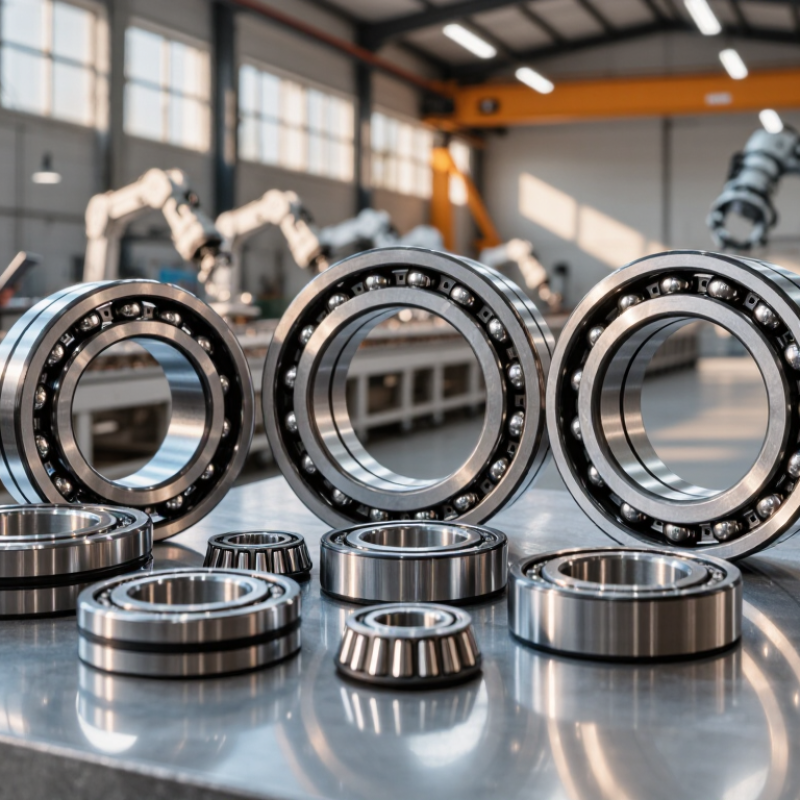
Agricultural bearings turn power into steady motion in tractors, seeders, harvesters, and irrigation pumps. Deep-groove ball bearings suit lighter, faster shafts; tapered roller bearings handle combined radial and axial loads in wheel hubs. Spherical roller bearings tolerate misalignment on heavy tillage equipment, while thrust bearings support axial force. The USDA National Agricultural Statistics Service counted 1,900,487 U.S. farms in its 2022 Census of Agriculture. That varied operating scale means bearing duty can differ sharply between machines and regions.
Field conditions are unforgiving. Fine soil dust can enter seals, water can thin or contaminate grease, and stones create sudden shock loads. Dust gets everywhere. Slow, heavily loaded pivots need different choices from fast seed-meter shafts. ISO 281 defines basic bearing rating life at 90% reliability, but that calculation assumes stated loads and operating conditions. It cannot fully capture poor lubrication, impact, or misalignment. A catalog rating alone rarely tells the whole story. Check actual speed, load, sealing, relubrication access, and temperature; inspect for pitting, discoloration, and rough rotation. One detail is easy to miss: correct installation matters, too.
The chart applies the ISO 281 basic rating life relationship, L10 = (C/P)p, where C/P is the ratio of basic dynamic load rating to equivalent dynamic bearing load. It shows calculated life in millions of revolutions: p = 3 for ball bearings and p = 10/3 for roller bearings. These are theoretical values at 90% reliability under the equation’s assumptions, not field-life predictions; contamination, moisture, shock loads, lubrication, and maintenance can significantly affect agricultural bearing service life.
China’s agricultural bearing industry is organized within a much larger manufacturing network. The China Bearing Industry Association reported 231.2 billion yuan in sector revenue and 28.1 billion bearing units produced in 2023. These figures cover the whole bearing industry, not agriculture alone. That distinction matters. Agricultural products are supplied by large integrated manufacturers and smaller specialists, supported by steel, forging, heat-treatment, sealing, and precision-machining suppliers.
Manufacturers usually sell through equipment makers, component distributors, and replacement-parts channels. Integrated producers can coordinate machining, assembly, and testing under one roof. Specialist factories may focus on particular sizes, seals, or operating conditions. For farm equipment, those details matter: a bearing near a muddy wheel hub faces water, dust, impact, and long periods of seasonal storage. Yet company size alone does not prove suitability. The industry map is useful, but it is not the whole picture.
Tips: Ask for load ratings, sealing details, and batch traceability. Check how the bearing handles moisture and shock, not just its dimensions. Request test records for the intended application. A catalogue can look convincing; field conditions are less tidy.
Top Agricultural Bearing Manufacturers in China
Leading agricultural bearing manufacturers in China serve equipment makers that need dependable parts for tractors, harvesters, seeders, and irrigation systems. The market is shaped by real operating conditions: dust, moisture, vibration, and long hours during planting and harvest. China’s Ministry of Agriculture and Rural Affairs reported a 73% mechanization rate for crop ploughing, planting, and harvesting in 2022. That figure signals broad demand for durable agricultural machinery components, though it does not measure bearing demand directly. A useful comparison starts with application fit, material quality, sealing design, and documented testing—not factory size alone.
ISO 281 sets methods for calculating bearing dynamic load ratings and rating life. Buyers can use those principles to ask manufacturers for load data, tolerance records, and life-test conditions. Ask how a sealed bearing performs when exposed to fine soil or repeated washing. Request traceable inspection records, too. A polished sample is not enough. Supplier claims can sound precise, yet field conditions vary; that deserves a second look. Lead times, batch consistency, and technical support matter just as much as catalogue specifications.
Tips: Match the bearing to the shaft, load, speed, and exposure. Check seals and lubrication plans. Ask for test records from the same product series, then verify fit with a small trial batch.
| Bearing Type | Common Designation Families | Typical Agricultural Applications | Load Characteristics | Common Sealing Options | Key Selection Considerations |
|---|---|---|---|---|---|
| Deep-Groove Ball Bearing | 6000, 6200 and 6300 series | Electric motors, pumps, fans and auxiliary equipment on agricultural machinery | Primarily radial loads; can also accommodate moderate axial loads in both directions | Open, shielded or contact-sealed designs, depending on the application | Check shaft and housing fits, speed requirements, contamination exposure and available space. |
| Tapered Roller Bearing | 30200 and 30300 series | Wheel hubs, axles and other assemblies subject to combined loading | Supports radial and axial loads; axial capacity depends on bearing arrangement and adjustment | Often used in a hub assembly with separate seals; configurations vary by application | Consider paired-bearing arrangement, preload or endplay setting, lubrication and sealing. |
| Spherical Roller Bearing | 22200 and 22300 series | Harvester, conveyor and other machinery shafts exposed to heavy loads or shaft misalignment | Designed for heavy radial loads and can accommodate axial loads in both directions | Usually installed in a housing with external seals; sealed bearing variants are also available | Evaluate misalignment, impact loading, mounting method, lubrication and housing condition. |
| Mounted Insert Ball Bearing | UC insert and related mounted-unit types | Conveyors, processing equipment and agricultural machinery shafts supported by bearing housings | Generally suited to radial loads with some allowance for shaft misalignment, depending on design | Commonly supplied with shields or seals; housing arrangements may add further protection | Match the insert to its housing, shaft diameter, locking method and expected contamination level. |
| Needle Roller Bearing | Needle roller and drawn-cup designs | Compact gearboxes, transmissions and linkages where radial space is limited | Provides high radial load capacity relative to its small cross-section; axial support usually requires separate components | Open or sealed versions are available, depending on bearing design | Check raceway hardness and finish, lubrication supply, alignment and whether a separate axial bearing is needed. |
| Thrust Ball Bearing | Single-direction and double-direction designs | Low- to moderate-speed mechanisms with an identifiable axial load path | Primarily carries axial loads; is not intended to support substantial radial loads | Typically relies on the surrounding assembly for contamination protection | Confirm load direction, speed, washer support and whether radial guidance is provided separately. |
| Flanged or Pillow-Block Bearing Unit | Mounted bearing units in common insert-bearing configurations | Disc harrows, seeders, balers, conveyors and other supported rotating shafts | Load capacity depends on the insert, housing, mounting and operating conditions | Often combines bearing seals with protective features on the mounted unit | Review bolt pattern, housing material, shaft locking, relubrication access and exposure to dust or moisture. |
Note: Designation families and features shown are general examples, not specifications for a particular product. Bearing dimensions, load ratings, sealing arrangements and operating limits vary by design; confirm them against the relevant technical data sheet and application requirements.
Chinese agricultural bearing manufacturers differ in product range, production depth, and target markets. Some focus on deep-groove ball bearings for electric motors and smaller farm equipment. Others offer tapered or spherical roller bearings for larger loads, such as those found in tractors and harvesting machines. Product fit matters. A bearing exposed to dust, moisture, vibration, and washdown needs suitable sealing and lubrication, not just the right dimensions.
Manufacturing capability is another useful comparison point. Buyers can ask about heat treatment, grinding accuracy, material traceability, and inspection records. These details affect consistency across repeat orders. Ask how samples are tested, too. A polished catalog is not a quality report. Some suppliers support custom dimensions or seals, while others mainly serve standard-size demand. Production flexibility can be valuable, though it may add lead time.
Markets also shape what manufacturers prioritize. Domestic suppliers may understand common equipment requirements, while export-focused factories may be more accustomed to varied specifications and shipping needs. Verify claims with drawings, test data, and sample parts. One limitation is that public product information rarely reveals how a factory handles defects or urgent orders. That deserves a direct question. Prices can look comparable, yet packaging, service support, and batch consistency may differ. No comparison is perfect.
An agricultural bearing faces dust, water, shock loads, and long hours between service stops. A clean laboratory result may not predict life in a muddy field. The FAO Statistical Yearbook 2023 reports about 4.78 billion hectares of agricultural land worldwide in 2021, reflecting widely varied operating conditions. Suppliers should explain how bearing designs address the buyer’s actual crop, machine speed, load, and maintenance interval. Generic claims are weak evidence.
Check technical documents, not just catalogue dimensions. ISO 281 defines methods for calculating bearing rating life, while ISO 492 specifies dimensional tolerances. Ask suppliers for load ratings, steel and heat-treatment details, sealing options, and test conditions. Request inspection records for sample and production batches. Then compare noise, vibration, runout, and fit against the machine’s requirements. A polished catalogue is not proof. Neither is one successful sample.
After-sales support matters when a bearing fails during harvest. Check whether the supplier can trace batches, investigate failure photos, and provide replacement lead times. Ask for references involving similar equipment and dusty or wet conditions. One practical test is simple: request a written explanation of how the supplier controls lubricant cleanliness. Vague answers deserve follow-up. Paperwork helps, but field results can still differ.
To learn more about any of the products and services provided by Abbott Ball Company, Inc., simply complete the form below.