
Choosing a reliable Galvanized Steel Plate Supplier requires more than comparing prices or browsing polished websites. Buyers must examine coating mass, steel grade, dimensional tolerance, production capacity, traceability, and delivery performance. A bright surface can still conceal uneven zinc coverage. That detail matters.
The global scale is substantial. World Steel Association data reports approximately 1,882.6 million tonnes of crude steel production in 2024. The International Zinc Association also identifies galvanizing as zinc’s largest application, reflecting its importance in corrosion protection. These figures explain why supplier selection affects construction, automotive, infrastructure, and manufacturing projects worldwide. Yet global production does not guarantee consistent quality.
Edwin Basson, Director General of worldsteel, has described steel as “a vital material for modern life.” His statement highlights steel’s practical importance, but it should not end the discussion. A supplier must connect material science with dependable execution. ISO 1461 compliance, mill certificates, independent inspection, and documented quality controls offer stronger evidence than marketing language. However, standards alone may not reveal packaging damage, delayed vessels, or poor after-sales communication.
This guide reviews ten leading suppliers through a practical lens. It considers geographic coverage, product range, certification practices, manufacturing experience, and customer support. The ranking is not perfect. Public information can be incomplete, and regional performance may differ. Buyers should still request current test reports, coating measurements, sample approvals, and references before signing contracts. In a real project, the best supplier is not always the largest. It is the one that delivers the specified plate consistently, safely, and transparently.
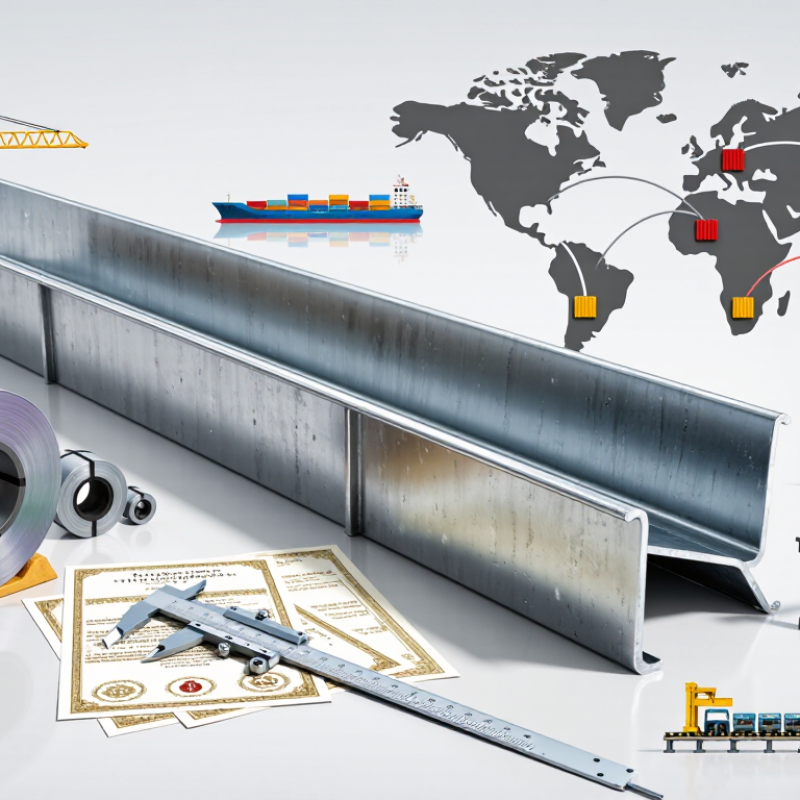
Galvanized steel plate is carbon steel protected by a zinc coating. The zinc acts as a physical barrier and provides sacrificial corrosion protection. When exposed steel is scratched, zinc corrodes first and delays rust formation. The World Steel Association reported global crude steel production of about 1.89 billion tonnes in 2023. That scale explains galvanized plate’s importance in construction, transport, roofing, and industrial equipment.
Hot-dip galvanizing follows several controlled steps. The plate is degreased, pickled in acid, rinsed, and treated with flux. It then enters molten zinc at roughly 450°C. Iron and zinc react, creating tightly bonded alloy layers beneath the outer zinc surface. Cooling and inspection follow. Electrogalvanizing uses an electrical current instead, producing a thinner and more uniform coating for selected applications. The coating designation, thickness, surface finish, and steel grade should match the project requirement.
Corrosion protection still depends on design quality. Water trapped between overlapping plates can shorten service life, even with a strong coating. A thicker coating is not automatically better. According to the NACE IMPACT study, corrosion can cost economies 3% to 4% of gross domestic product. I would not treat a supplier’s brochure as proof. Buyers should request coating test results, dimensional records, and compliance with ASTM A653/A653M or an equivalent standard. Small details matter.
How the Top 10 Global Suppliers Are Selected
Selecting the top ten galvanized steel plate suppliers requires more than comparing annual output. The World Steel Association reported approximately 1.88 billion tonnes of global crude steel production in 2024. That figure shows market scale, but it does not prove galvanized plate capability. Our assessment separates crude steel volume from finished-product performance. We examine verified production capacity, coating range, plate thickness, zinc-layer consistency, and export coverage.
Technical evidence carries greater weight. Suppliers should demonstrate compliance with recognized standards, such as ISO 1461 or ASTM A123, where applicable. Independent mill certificates, batch traceability, and coating-thickness test records support reliability. The OECD’s steel market studies also highlight persistent global overcapacity concerns. Therefore, capacity alone cannot define leadership. A large facility may still deliver uneven coating quality or slow replacement service.
Delivery performance matters on a real project. We review port access, standard lead times, packaging practices, and claims handling. Industry data from UN Comtrade can help compare export activity, although trade codes may combine different steel products. That limitation deserves attention. Public figures are not perfectly comparable. Some suppliers disclose energy intensity and emissions; others provide only broad statements. We score transparent reporting higher, while checking claims against audits, certifications, and customer evidence. Site experience still matters. A clean sample may hide inconsistent production.
| Rank | Selection Criterion | Weight | Key Data to Verify | Recommended Evidence | Reason for Inclusion |
|---|---|---|---|---|---|
| 1 | Production Capacity | 18% | Verified annual galvanized steel output, rolling capacity, and available export volume. | Audited annual reports, mill certificates, and production disclosures. | Large and stable capacity supports continuity for international buyers. |
| 2 | Product Standards | 15% | Compliance with recognized specifications such as ASTM A653/A653M, EN 10346, JIS G3302, and equivalent national standards. | Current certificates of conformity, technical datasheets, and third-party test reports. | Standards compliance determines whether the material is suitable for the intended application and market. |
| 3 | Zinc-Coating Capability | 14% | Available coating masses, coating designation, surface treatment, and coating uniformity. | Coating-weight test results, inspection records, and product-range documentation. | Coating mass directly affects corrosion resistance and service life. |
| 4 | Dimensional Range | 10% | Available thickness, width, coil or sheet format, flatness, and dimensional tolerances. | Published product range, inspection plans, and sample measurement reports. | A broader dimensional range reduces the need for multiple sourcing channels. |
| 5 | Quality Management | 10% | Quality-control procedures, traceability, nonconformance handling, and management-system certification. | Valid ISO 9001 certification, batch traceability, and corrective-action records. | Documented quality systems reduce variation between production batches. |
| 6 | Export and Logistics Capability | 9% | Export experience, port access, packaging standards, shipping documentation, and delivery performance. | Shipment records, delivery data, packing specifications, and trade documentation. | Reliable logistics are essential for cross-border steel procurement. |
| 7 | Delivery Reliability | 8% | On-time delivery rate, standard lead time, minimum order quantity, and order flexibility. | Verified customer references, purchase-order history, and service-level data. | Consistent delivery helps prevent production interruptions and inventory shortages. |
| 8 | Technical Support | 6% | Availability of engineers, application guidance, inspection support, and claims response procedures. | Technical service structure, response-time records, and documented complaint procedures. | Technical assistance improves material selection and reduces application risk. |
| 9 | Sustainability and Compliance | 5% | Environmental management, emissions reporting, recycled-content information, and responsible-sourcing policies. | ISO 14001 certification, environmental product data, and regulatory declarations. | Environmental transparency supports regulatory, procurement, and sustainability requirements. |
| 10 | Commercial Competitiveness | 5% | Total landed cost, payment terms, price stability, warranty conditions, and trade-risk exposure. | Comparable quotations, contract terms, tariff checks, and total-cost analysis. | The lowest quoted price is not always the lowest total procurement cost. |
| Total Evaluation Weight | 100% | Final selection should combine documented evidence, sample testing, commercial review, and customer-reference checks. | |||
Note: The ranking framework is supplier-neutral and excludes company names and brand-specific data. Supplier positions should be assigned only after current documentation, product samples, and market-specific compliance requirements have been verified.
Supplier A is known for high-volume hot-dip galvanized plates used in construction frames. Its common strengths include stable coating thickness and detailed mill certificates.
Supplier B focuses on automotive-grade steel, offering tight dimensional control and consistent surface appearance.
Supplier C serves roofing and cladding manufacturers with cut-to-length plates and protective packaging.
Supplier D specializes in heavy plates for bridges, warehouses, and industrial platforms. Its technical teams often support welding trials and coating inspections.
Supplier E provides thinner sheets for appliances and light engineering work. It earns attention through flexible order quantities and responsive sampling.
Supplier F combines galvanized steel with pre-painted finishes, helping buyers reduce processing time. The finish matters.
Supplier G is valued for export logistics, seaworthy packaging, and traceable batch records.
Supplier H emphasizes low-spangle surfaces where appearance is important.
Supplier I supplies structural grades and can discuss yield strength, bend performance, and edge quality in practical terms.
Supplier J serves regional distributors with fast production scheduling and several coating options.
A careful buyer should compare more than price. Coating mass, plate flatness, surface defects, packing quality, and delivery history deserve equal review.
Independent testing can confirm zinc weight and mechanical performance.
Published rankings are imperfect because production data and customer feedback are not always complete. That weakness deserves attention.
Supplier capability may also change with raw-material conditions, maintenance schedules, and order size.
Expect questions, not promises.
Top 10 Galvanized Steel Plate Suppliers Worldwide?
Comparing galvanized steel plate suppliers requires more than checking price. Start with coating quality, base steel grade, thickness tolerance, and delivery records. ASTM A653 and EN 10346 define important requirements for galvanized sheet and plate products. However, certificates alone do not prove consistent factory performance. Ask for recent mill test certificates, coating-weight results, and independent inspection options.
Market scale also matters. The World Steel Association reported global crude steel production of about 1.89 billion tonnes in 2023. This huge output does not guarantee equal supplier reliability. A capable supplier should explain its zinc coating process, surface treatment, cutting tolerance, and packaging method. Request samples from different production batches. Inspect edges, spangle consistency, scratches, and coating adhesion. A warehouse visit can reveal more than a polished brochure.
Tips: Compare total delivered cost, not only the quoted tonnage price. Check minimum order quantities, production lead time, export packing, and replacement procedures. Confirm whether the quoted thickness includes the zinc coating. This detail matters. Buyers often overlook inland freight and moisture damage during storage. Reports from the International Zinc Association emphasize coating thickness and surface protection as key factors in corrosion performance. Still, no supplier is perfect. Even strong documentation cannot replace practical inspection, especially for large structural projects.
Galvanized steel plate supports demanding industries where corrosion resistance, strength, and practical fabrication matter. A zinc coating protects the steel surface from moisture and oxygen. The protection is valuable, but it is not permanent.
Construction remains a major application. Contractors use galvanized plate for roofing panels, wall cladding, structural covers, drainage channels, and safety barriers. The material performs well in warehouses, commercial buildings, and outdoor infrastructure. Proper coating weight still matters. Thin coatings may fail faster in coastal or industrial atmospheres. That detail is sometimes overlooked.
Automotive manufacturers use galvanized plate for body panels, chassis components, brackets, and underbody parts. Its formability supports stamping and bending during production. Appliance makers also select it for cabinets, housings, and internal supports. HVAC systems depend on galvanized plate for ducts, equipment panels, and ventilation components. Clean edges help reduce assembly problems.
Agriculture uses galvanized plate for grain bins, animal shelters, gates, and equipment guards. Transport equipment benefits from its balance of durability and manageable weight. Renewable energy projects may use it for mounting structures and protective enclosures. However, galvanized steel is not maintenance-free. Scratches, cut edges, trapped water, and poor drainage can create weak points. Buyers should verify coating standards, plate thickness, surface condition, traceability, and forming requirements before selecting a supplier. Surface appearance alone cannot prove long-term performance.
To learn more about any of the products and services provided by Abbott Ball Company, Inc., simply complete the form below.