
MON - FRI 8AM - 5PM

Top 10 Best 51.2V 160Ah LFP Batteries for Solar

Choosing a home battery is less about chasing the biggest number and more about matching storage to real daily use. 51.2 V 160ah Lfp Batteries typically provide about 8.19 kWh of nominal energy, calculated from voltage and capacity. Usable energy can be lower, depending on the battery’s settings, operating limits, and manufacturer guidance.

The market is expanding quickly. The International Energy Agency reported that battery storage additions in the power sector reached about 42 GW in 2023, more than doubling from the previous year. That figure describes power-sector installations, not household sales, but it signals growing investment in battery storage. The U.S. National Renewable Energy Laboratory’s Annual Technology Baseline also tracks storage costs and performance, offering useful context for comparing system choices.

Specifications alone can mislead. A polished datasheet may not tell you how clearly a brand documents cycle life, temperature limits, warranty coverage, or inverter compatibility. Small details matter. A battery installed in a warm garage faces different conditions from one in an unheated shed. This guide compares ten 51.2 V, 160 Ah lithium iron phosphate options for solar use, focusing on practical specifications and published product information. Some claims may be difficult to compare directly, and that deserves caution. Treat the rankings as a starting point, then verify current manuals, warranty terms, and compatibility with your own solar equipment.
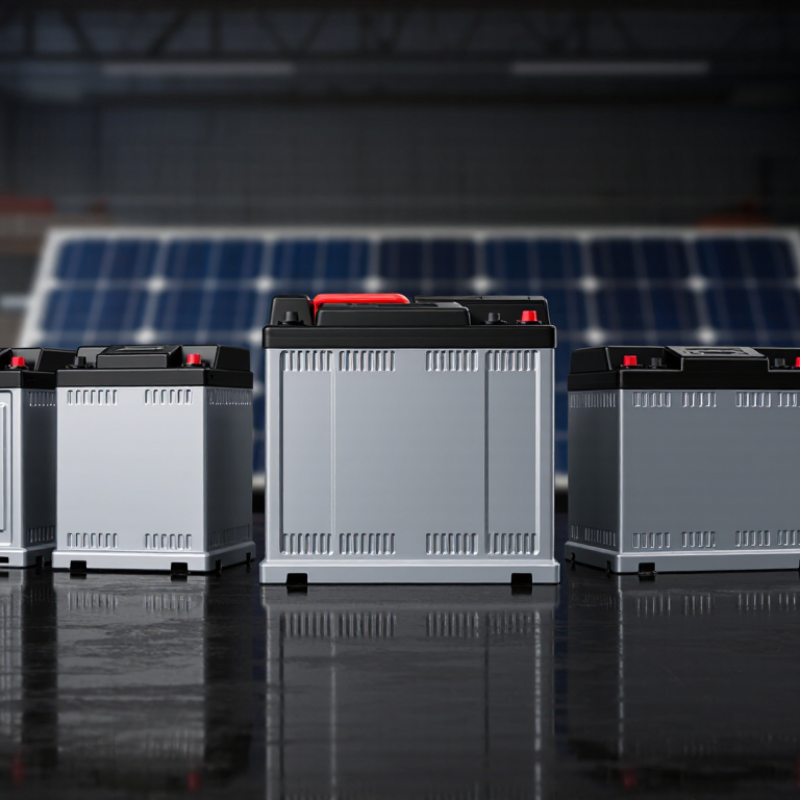
Top 10 Best 51.2V 160Ah LFP Batteries for Solar

Understanding 51.2V 160Ah LFP Batteries for Solar Systems

A 51.2V 160Ah LFP battery stores about 8.19 kWh at nominal voltage: 51.2 multiplied by 160. The voltage typically reflects 16 LFP cells connected in series, each rated near 3.2V nominal. But nominal capacity is not the same as energy available to household appliances. Battery reserves, inverter losses, temperature, and the battery management system’s limits all reduce practical output. At a 100A discharge, the nominal power is about 5.12 kW; the permitted current matters just as much as capacity. Check it.

For a rough planning example, using 80% of nominal capacity gives about 6.55 kWh of DC energy before inverter losses. That could cover evening lighting, a refrigerator, and some electronics, but not necessarily electric heating or cooking for long. NREL’s 2024 Annual Technology Baseline uses 85% round-trip efficiency as a utility-scale battery-storage benchmark. It is a comparison point, not a guarantee for a home battery. The IEA’s Batteries and Secure Energy Transitions report says global battery storage additions in the power sector reached 42 GW in 2023, more than double the previous year. That growth signals wider use, yet sizing still depends on actual loads. A sunny-day estimate can be misleading; winter production and the inverter’s continuous power rating deserve equal attention.

Key Specifications and Features to Compare

A 51.2 V, 160 Ah LFP battery stores about 8.19 kWh nominally. At 80% usable depth of discharge, that is roughly 6.55 kWh before inverter losses.

Small details matter. Compare continuous charge and discharge current, not just peak current: a 100 A limit represents about 5.12 kW at nominal voltage. Check whether the battery’s BMS can sustain your inverter’s demand, and whether parallel connections are supported.

Also verify charge-voltage limits, low-temperature charging protection, and the stated operating temperature range.

Cycle-life claims need context. Ask what depth of discharge, temperature, and end-of-life capacity the test assumes. I would not treat a cycle figure as a promise; test conditions vary.

For system efficiency, NREL’s 2024 Annual Technology Baseline uses 85% round-trip efficiency for utility-scale lithium-ion storage, a useful reference, though not a direct guarantee for a home battery. The IEA’s Global EV Outlook 2024 reports that LFP supplied around 40% of electric-car batteries in 2023, reflecting broad industry use of the chemistry.

Compare warranty terms, usable energy, certifications, and communication protocols alongside price.

One easy-to-miss issue: a battery may fit the energy requirement but still fall short on continuous power.

How to Evaluate the Top 10 Battery Options

When evaluating the top 10 battery options, compare usable energy, not just the 51.2V and 160Ah labels. Those figures imply about 8.2kWh nominal capacity, but the energy available to your home depends on the battery’s permitted depth of discharge. Check the manufacturer’s usable-capacity figure and the conditions behind it. A high cycle-life claim means little without its test temperature, discharge rate, and end-of-life capacity threshold. Read the fine print.

Next, match the battery’s continuous and peak current ratings to your inverter and expected loads. A kettle, pump, or workshop tool can briefly demand much more power than lights and electronics. Confirm charge-voltage limits, communication compatibility, and support for connecting multiple units. Small details matter. For outdoor or unheated installations, check the stated operating temperatures and whether charging is restricted in cold conditions. Review the warranty period, exclusions, and required maintenance, too.

Physical fit is easy to overlook. Measure the installation space, leave room for cables, and check the battery’s weight before planning a wall or floor mount. A tidy specification sheet cannot confirm that an inverter will communicate properly with the battery; verify compatibility in writing. I would not rank options by price per kilowatt-hour alone. That comparison misses installation costs, usable capacity, and support quality, and I might still choose differently after checking the actual loads.

Top 10 Best 51.2V 160Ah LFP Batteries for Solar - How to Evaluate the Top 10 Battery Options

Use these ten checks to compare product datasheets without relying on brand claims. The energy and power figures below are nominal calculations; operating limits, usable capacity, and warranties must be verified for each battery model.

No. Evaluation Check What to Look For Why It Matters
1 Nominal energy 51.2 V × 160 Ah = 8.192 kWh nominal energy. This provides a consistent starting point for comparing batteries with the same stated voltage and capacity. It is not the same as guaranteed usable energy.
2 Usable capacity and discharge limit Check the manufacturer’s stated usable capacity and permitted depth of discharge. For reference, 90% of 8.192 kWh is about 7.37 kWh, before conversion losses. The actual energy available to loads depends on the battery’s operating limits, BMS settings, temperature, and inverter losses.
3 Continuous discharge current Compare the continuous current rating with the inverter’s requirements. At nominal voltage, 100 A corresponds to about 5.12 kW; 160 A corresponds to about 8.19 kW. A battery’s amp-hour capacity alone does not establish how much power it can supply continuously. Confirm both the battery and inverter limits.
4 Peak discharge rating Look for a peak-current rating and its permitted duration, such as a specified number of seconds. Do not treat a short-duration peak as a continuous rating. Starting loads and brief power surges can exceed normal running demand. The BMS may disconnect the battery if current or duration limits are exceeded.
5 Charge-current limits Verify the recommended and maximum charge current, along with any charging-power limit. At nominal voltage, 100 A is approximately 5.12 kW. The battery’s limits must be compatible with the solar charge controller and inverter-charger. Charging current can affect charging time and battery operation.
6 Cycle-life test conditions Compare cycle-life claims only when the depth of discharge, temperature, charge/discharge rate, and end-of-life capacity criterion are stated. Cycle-life figures are not directly comparable when test conditions differ. A cycle count without its conditions gives limited information.
7 Operating temperature limits Check separate permitted temperature ranges for charging, discharging, and storage. Confirm whether low-temperature charging protection is specified. Temperature restrictions vary by battery design. Charging outside the stated range may be restricted or prevented by the BMS.
8 BMS protections and monitoring Review documented protection functions, such as over-voltage, under-voltage, over-current, short-circuit, and temperature protection. Check how state-of-charge data is communicated. The BMS manages battery safety limits and may provide information needed by an inverter or energy-management system.
9 Inverter compatibility and expansion Confirm supported communication protocols, approved inverter settings, and the permitted number of parallel batteries. Matching nominal voltage does not guarantee full system compatibility. Parallel operation may also require specified cabling and configuration.
10 Warranty and installation requirements Read the warranty term, throughput or cycle limits, capacity-retention conditions, installation rules, and service process. Warranty coverage depends on its stated terms and installation conditions. These details help distinguish a headline warranty from its practical coverage.

Solar System Compatibility and Installation Requirements

A 51.2V 160Ah LFP battery stores about 8.2 kWh at nominal voltage. Actual usable energy depends on the battery’s reserve settings and operating conditions. Check that the solar inverter supports the battery’s voltage range and lithium charging profile. The numbers must match. Confirm continuous charge and discharge current limits too; a large inverter can exceed them during heavy loads.

Before installation, check whether the inverter and battery can communicate through a supported connection, or whether approved voltage-based settings are available. Follow both manuals. For parallel batteries, verify that the system permits the planned number and configuration. Install the specified overcurrent protection, use correctly sized cables, and keep cable runs short where practical. A loose terminal can heat under load. Mount the battery in a dry, ventilated area within its stated temperature range, and check polarity before energizing. Small oversights matter.

Tips: Photograph cable labels before connecting them. Use a torque wrench if the manual gives a terminal torque value. Do not guess at cable size; current, run length, and installation conditions all affect it. After commissioning, review inverter alerts and battery readings under a real load. If readings seem inconsistent, pause and recheck the settings—my first assumption would not always be right.

Battery Safety, Maintenance, and Expected Lifespan

A 51.2V 160Ah LFP battery stores substantial energy, so safe installation matters. Use a charger and inverter configured for the battery’s specified voltage limits. The battery management system can help prevent overcharge or excessive discharge, but it cannot correct poor wiring. Keep terminals covered, use correctly rated cables, and isolate the system before servicing. A dropped metal tool can bridge terminals. That can cause a dangerous arc.

Check the battery and connections periodically. Look for loose cable lugs, damaged insulation, unusual heat, corrosion, or a case that appears swollen. Stop using a battery with visible damage and contact a qualified service professional. Keep the unit dry and within its stated temperature range; avoid direct sun and heat from nearby equipment. Don’t open the enclosure. Dust around the installation can be easy to overlook, yet it can trap heat.

LFP batteries can provide many years of service, but no lifespan is guaranteed. Heat, frequent deep discharges, high charging rates, and long periods at full charge may shorten useful life. For everyday solar storage, follow the manufacturer’s recommended charge settings and avoid routinely running the battery to empty. Check the displayed state of charge against actual system behavior now and then. Readings can drift. Record unusual changes in capacity or charging time, and have the setup checked if performance declines.

Article Source:

Request a Quote

To learn more about any of the products and services provided by Abbott Ball Company, Inc., simply complete the form below.