10 Tips for Buying Bluetooth Smart Glasses in Bulk
Buying Bluetooth Smart Glasses in bulk is not just a matter of comparing unit prices. A lower quote may come with limited warranty coverage, inconsistent components, or missing accessories. Those details can change the true cost of an order.
Before placing a large order, consider how the glasses will be used: for hands-free calls, audio prompts, or workplace communication. A model suited to a brief product demonstration may not work well during a long shift or outdoors. Comfort matters. Check real samples for frame fit, microphone clarity, battery performance, charging method, lens options, and app compatibility. Test them with the phones your customers actually use.
Ask suppliers to confirm minimum order quantities, color choices, packaging, lead times, replacement parts, and quality checks in writing. Clarify whether the price includes shipping, customization, and accessories. Request sample units and current test information, and review warranty terms and after-sales support before paying a deposit. Keep records of approved specifications. A spreadsheet can still miss something.
No checklist removes every risk. Even experienced buyers can overlook a detail, particularly if production units differ from the approved sample. The ten tips in this guide offer a practical way to compare suppliers, assess product performance, and plan a more reliable bulk purchase.
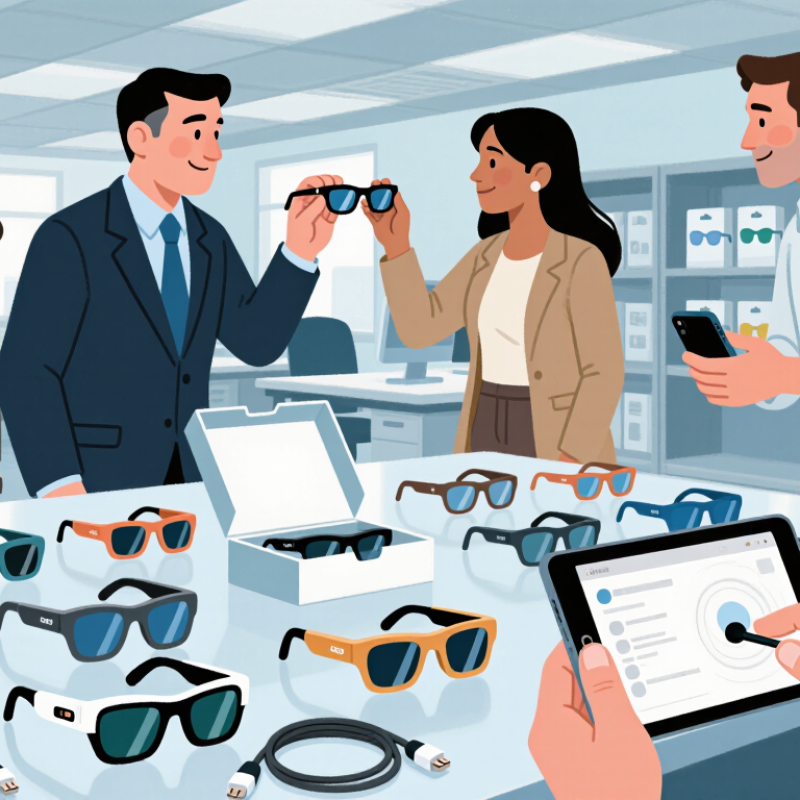
Identify Your Intended Use and Essential Features
Start with the job, not the product. A warehouse worker may need clear audio and glove-friendly controls, while a tour guide may value discreet prompts and all-day comfort. For field service, hands-free calls and reliable phone pairing may matter more than a built-in camera. That changes everything.
Ask users where they will wear the glasses, for how long, and in what conditions. A noisy floor, bright sunlight, or a safety helmet can expose weaknesses that a desk demonstration misses. Test real shifts. Check whether the frame stays comfortable after several hours, and whether buttons are easy to find without looking.
Translate these needs into a short feature list before requesting bulk quotes. Confirm compatibility with the phones and operating systems your team already uses. Compare battery life under realistic audio use, microphone clarity, charging time, and replacement-part availability. If staff need prescription lenses, verify frame and lens options with a qualified supplier. For shared devices, simple pairing and reset procedures can save time. Ask for samples and run a small pilot before committing to a large order. I once assumed a longer feature list meant better value; it did not. Unused functions can add cost, weight, and training time. Check the details.
Compare Bluetooth Compatibility, Battery Life, and Audio Quality
10 Tips for Buying Bluetooth Smart Glasses in Bulk
Tip 1: Check Bluetooth compatibility against the phones and tablets your customers actually use. Ask suppliers for supported Bluetooth versions, operating system requirements, and pairing instructions. Then test a sample with several devices. A spec sheet is helpful, but real pairing can be less tidy. Watch for dropped connections while walking between rooms.
Tip 2: Compare battery life under realistic use. A listing may quote standby time, which tells you little about music or calls. Play audio at a moderate volume, take a few calls, and record how long the sample lasts. Small batteries vary in performance.
Tip 3: Check charging time and connector type, too. Staff and buyers notice these details.
Tip 4: Judge audio quality in a quiet room and outdoors. Listen for clear speech, distortion, and sound leakage at normal volume. Try calls near light traffic or a fan; noisy conditions reveal weaknesses quickly.
Tip 5: Request consistent test results from multiple units before placing a bulk order. One good sample is not proof of a uniform batch. Compare comfort and microphone pickup as well. Not glamorous, but important. Keep notes on device models, playback time, and connection interruptions so your purchasing decision rests on evidence, not one rushed demonstration.
Verify Safety Standards, Warranty Terms, and Return Policies
For a bulk order, request the exact safety reports for the finished glasses, not just their components. IEC 62368-1 addresses audio, video, and information technology equipment safety. If the glasses are advertised as protective eyewear, ask whether testing covers the applicable ANSI/ISEA Z87.1 requirements. Bluetooth and battery documentation should match the model and shipment you are buying. Check sample units for sharp edges, loose hinges, heat during charging, and clear user instructions. A neat demo is not proof of safe production.
Read the warranty line by line. Confirm coverage for frames, lenses, batteries, and Bluetooth modules, plus the process for dead-on-arrival units. Ask who pays return freight and how quickly replacements ship. Get every promise in writing. A vague “one-year warranty” leaves too much open. The NRF and Appriss Retail’s 2023 report estimated US retail returns at $743 billion, or 14.5% of annual sales. That figure covers retail broadly, not smart glasses specifically, but it shows why return costs deserve attention.
Before paying, clarify the return window, restocking fees, opened-box rules, and minimum quantities eligible for return. Ask for a written defect procedure with photo requirements and response times. Keep a few units from the shipment for inspection before distributing the full order. That can catch problems early. It may still miss something; batch testing has limits. A clear policy makes those limits easier to manage.
10 Tips for Buying Bluetooth Smart Glasses in Bulk
Verify safety standards, warranty terms, and return policies before placing a bulk order.
The chart groups 10 practical checks: 3 for safety and compliance, 2 for warranty coverage, 2 for returns, and 3 for product and supplier validation. These are checklist counts, not market statistics. Confirm which requirements apply in your destination market and whether contract terms differ for bulk purchases.
Plan Ordering, Shipping, and After-Sales Support
Before requesting a bulk quote, define the intended use, quantity, and delivery window. Ask for written specifications covering lens options, Bluetooth version, battery capacity, microphones, and included accessories. Test a sample from the proposed production configuration for call clarity, fit, and charging time. A sample may not represent every unit, so ask how production checks are documented. Small details matter.
Set a schedule with confirmed production lead time, packing dates, and shipping estimates. Check which freight charges and import fees are included, and ask for carton dimensions before arranging storage. If delivery dates are tight, discuss partial shipments and tracking options early. Leave room for delays. We often underestimate how much packaging and handover time can affect arrival, so avoid planning around the most optimistic estimate.
Agree on after-sales support before placing the order. Confirm the warranty period, how to report defects, what evidence is needed, and whether replacement parts are available. Ask who handles technical questions and how quickly they typically respond. Keep the purchase order, approved sample notes, and delivery records together. A practical process beats a vague promise, though no plan can prevent every issue.