How to Choose the Best Electric Winch in 2026?
Choosing the best Electric Winch in 2026 starts with the job, not the biggest number on the box. Will it pull a vehicle across wet gravel, move a boat onto a trailer, or lift equipment in a workshop? Each task places different demands on pulling capacity, duty cycle, line speed, and mounting hardware. A winch that looks powerful on paper may struggle when its cable layers build up on the drum. Small details matter.
Winch engineer Jordan Lee puts the key idea this way: “Choose for the hardest realistic pull, not the easiest one.” Compare rated line pull with the load, then account for friction, slope, and the extra force created by a buried tire. Check whether the motor is sealed against water and dust, whether the cable is steel or synthetic rope, and whether the controls remain practical with gloves on. Look closely at the mount, too. A strong winch on a weak bumper is still a weak system.
This guide explains how to weigh those choices without treating one specification as the whole answer. It covers capacity, power source, rope type, safety features, and long-term maintenance. It also considers the awkward real-world moments: a cold battery, a muddy fairlead, or a pull that takes longer than expected. There is no perfect winch for every task. The right choice depends on honest estimates—and sometimes, the estimate will be wrong.
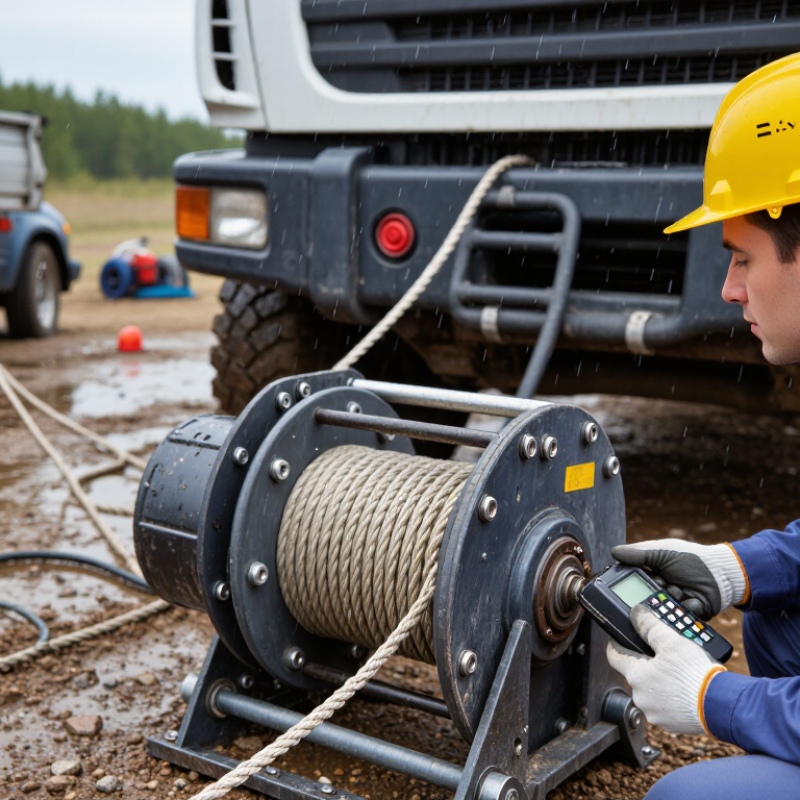
Define the Winch’s Intended Use and Operating Conditions
Start with the job, not the catalogue. Will the winch pull a boat onto a trailer, recover a vehicle, or position equipment on a worksite? Each task changes the required line pull, duty cycle, and control method. Record the heaviest expected load, pull distance, slope, and operating frequency. A wet ramp, loose gravel, or sharp cable angle can increase resistance. Small details matter. Estimate the load conservatively, then check the selection against the winch’s rated capacity and applicable ASME B30.7 guidance. Rated line pull is not a universal working capacity.
Map the real operating conditions: voltage at the winch, cable length, ambient temperature, water exposure, dust, and cooling time. For example, long, undersized power leads can cause voltage drop and reduce performance. Check mounting strength and fairlead alignment; side-pulling can damage wire rope. If the load, anchor, or route is uncertain, rethink the setup. The U.S. Bureau of Labor Statistics recorded 5,283 fatal work injuries in 2023 in its Census of Fatal Occupational Injuries. This broad figure is not winch-specific, but it underscores the need to assess hazards. Field estimates can be wrong. Recheck them against measured loads and operating limits.
Compare Electric Winch Types and Drive Systems
How to Choose the Best Electric Winch in 2026?
Compare Electric Winch Types and Drive Systems
Choosing a winch starts with the job, not the largest number on the box. Portable models suit occasional recovery or material handling, while fixed-mounted units work better on vehicles, trailers, and workstations. Check the rated line pull on the first rope layer; capacity usually drops as more rope winds onto the drum. Leave a safety margin.
Drive systems change how a winch behaves. Planetary gears are compact and often provide faster line speed, making them common in mobile applications. Worm gears can offer controlled movement and resistance to back-driving, but may run slower and generate more heat. Neither design is automatically safer. Confirm the winch’s braking system and follow its operating instructions.
Motor choice matters, too. Many vehicle winches use 12- or 24-volt DC power, while some workshop equipment uses AC power. Match the voltage to the available supply, and consider cable length: long, undersized cables can cause voltage drop and sluggish pulling. Short pulls? Duty cycle still matters. A winch may need cooling breaks between loads, even when the motor sounds fine. Compare rope type, mounting space, and service access before buying. One detail is easy to miss: real loads rarely pull in a perfectly straight line. Check the manual and reassess the setup for your actual working conditions.
Calculate the Required Pulling Capacity and Line Speed
How to Choose the Best Electric Winch in 2026?
Start by estimating the load you must move, not just its listed weight. Include cargo, equipment, and any added resistance from mud, gravel, or an incline. A vehicle that rolls easily on pavement may need far more pulling force on a wet slope. Use a conservative estimate, then check the winch’s rated capacity chart. Capacity is commonly highest on the drum’s innermost rope layer and falls as more rope layers build up.
Line speed matters just as much as pulling capacity. Check the rated speed at your expected load, rather than relying on the faster unloaded figure. Pulling speed can drop under strain, and battery condition, wiring, and rope layers can affect performance. A larger drum diameter may improve speed but reduce available pulling force. Consider how often you’ll use the winch, too; continuous heavy pulling can cause heat buildup. This part is easy to underestimate.
Tips: Measure the real load. Note the steepest slope and roughest surface. Compare capacity and speed at that working load, and leave a sensible margin. If the figures are uncertain, pause and verify them against the manufacturer’s chart before choosing.
Check Power Supply, Mounting Options, and Safety Features
Before comparing electric winches, match the unit to its power supply. A 12-volt vehicle system and a 24-volt system are not interchangeable. Check the winch’s voltage, peak current draw, and recommended cable size in its manual. Long, thin cables can cause voltage drop and sluggish pulling. Your battery and charging system also need enough capacity for the intended duty cycle. A brief pull is different from repeated recoveries.
Check the mounting surface as carefully as the winch itself. A steel bumper or bed plate must support the expected load and keep the winch aligned with the pull. Use the specified fasteners, and inspect for cracks, corrosion, or loose bolts. The published pulling rating may depend on rope layers and test conditions, so don’t treat it as a universal safe working load. Small details matter.
Look for a reliable brake, overload protection, and a control that lets the operator stand clear of the line. Keep hands away from moving rope, and never exceed the rated capacity. A neat installation can still be unsafe if the anchor point is weak. That’s easy to miss. Recheck the wiring, mount, and controls before each demanding use; even careful setups deserve another look.
How to Choose the Best Electric Winch in 2026
Typical rated line-pull ranges by vehicle class (lb). Use these as starting points, not universal requirements.
Before choosing a winch, check that its voltage matches your power supply, its mounting pattern fits your vehicle and winch plate, and its rated line pull suits the loaded vehicle and recovery conditions. Follow the winch manual, use a correctly rated recovery point, and inspect the rope and safety equipment before use.