
Choosing a screw air compressor is not simply a matter of comparing horsepower and price. The right unit must match production demand, operating hours, air quality, and installation conditions. A compressor running beside a dusty workshop wall faces different challenges from one serving a clean packaging line.
Real purchasing experience shows that small details often affect long-term costs. Check the required flow rate at the correct pressure, not only the motor rating. Examine the air receiver, dryer, filters, controls, and service access. Ask how quickly technicians can supply genuine parts. A low purchase price may look attractive, but frequent oil changes, heat problems, or difficult maintenance can change the calculation.
This guide presents ten practical tips for buying a screw air compressor with greater confidence. It considers energy efficiency, variable-speed control, noise, reliability, warranty coverage, and future capacity. Manufacturer specifications provide a useful starting point, yet independent operating data deserves attention. Claims should be checked against performance records, service feedback, and clearly stated test conditions.
No checklist is perfect. Real factories change.
Unexpected leaks, seasonal temperatures, and production expansion can weaken an otherwise careful decision. Therefore, the safest approach combines engineering calculations with observations from the actual site. Measure air demand during busy shifts, inspect the installation area, and discuss maintenance expectations with qualified professionals. Reliable advice should explain both benefits and limitations, rather than promise effortless savings. With these ten tips, buyers can reduce avoidable mistakes and select equipment that supports stable production over many years.
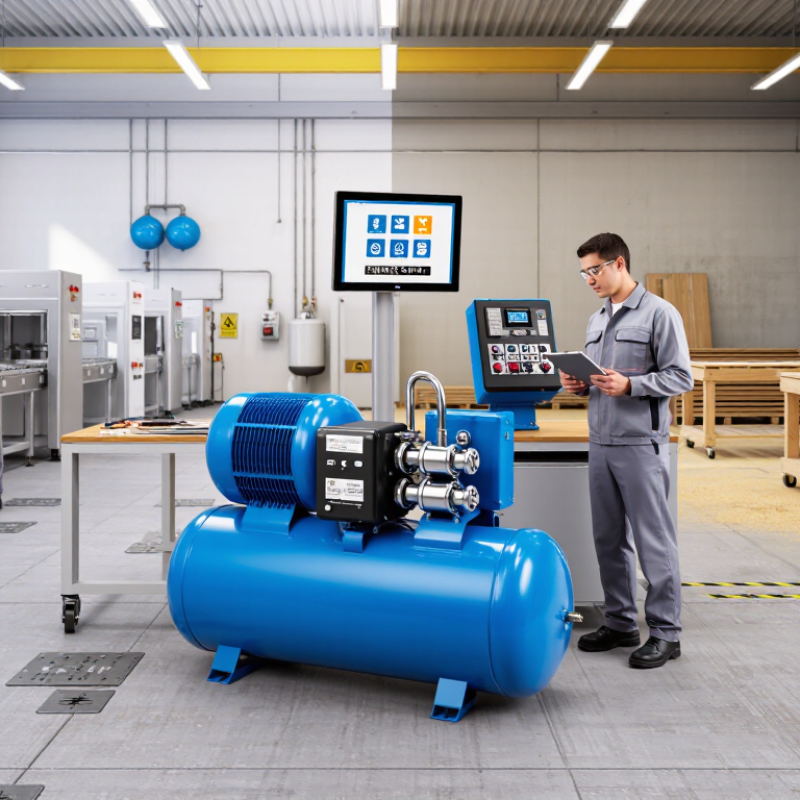
Before buying a screw air compressor, define the actual compressed air requirement. Measure average flow, peak flow, pressure, and operating hours across a normal production week. Measure it first. Nameplate capacity alone can mislead.
The U.S. Department of Energy reports that compressed air may consume 10–15% of industrial electricity, with higher shares in some facilities. Oversizing increases unloaded running, heat, and energy waste. Undersizing creates pressure drops and production interruptions. Check whether tools need 6 bar, 7 bar, or more at the point of use. Include pipe losses, filters, dryers, elevation, and seasonal temperature changes. Small errors matter.
Air quality also needs a clear specification. ISO 8573-1 classifies particles, water, and oil, so the required class should match the process rather than habit. Food, electronics, painting, and general assembly may need different treatment. Review moisture loads during humid mornings, not only in dry weather. A receiver tank can stabilize short demand spikes, but it cannot fix a consistently undersized compressor. The DOE Compressed Air Systems Sourcebook also emphasizes leak control and demand-side management. In practice, flow estimates are often too optimistic. Allow measured growth, but question every “future expansion” allowance. A temporary data logger and pressure test may reveal that the real problem is leakage, not compressor capacity.
10 Tips for Buying a Screw Air Compressor
Compare Compressor Types, Airflow Ratings, and Pressure Performance
A screw compressor suits steady industrial demand, while reciprocating units often fit intermittent use. Centrifugal models can serve very large, stable systems. I have seen buyers choose by horsepower alone. That shortcut can create expensive surprises. The U.S. Department of Energy reports that compressed air may consume 10–15% of industrial electricity. Part-load efficiency matters.
Check airflow as free air delivery, or FAD, not only advertised displacement. FAD should state inlet temperature, pressure, and humidity. ISO 1217 testing provides a useful comparison basis. A machine rated at 20 m³/min may deliver less after filters, dryers, piping, and elevation. Measure actual demand during production. A flow logger is better than guesswork.
Pressure also needs practical testing. Select the required working pressure, then allow for system pressure drop without overpressurizing the compressor. The DOE’s compressed-air sourcebook notes that leaks can waste 20–30% of compressor output. Walk the plant with an ultrasonic leak detector. Small hissing points matter. Variable-speed control can reduce unloaded running, but savings depend on the load profile. A receiver tank can stabilize short demand spikes. Bigger is not always better. Review noise, cooling conditions, service access, and control response. I would still challenge every supplier’s performance curve against measured site data.
Buying a screw air compressor requires more than comparing purchase prices. Measure your plant’s actual demand across shifts, including leaks, pressure drops, and idle periods. A unit running far below capacity may waste energy through frequent unloading. Ask for performance data at your expected pressure, not only the advertised maximum. Small differences in specific power can become expensive over thousands of operating hours.
Controls deserve close inspection. Variable-speed control can follow changing demand, but savings depend on correct sizing and stable programming. Check whether the controller records pressure, runtime, temperature, alarms, and energy use. Remote monitoring is useful when maintenance staff cannot inspect the machine daily. However, complicated interfaces may be ignored. A clear screen often beats a sophisticated system nobody uses. Test the response during sudden demand changes, such as several tools starting together.
Calculate lifecycle cost before signing an order. Include electricity, filters, oil, service labor, cooling requirements, downtime, and disposal. Request maintenance intervals and realistic parts pricing in writing. In one plant assessment, my initial energy estimate was too optimistic because weekend operation was overlooked. Metering corrected the calculation. Install an energy meter if possible, then compare monthly consumption against production volume. A cheaper compressor can cost more over five years. Leave room for uncertainty, because production schedules rarely remain fixed.
| No. | Buying Tip | Key Evaluation Dimension | Typical Planning Data | Why It Matters | Recommended Action |
|---|---|---|---|---|---|
| 1 | Define the actual air demand | Flow profile and peak demand | Record average, minimum, and peak flow in m³/min or cfm. A practical design target is usually the measured peak demand plus approximately 10% to 15%, after eliminating artificial demand. | Oversizing can increase unloaded running time, while undersizing may cause pressure drops and production interruptions. | Use at least 7 days of flow and pressure data where the demand varies by shift. |
| 2 | Select the correct working pressure | System pressure and pressure drop | Common plant-air requirements are approximately 7 to 10 bar(g). Many tools and processes operate near 6 to 7 bar(g), but distribution losses and equipment requirements must be verified. | Increasing discharge pressure typically increases compressor power demand; approximately 0.1 bar of unnecessary pressure can add measurable energy cost over time. | Measure pressure at the compressor and at the point of use, then specify the lowest pressure that satisfies the process. |
| 3 | Compare specific power, not only motor size | Energy efficiency | Compare total specific power in kW per m³/min or kW per 100 cfm at the same pressure, including the motor, drive, cooling system, and controls. | A larger motor does not automatically provide more air or lower operating cost. Specific power allows fair comparison between packages. | Request performance data at full load, part load, and the stated inlet and ambient conditions. |
| 4 | Assess variable-speed control carefully | Load profile and turndown range | Variable-speed drive compressors can reduce unloaded running when demand changes frequently. Savings depend on the actual load profile, operating hours, minimum stable speed, and control range. | Variable-speed equipment is not automatically more efficient at every load or at constant full-load operation. | Use logged demand data to model annual kWh before choosing fixed-speed, variable-speed, or a combined system. |
| 5 | Specify intelligent sequencing controls | Multi-compressor control | A master controller should coordinate start/stop sequences, pressure bands, load sharing, runtime balancing, alarms, and communication with plant monitoring systems. | Poor sequencing can make several compressors unload simultaneously, increasing energy use and pressure fluctuation. | Require trend logs for pressure, flow, loaded hours, unloaded hours, starts, and energy consumption. |
| 6 | Calculate the lifecycle operating cost | Total cost of ownership | For many compressed-air installations, electricity can represent roughly 60% to 80% of lifecycle cost, with purchase, installation, maintenance, cooling, and disposal making up the balance. | A lower purchase price may result in a higher five- or ten-year cost if energy consumption and service requirements are greater. | Calculate annual cost as: energy use in kWh × electricity tariff, then add maintenance, installation, and expected replacement costs. |
| 7 | Review maintenance requirements | Service intervals and consumables | Check oil, separator, air filter, oil filter, belts or couplings, bearings, valves, coolers, and condensate components. Service intervals commonly depend on hours, oil condition, air quality, and ambient conditions. | Blocked filters and dirty coolers increase pressure drop, operating temperature, and power consumption. | Request a five-year maintenance schedule with parts, labor, downtime, and recommended inspection frequency. |
| 8 | Verify installation and ambient conditions | Ventilation, altitude, temperature, and space | Confirm maximum and minimum ambient temperature, altitude, intake-air quality, room ventilation, service clearance, noise limits, and electrical supply before final selection. | High ambient temperature, restricted airflow, or contaminated intake air can reduce capacity and shorten component life. | Obtain corrected performance data for the actual site conditions rather than relying only on standard laboratory conditions. |
| 9 | Evaluate heat recovery potential | Energy recovery and sustainability | Most compressor input power becomes heat. Depending on design and operating conditions, a substantial portion of this heat may be recoverable for water heating, space heating, or process air preheating. | Recovered heat can reduce fuel or electric heating demand and improve the overall energy value of the installation. | Match recovery output to a year-round heat load and calculate savings using the site’s actual heating tariff. |
| 10 | Check air quality and expandability | Air treatment, reliability, and future capacity | Specify the required air-quality class, including particles, water, and oil, according to the process. Also allow for future demand growth, redundancy, dryer capacity, receiver volume, and distribution upgrades. | Inadequate treatment can damage products and equipment, while insufficient redundancy can stop production during service or failure. | Define critical-load requirements and consider N+1 capacity where continuous operation or high downtime costs justify redundancy. |
| Planning note: The figures shown are general engineering planning ranges, not guaranteed performance values. Final selection should be based on verified flow measurements, operating pressure, site conditions, supplier test data, local electricity tariffs, and the required air-quality specification. | |||||
10 Tips for Buying a Screw Air Compressor
Tip 1: Measure the installation area before comparing compressor models. Leave clear space around panels, filters, and cooling outlets. Space matters. Tip 2: Check the floor strength, doorway width, ventilation, and electrical supply. A compressor may fit on paper but fail during delivery. Tip 3: Match airflow and pressure to your real tools, not future guesses. Oversizing can increase energy costs and create inefficient cycling. Tip 4: Ask whether heat and noise can affect nearby workers. I once underestimated heat release in a small workshop, and the room became uncomfortable within hours.
Tip 5: Inspect maintenance access carefully. Technicians should reach oil filters, separators, belts, drains, and control panels without moving other equipment. Tip 6: Confirm service intervals and required consumables before purchase. Keep a simple maintenance log with dates, operating hours, and replaced parts. Tip 7: Look for visible gauges and useful alarms. Small details reduce troubleshooting time. Tip 8: Ask how oil leakage, condensate, and cleaning tasks will be handled safely. A tidy machine room is easier to inspect.
Tip 9: Evaluate local service support, response times, spare-part availability, and technician training. Do not rely only on a sales promise. Request written service terms. Tip 10: Ask for commissioning support and operator training. A poorly adjusted compressor can waste power or suffer early wear. My own checklist would now include an emergency contact and a backup plan. That detail is easy to overlook.
Practical planning priorities for installation, maintenance access, energy use, and service support
The chart uses a practical 10-point planning scale. Installation space, maintenance access, air quality requirements, lifecycle energy efficiency, and service support should be evaluated before selecting a screw air compressor. Actual requirements depend on airflow demand, operating hours, ambient conditions, and local regulations.
Buying a screw air compressor is not only a capacity decision. Quality must be verified through measured performance, not attractive brochures. Request a factory test report showing free air delivery, working pressure, motor input, noise, and oil carryover. ISO 1217 provides a useful basis for compressor acceptance testing. Ask whether the quoted figures use the same test conditions as your plant.
Energy efficiency deserves close attention. The U.S. Department of Energy reports that compressed air can consume about 10% of industrial electricity. Its Compressed Air Sourcebook also notes that leaks may waste 20–30% of compressor output. A small efficiency gap can become expensive after thousands of operating hours. I would request a specific power curve and compare it with measured site demand. Brochure numbers alone are weak evidence.
Safety details should be visible before payment. Check emergency stops, pressure relief devices, guarding, thermal protection, alarms, and automatic shutdown logic. Confirm that electrical documentation matches applicable local requirements. Warranty language needs equal scrutiny. Check coverage periods, labor exclusions, response times, and approved maintenance conditions. Ask for spare-parts availability in writing. A long warranty means little if service takes weeks. Supplier reliability is easier to judge through documented installations, technician qualifications, service records, and customer references. I would contact at least two users, preferably with similar duty cycles. Some choices still involve uncertainty. Recheck assumptions before signing.
To learn more about any of the products and services provided by Abbott Ball Company, Inc., simply complete the form below.