
A Drain Cleaning Machine is a practical tool designed to remove blockages from pipes, drains, and sewer lines. It usually uses a motor, rotating cable, and cutting or clearing head. Some models use high-pressure water instead of a mechanical cable. The basic purpose remains the same: restore water flow without immediately replacing the pipe.
Understanding the working process helps users choose the right equipment. A technician feeds the cable into the drain opening, then starts the motor at a controlled speed. As the cable rotates, its attached head breaks through grease, hair, roots, or compacted debris. The loosened material can then move through the pipe or be removed manually. It is not magic. Pipe size, blockage type, and machine power all affect the result.
In real service conditions, careful preparation matters. The operator should inspect the drain, wear suitable protective equipment, and follow the manufacturer’s instructions. A drain camera can reveal cracks, collapsed sections, or repeated root intrusion that a machine cannot fix. This distinction is important because clearing a blockage does not always repair the underlying problem. Small errors matter. Excessive force may damage fragile pipes, while poor cable control can create a safety hazard. Even experienced technicians sometimes need to reassess their approach when resistance changes suddenly. This guide explains the main machine types, their components, and the cleaning process in clear, practical terms. It also considers limitations, maintenance needs, and when professional evaluation is the more reliable choice.
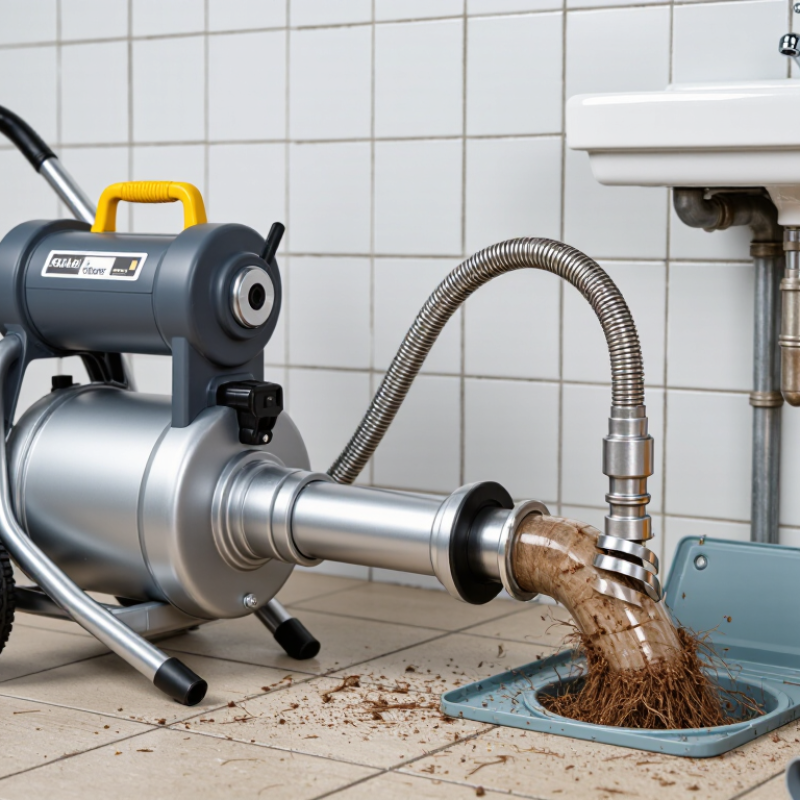
A drain cleaning machine is a mechanical tool for removing blockages inside pipes. Its operating purpose is simple: restore water flow without opening the entire drainage system. A typical unit includes an electric motor, rotating drum, flexible cable, cutter head, guide tube, frame, and foot switch. Each part has a specific role. The motor turns the cable, while the cutter head breaks through grease, hair, roots, or compacted waste.
During operation, the technician guides the cable slowly into the pipe. The rotating cable follows bends and carries the cutter toward the blockage. When resistance increases, controlled pressure helps the head cut or loosen the material. Water can then move through the cleared passage. The foot switch leaves both hands available for cable control. That detail matters. A drain machine is powerful, but it does not correct damaged pipes or poor connections.
Tips: Inspect the cable before use. Look for kinks, cracks, or weak sections. Wear eye protection and suitable gloves. Feed the cable gradually, rather than forcing it. In practical service work, I have found that rushing often creates a second problem. The cable may bind, twist, or damage a fragile pipe. Stop when the machine behaves unusually. Recheck the pipe condition and cutter size. A small mistake here can become an expensive repair.
A drain cleaning machine uses an electric motor or manual drive to rotate a flexible cleaning cable. The cable passes through the guide or drum and pushes a cutting head into the blockage. Typical cable diameters increase with machine capacity and are selected according to the drain size and blockage type.
The main components are the motor or crank, cable or sectional rod, rotating shaft, guide tube or drum, cutting head, frame, and feed control. Actual operating ranges vary by machine design and drain conditions.
What Is a Drain Cleaning Machine and How Does It Work?
A drain cleaning machine removes blockages with a rotating cable or a high-pressure water jet. The correct machine depends on pipe size, blockage type, and access space. Small cable machines often use 1/4-inch cables for bathroom sinks and narrow branch lines. Larger models may accept 3/8-inch, 1/2-inch, or 3/4-inch cables. These thicker cables reach farther and handle heavier buildup. I have found that cable selection matters more than machine size alone. A stiff cable can damage an old pipe if the operator forces it.
Cable machines work through controlled rotation. The cutting head breaks through hair, grease, roots, or compacted debris. The operator feeds the cable slowly and feels changes through the housing. That physical feedback is useful, but it is not perfect. Some blockages feel clear before they are fully removed. Jetting machines use water pressure instead. Light-duty work may require about 1,500 PSI, while serious grease and sediment often need 3,000 to 4,000 PSI. Flow rate matters too. Pressure alone does not carry loosened debris from the pipe. The nozzle must match the pipe diameter and blockage. It is easy to overestimate cleaning power. A camera inspection after cleaning can reveal remaining roots, cracks, or displaced material. Protective equipment and careful hose control are essential around pressurized water.
| Machine Type | Working Mechanism | Typical Cable or Pressure Range | Common Drain Size | Typical Reach or Coverage | Best-Suited Applications | Important Operating Considerations |
|---|---|---|---|---|---|---|
| Hand-Crank Cable Machine | A manually rotated flexible cable passes through the drain and breaks through or hooks soft blockages. | 1/4–3/8 in. cable | Approximately 1–2 in. | Usually up to about 25 ft, depending on the cable assembly | Lavatory, bathtub, shower, and other short residential branch lines | Provides limited torque and reach. It is generally intended for light obstructions rather than heavy grease, roots, or deep main-line blockages. |
| Drum-Style Electric Cable Machine | An electric motor rotates a cable stored inside a drum. The rotating cable carries a cutter or auger into the blockage. | 1/4–3/8 in. cable | Approximately 1–3 in. | Commonly 50–75 ft, depending on cable diameter and machine configuration | Residential sinks, showers, tubs, and small branch drains | Offers more consistent rotation than a hand crank. The operator must control feed pressure to reduce the risk of cable kinking or binding. |
| Compact Sectional Cable Machine | A motor rotates separate cable sections that are fed into the line one section at a time. | 3/8–1/2 in. cable | Approximately 1–3 in. | Often 50–100 ft, based on the number of sections used | Longer residential branch lines and moderate stoppages | Separate sections can be added or removed as needed. Proper gloves, guarding, and cable control are essential during operation. |
| Heavy-Duty Drum or Sectional Machine | A higher-torque motor drives a larger cable equipped with cutting, boring, or retrieval attachments. | 1/2–3/4 in. cable | Approximately 3–6 in. | Commonly 75–100 ft or more, depending on equipment and cable selection | Building drains, larger branch lines, and tougher obstructions | Designed for greater resistance and longer runs. Cable size and cutting head should match the pipe diameter to avoid damaging the line. |
| Electric or Gasoline Jetter | A high-pressure water pump sends water through a specialized nozzle. Rear-facing jets propel the hose while forward jets scour the pipe wall and obstruction. | 1,500–4,000 PSI | Approximately 2–6 in., depending on flow, hose, and nozzle | Often 50–200 ft, depending on hose length and system capacity | Grease, sludge, sediment, soap residue, and recurring buildup in branch or building drains | Cleaning performance depends on both pressure and water flow. The pipe condition, nozzle design, hose size, and blockage type must be evaluated before jetting. |
| Trailer or Truck-Mounted Jetter | A high-capacity pump delivers pressurized water through a long hose and specialized nozzle to clean larger or longer drain lines. | Approximately 2,000–4,000 PSI | Approximately 4–12 in. or larger, subject to equipment capacity | Often 200 ft or more, depending on the hose and pump system | Commercial laterals, municipal lines, long building drains, and heavy deposits | Requires access planning, adequate water supply, proper nozzle selection, and controlled pressure. A camera inspection can help verify pipe condition before cleaning. |
Note: Cable capacity, jetting pressure, flow rate, reach, and suitable pipe diameter vary by machine configuration. Pressure ratings should be treated as equipment specifications rather than a guarantee of cleaning performance.
A drain cleaning machine uses a motor-driven cable or rotating cutter to break through grease, hair, scale, and soft blockages. Before operating it, professionals inspect 1.5–4-inch drain lines. They ask about slow drainage, backups, unusual odors, and recent repairs. These details help identify the likely blockage location.
The inspection usually starts at an accessible cleanout or fixture opening. A technician checks pipe material, entry size, standing water, and visible corrosion. A small camera can then travel through the line, showing roots, separated joints, heavy scale, or a collapsed section. Cable size and cutting head selection depend on the pipe diameter and obstruction.
For example, a 1.5-inch branch line needs more control than a 4-inch building drain. Improper force can damage weak piping. It happens, and every inspection should challenge the first assumption.
The U.S. EPA’s 2022 Clean Watersheds Needs Survey identified about $630.1 billion in wastewater infrastructure needs. ASCE’s 2021 Infrastructure Report Card rated U.S. wastewater infrastructure D+. These reports reinforce why condition checks matter before aggressive cleaning.
Tips: Run the camera before and after cleaning when access allows. Record distance, defect type, and pipe condition. Do not treat flowing water as proof of a clear line. A partial blockage may still hide behind the water. Wear eye protection, gloves, and suitable ventilation equipment. End the process if the cable binds repeatedly.
A drain cleaning machine uses a rotating steel cable to reach blockages inside pipes. Its work is simple in principle, but control matters. The cable first cuts through soft buildup, including grease, hair, and soap residue. A cutter head spins at the pipe’s entrance. The operator feeds the cable slowly, feeling changes in resistance.
Harder obstructions require a hook or auger head. The hook catches fibrous material, while the auger drills into compacted debris. When the cable tightens, the operator reverses the rotation and pulls steadily. This action extracts the blockage instead of pushing it farther downstream. It can feel surprisingly physical.
The U.S. Environmental Protection Agency’s WaterSense leak factsheet estimates that household leaks waste nearly 10,000 gallons of water yearly. That figure concerns leaks, not clogs, but it shows how small plumbing faults can create major waste. Drain cleaning protects flow and can reveal damaged sections before water loss increases.
The U.S. Bureau of Labor Statistics recorded 5,283 fatal work injuries in 2023 across all industries, reinforcing the need for controlled equipment handling. Gloves, eye protection, and a ground-fault circuit interrupter are practical safeguards. The machine is not magic. A cable can snag, kink, or damage an aging pipe. Experienced technicians inspect the drain, choose the smallest effective head, and stop when resistance feels abnormal. Sometimes, cutting less is the smarter repair.
A drain cleaning machine removes blockages from inside wastewater pipes. Traditional cable machines cut through roots, grease, and compacted debris. Hydro-jetting uses pressurized water instead. A pump pushes water through a flexible hose and specialized nozzle, creating powerful forward and backward streams.
Some professional hydro-jetting equipment can reach up to 4,000 PSI. That pressure is directed through small nozzle openings, not released randomly. The rear-facing jets pull the hose through the pipe and scrub its walls. Forward jets break apart grease, scale, sediment, and soft obstructions. Water then carries the loosened material toward an approved access point.
Pressure alone is not a cure. Experienced technicians inspect the line before choosing a nozzle and pressure level. A camera inspection can reveal cracks, collapsed sections, or fragile joints. Excessive pressure may worsen damaged pipes, especially in older systems. The pipe’s material, diameter, blockage type, and condition all matter.
The work can be messy.
A careful operator protects nearby surfaces and controls wastewater flow. They also confirm that the line can handle the cleaning process. In real jobs, a second pass is sometimes necessary because grease can remain in small side connections. Hydro-jetting cleans more than a narrow path; it can restore a broader section of the pipe wall when used correctly._eta
To learn more about any of the products and services provided by Abbott Ball Company, Inc., simply complete the form below.