
Dishwasher Tooling refers to the molds, dies, fixtures, gauges, and production equipment used to build modern dishwashers. It supports the accurate manufacturing of tubs, racks, doors, spray arms, brackets, and insulation panels. In appliance factories, each tool is designed around a specific material, shape, and production stage. A metal-forming die may press a flat stainless-steel sheet into a rigid tub. An injection mold can create a smooth plastic spray-arm housing with narrow water channels. Welding fixtures hold parts in position while automated equipment joins them consistently.
The working process begins with engineering drawings, material studies, and tolerance requirements. Designers often use computer-aided models before producing a prototype tool. Technicians then test sample parts, checking dimensions, surface quality, fit, and resistance to heat or detergent exposure. Small errors matter. A slight shift in a fixture can affect door alignment or create vibration during operation. Tooling is adjusted, inspected, and maintained as production continues. Wear is unavoidable. This is where practical experience becomes important, because real machines may behave differently from digital models. Reliable manufacturers document inspections, control process changes, and validate tooling before full-scale production. Still, no tooling system is perfect. Unexpected distortion, material variation, or maintenance delays can reveal weaknesses. Understanding these limitations helps engineers improve accuracy, reduce waste, and produce dishwashers that perform safely and consistently.
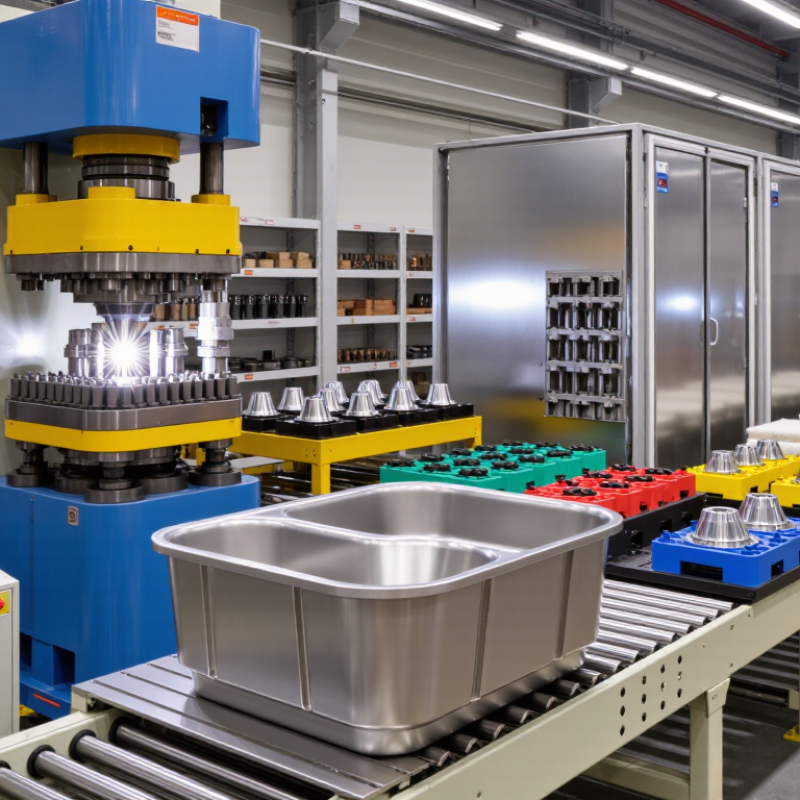
What Is Dishwasher Tooling and How Does It Work?
What Dishwasher Tooling Means and Why It Matters
Dishwasher tooling is the collection of molds, fixtures, gauges, and forming tools used to make dishwasher parts. It shapes tubs, doors, racks, spray arms, and mounting components with controlled accuracy. A metal-forming die may create a panel, while a fixture holds that panel during welding or assembly. The process turns design measurements into repeatable physical parts.
Tooling matters because small errors can create large problems. A door that shifts by one millimeter may leak, rub, or close unevenly. A poorly aligned spray-arm fixture can reduce water coverage inside the tub. In a working production line, technicians check dimensions, surface marks, joint strength, and movement. They also inspect trial parts before approving regular production. This practical feedback often reveals issues that drawings miss.
Good tooling improves consistency, production speed, and worker safety. It can reduce material waste and make maintenance more predictable. However, tooling is not perfect on its first trial. Temperature changes, metal springback, and machine vibration can affect results. Engineers may adjust a die or reposition a locating pin several times. That extra testing is easy to underestimate. It often determines whether a dishwasher performs reliably after years of opening, closing, heating, and washing.
| Tooling Dimension | What It Means | How It Works in Dishwasher Manufacturing | Why It Matters |
|---|---|---|---|
| Definition | Specialized molds, dies, fixtures, gauges, and production aids used to form and assemble dishwasher components. | Tooling controls the shape, position, dimensions, and repeatability of parts throughout production. | It converts design specifications into consistent, manufacturable parts. |
| Sheet-Metal Dies | Press tools used for cutting, bending, punching, and drawing metal sheet. | A press applies force to the die and forms stainless-steel or coated-steel panels into tubs, doors, brackets, and structural parts. | Accurate dies reduce deformation, rework, sharp edges, and dimensional variation. |
| Deep-Drawing Tooling | Tooling that stretches sheet metal into a deeper three-dimensional shape. | A punch pushes the sheet into a die cavity while a blank holder helps control wrinkling and tearing. | It enables the production of watertight dishwasher tubs with smooth internal surfaces. |
| Injection Molds | Molds used to shape molten plastic into functional or decorative components. | Plastic is injected into a heated mold, cooled until rigid, and then ejected using pins or automated mechanisms. | They support high-volume production of spray-arm parts, racks, covers, brackets, and control housings. |
| Assembly Fixtures | Devices that hold components in a defined position during joining or installation. | Locators, clamps, and supports maintain alignment during welding, fastening, riveting, or adhesive application. | They improve assembly speed, operator safety, and part-to-part consistency. |
| Welding Fixtures | Fixtures designed to position metal components during spot, seam, or other resistance-welding operations. | The fixture controls joint location and access while electrodes or welding equipment create the bond. | Stable positioning helps maintain structural strength and reduces distortion or missed welds. |
| Checking Gauges | Inspection tools used to verify critical dimensions, clearances, and assembly locations. | Go/no-go gauges, profile gauges, height gauges, and coordinate-measuring equipment compare parts with defined tolerances. | They detect defects before parts move to later operations or final assembly. |
| Typical Tool Materials | Tool steels, hardened steels, aluminum, engineering plastics, and wear-resistant inserts. | Material selection depends on forming load, production volume, temperature, abrasion, corrosion exposure, and required surface finish. | Appropriate materials extend tool life and help maintain dimensional accuracy. |
| Design Inputs | Three-dimensional product data, material specifications, tolerances, production volume, and process requirements. | Engineers use these inputs to determine parting lines, draft angles, forming stages, locating points, and access for maintenance. | Clear design inputs prevent interference, premature wear, and costly tooling changes. |
| Manufacturing Process | The sequence used to produce tooling, including machining, heat treatment, polishing, coating, and trial runs. | Computer-controlled machining creates the tool, followed by finishing and testing with representative parts. | A controlled process improves tool accuracy, surface quality, and production readiness. |
| Quality Checks | Dimensional inspection, functional trials, leak checks, surface inspection, and process capability reviews. | Tooling is tested under production-like conditions before full-scale manufacturing begins. | Early validation reduces scrap and confirms that components meet fit, function, and safety requirements. |
| Maintenance Needs | Cleaning, lubrication, sharpening, replacement of wear parts, calibration, and repair of damaged surfaces. | Maintenance teams inspect contact surfaces, alignment features, cutting edges, ejectors, sensors, and clamps at planned intervals. | Regular care preserves accuracy, reduces unplanned downtime, and extends service life. |
| Business Impact | The effect of tooling on production cost, cycle time, quality, flexibility, and launch timing. | Well-designed tooling supports repeatable automated or manual operations with fewer adjustments and interruptions. | Effective tooling improves productivity while helping control defects, labor requirements, and total manufacturing cost. |