How to Choose a Vertical Boring Machine in 2026?
Choosing a Vertical Boring Machine in 2026 starts with the workpiece, not the brochure. Measure the largest diameter, height, and weight you expect to machine. A casting that barely fits the table can cause setup delays every shift. Allow room for fixtures and safe loading, too. Small details matter.
Next, match the machine’s capacity and features to real jobs. Check table load, spindle power, speed range, travel, and the tolerances your parts require. For example, a heavy pump housing may need a rigid table and steady cutting performance more than a very high spindle speed. Consider whether CNC controls, tool changers, or probing functions will save time in your shop. Extra features are not automatically useful. They should solve a defined problem.
Ask manufacturers for documented specifications, sample machining results, service coverage, and parts availability in your region. If possible, review a test cut on material similar to your own. Compare installation needs, operator training, maintenance access, and total ownership costs alongside the purchase price. These checks make the decision more reliable, but they cannot predict every production issue. I would still leave some room in the plan for what the first months reveal. A machine can look right on paper and feel different beside a busy production line. This guide explains the practical questions to ask before choosing, so you can judge capability against your parts, people, and budget—not marketing claims alone.
Understanding Vertical Boring Machines and Their Main Types
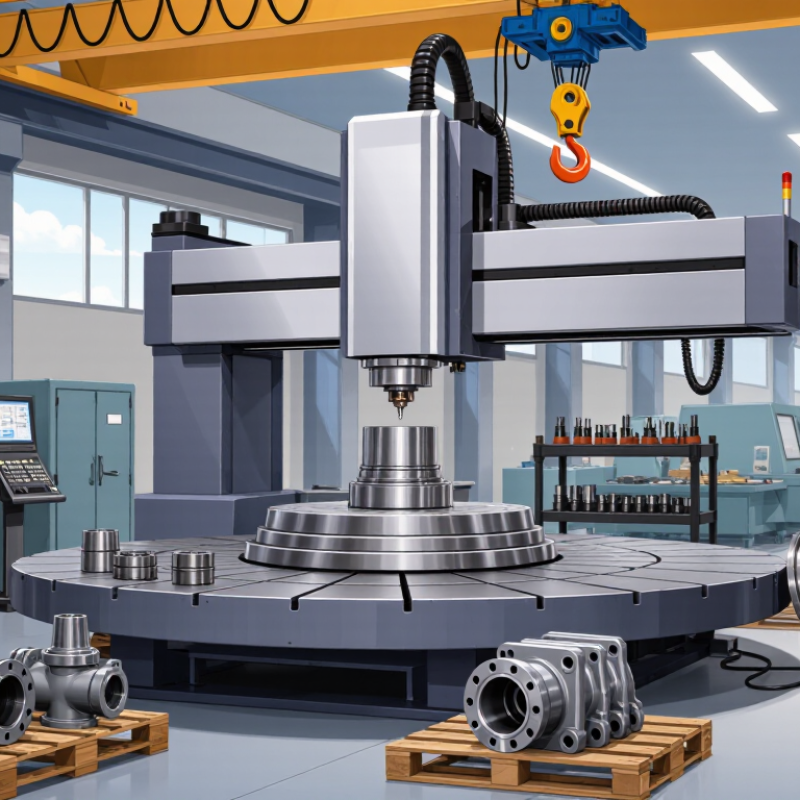
A vertical boring machine rotates a workpiece on a horizontal table while cutting tools move vertically. It suits large, heavy parts that are awkward to turn horizontally, such as pump housings, turbine discs, and gear blanks. The machine’s table carries the load; its spindle and ram control the cut. That difference matters when comparing it with a conventional horizontal boring mill.
Common types include single-column and double-column machines, along with vertical turret lathes, often grouped under the same broad category. Single-column designs need less floor space and suit moderate workpiece diameters. Double-column machines use two uprights and a crossrail, adding support for larger, heavier jobs. Turret-style machines allow several tools to be mounted for sequential operations. CNC models add programmed positioning and repeatability, but setup and operator skill still matter. One detail is easy to miss.
The Gardner Intelligence 2023 World Machine Tool Survey reported estimated global machine-tool consumption of $88.9 billion in 2023, down 6.4% from 2022. This figure covers the wider machine-tool market, not vertical boring machines alone. It signals a competitive capital-equipment market, but should not replace a job-specific assessment. Compare maximum turning diameter, table load, ram travel, and required accuracy against actual parts. A machine that fits the largest job may be oversized for daily production. That trade-off deserves a careful look.
Assessing Workpiece Size, Material, and Machining Requirements
Choose the machine’s working envelope from the largest part you actually expect to cut. Check swing diameter, turning height, table load, and fixture clearance—not just the part’s bare dimensions. A heavy casting with an offset center of gravity may need a larger load capacity than its dimensions suggest. The first estimate can be wrong; verify it against a real setup drawing.
Material changes the cutting plan. World Steel Association reported 1,882.6 million tonnes of global crude steel production in 2024, underlining steel’s importance in industrial work. But “steel” is not one cutting condition: hardness, heat treatment, and scale affect tool choice, speed, and cutting force. For cast iron, consider abrasive skin and chip evacuation. For stainless alloys, plan for heat and work hardening. Confirm starting values with reliable machining data, then test on a representative cut.
Tips: Write down part diameter, height, mass, material grade, hardness, tolerance, and finish requirement. Check whether the machine can hold the part securely while allowing tool access. Ask for a trial cut when material or tolerances are unfamiliar. Small details matter. A clamping plan that looks fine on paper may still obstruct the tool.
Comparing Machine Configurations, Capacity, and Key Specifications
Vertical boring machines differ in how they support the workpiece and cutting head. A single-column configuration can suit smaller components and limited floor space. A double-column design often offers a more rigid structure for larger, heavier work. Check the actual table diameter, maximum turning diameter, and workpiece height. “Swing” alone does not tell you whether a tall casting will clear the crossrail.
Capacity must match real jobs, not just the largest part listed on a specification sheet. Compare maximum table load with the weight of the part, fixture, and any clamping equipment. Leave room for uneven loading. A 1,200-millimeter table may still be unsuitable if your workpiece needs awkward supports or extra clearance. Small details matter.
Review spindle power and torque alongside speed range. High torque at low speed helps with heavy cuts, while a broad speed range can support different materials and finishing operations. Also inspect ram travel, crossrail movement, tool size, and positioning accuracy. Ask how accuracy is measured and under what conditions; figures without test details are hard to compare. I have seen capacity look adequate on paper, then disappear once fixtures are included. That deserves a second look. Choose controls and tooling around the operators’ experience, maintenance access, and the parts you expect to run—not an optimistic production plan.
Selecting a Supplier and Calculating Total Ownership Costs
A vertical boring machine may have an attractive purchase price, but the supplier’s support can shape its real cost. Ask who handles installation, commissioning, and operator training. Confirm typical response times and whether critical spare parts are stocked nearby. Request references from shops machining similar diameters and materials. A machine suited to small steel parts may not perform well on large, heavy castings.
Look beyond brochures. Ask the supplier to run a sample part using your material, tooling, and tolerance requirements. Check the finished bore, cycle time, and setup effort. If possible, observe a similar machine cutting in a working shop. A polished demonstration is useful, but it may not reflect your daily workload. That gap matters.
Calculate ownership costs over a realistic service period, not just the first year. Include freight, foundation work, power upgrades, tooling, inspection equipment, maintenance, and planned downtime. Ask for recommended service intervals and common wear-item prices. Then estimate labor and energy use from your expected shifts. Small items add up. The estimate will still be imperfect: production mixes change, and unexpected repairs happen. Keep a contingency instead of treating the spreadsheet as a promise. Compare suppliers using the same operating assumptions, and note which costs are confirmed versus estimated.