
Choosing the right 5g Component for global sourcing requires more than comparing prices and datasheets. A component that performs well in Seoul may struggle in Nairobi, São Paulo, or rural Canada. Regional bands, certification rules, antenna design, thermal limits, and supply continuity can change the final decision.
Cristiano Amon, President and CEO of Qualcomm, has said, “5G is not just about faster speeds; it is about enabling new experiences.” That perspective matters for sourcing teams. A modem, RF front-end, antenna module, or timing device must support the intended experience reliably. Engineers should examine band coverage, carrier aggregation, power consumption, firmware support, and interface compatibility. Procurement teams should also verify factory capacity, lifecycle commitments, traceability, and second-source options.
Small details matter. A few extra watts can require a larger heat spreader. A missing regional band can block commercial deployment. A delayed certification can leave finished equipment waiting in a warehouse. These are practical risks, not spreadsheet theory.
Still, no selection method is perfect. Supplier data may be incomplete. Forecasts may be wrong. A technically superior 5g Component may become a poor choice if its manufacturer cannot maintain delivery. Teams should test samples in realistic temperatures, networks, and enclosure conditions. They should also question attractive claims and request documented evidence.
The strongest global sourcing decision balances performance, compliance, resilience, cost, and serviceability. It does not chase the newest specification blindly. It chooses the component that remains dependable after the product leaves the laboratory.
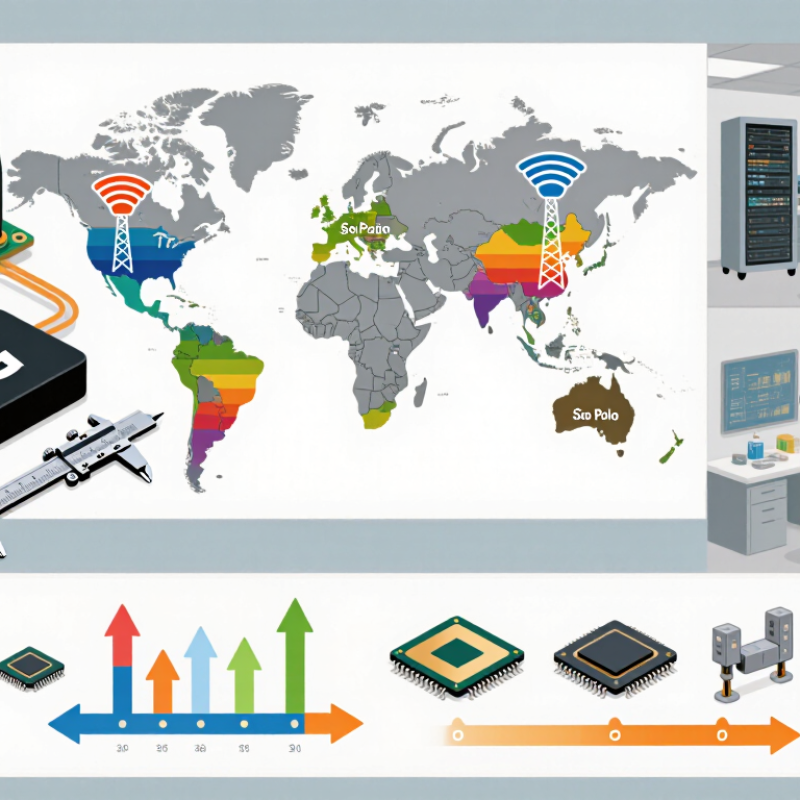
Choosing the right 5G component starts with defining its role in the target network. A radio module, timing device, core-network processor, and power component solve different problems. Treating them as interchangeable creates avoidable sourcing risk.
Network purpose matters. Enhanced mobile broadband needs high throughput and efficient spectrum use. Industrial control needs predictable latency and strong synchronization. Massive sensor deployments prioritize low power and long service life.
GSMA Intelligence reported about 1.6 billion 5G connections globally at the end of 2023, with roughly 5.5 billion forecast by 2030. That growth does not make every component suitable for every market.
Map the component to the network layer. Check supported frequency bands, carrier aggregation, latency behavior, thermal limits, and interoperability standards. Ericsson’s November 2024 Mobility Report projected 6.3 billion 5G subscriptions by 2029. Global demand will expand, but regional requirements will remain uneven. A module approved for one band plan may fail another deployment. A low-cost power unit may also struggle in a sealed outdoor cabinet.
In sourcing reviews, I examine certification paths, firmware support, repairability, and documented test results. I also ask whether the supplier can provide stable revisions for five years. That question is often missed. A neat technical specification can still hide supply interruptions or software dependencies. Independent validation, traceable quality records, and realistic field trials make the final choice more reliable.
Choosing a 5G component for global sourcing starts with regional standards, not catalog availability. 3GPP specifications define the technical framework, but each market allocates different bands. Low-band spectrum below 1 GHz improves indoor coverage. Mid-band, often around 3.3–4.2 GHz, balances speed and reach. mmWave bands above 24 GHz deliver high capacity but require dense site planning. A component supporting every band on paper may still perform poorly in a local network.
Regional certification can change the sourcing decision. The United States commonly requires FCC authorization, while European markets apply CE-related radio and electromagnetic requirements. Other regions may request local testing, import registration, or operator approval. Check supported NR bands, duplex mode, antenna design, power limits, and country-specific emergency requirements. Small details matter.
Industry forecasts show why this work is urgent. GSMA Intelligence projected more than 2 billion global 5G connections by the end of 2025 in its Mobile Economy 2024 report. Ericsson’s Mobility Report, published in November 2024, estimated about 2.3 billion 5G subscriptions by year-end 2024. These figures indicate scale, not universal compatibility. In practical sourcing reviews, a compliance matrix is useful, but it is not perfect. Firmware restrictions, regional testing delays, and antenna losses can undermine an otherwise suitable module. Validate samples in the target country before committing to volume.
Identify regional 5G standards, bands, and certification requirements before selecting a radio-frequency component, antenna, modem, or module.
The chart shows representative center frequencies for commonly referenced 5G NR spectrum positions. Actual allocations, channel bandwidths, duplex modes, and deployment status can vary by operator and country, so component support should be checked against the target market’s approved band plan.
Global sourcing turns a 5G component into a performance, compatibility, and power decision.
Market scale raises the cost of a weak choice. GSMA Intelligence reports 1.6 billion 5G connections at the end of 2023, with 5.5 billion forecast by 2030. For RF front ends, compare insertion loss, receiver sensitivity, linearity, and supported bands. Do not judge throughput alone.
Compatibility begins with the target modem and regional spectrum plan. Check 3GPP release support, sub-6 GHz or millimeter-wave coverage, carrier aggregation, duplexing, and antenna impedance. A component can pass laboratory tests yet fail in a crowded enclosure. ITU’s IMT-2020 framework identifies peak data rates of 20 Gbit/s downlink and 10 Gbit/s uplink. Those are system-level targets, not guaranteed module results. Use conducted and over-the-air tests across temperature and frequency corners.
Power specifications need equal scrutiny. Compare power-amplifier efficiency, transmit current, sleep current, heat rise, and thermal derating. A smaller package may save board space, yet force higher thermal stress. In practical sourcing reviews, I often keep a 15–20% electrical margin. That is not always economical. However, supply substitutions, firmware revisions, and regional testing can expose optimistic assumptions. Request verified datasheets, lifecycle commitments, and independent test evidence before purchase.
Choosing a 5G component for global sourcing requires more than comparing unit prices. Define the operating band, thermal range, data rate, connector type, and expected service life. A module tested in a quiet laboratory may behave differently inside a metal enclosure. Request production samples, not only development units. Ask for test conditions and raw results. This detail matters.
Evaluate suppliers through documented audits, factory capacity, engineering depth, and financial continuity. Verify traceability from wafer, substrate, or connector lot to the finished component. Check whether the supplier controls subcontractors and reports process changes before shipment. A written change-notification period is useful, even when it feels bureaucratic. Review certificates for each destination market, including radio, safety, environmental, and import requirements. Do not accept a certificate with a mismatched model number. That error is common.
Measure supply-chain reliability with actual lead-time history, capacity reservations, minimum order quantities, and recovery plans. Request evidence from the last four quarters, then compare promised and delivered dates. Test incoming lots with a defined sampling plan, especially for sensitivity, output power, and solderability. Keep a qualified second source where design rules permit. Still, dual sourcing can create firmware and calibration differences. Ignoring that risk is an avoidable weakness. Build those differences into validation. No plan is perfect.
| Component Category | Typical 5G Application | Relevant Frequency Range | Critical Technical Criteria | Common Compliance Evidence | Typical Production Lead Time | Recommended Supply-Chain Benchmark | Supplier Qualification Evidence |
|---|---|---|---|---|---|---|---|
| RF Power Amplifier Module | Transmit power amplification in radio units, small cells, and customer-premises equipment | FR1: approximately 410 MHz–7.125 GHz; FR2: approximately 24.25–71 GHz, depending on product design | Gain, output power, power-added efficiency, linearity, error-vector magnitude, thermal performance, and ruggedness | RoHS, REACH, conflict-minerals declaration, material declaration, and market-specific radio-equipment evidence where applicable | Typically 12–26 weeks after design approval; longer for customized variants | At least two qualified wafer, assembly, or final-test options; documented allocation and end-of-life notification process | Electrical characterization across temperature, reliability report, change-control procedure, and lot traceability |
| RF Front-End Module | Integrated filtering, switching, amplification, and antenna-path control in 5G user equipment | Sub-6 GHz FR1 bands; support depends on the selected regional band combination | Insertion loss, isolation, sensitivity, switching time, coexistence performance, and multi-band coverage | RoHS, REACH, product safety documentation, and regional radio-compliance test support | Typically 10–20 weeks for established products; 20–36 weeks for new configurations | Approved second source or pin-compatible alternative; safety stock sized to forecast volatility | S-parameter data, band-by-band test results, application reference design, and production yield history |
| RF Filter, Duplexer, or Diplexer | Band selection and interference rejection in radio and antenna signal paths | Sub-6 GHz bands; exact passband and rejection profile are band-specific | Passband insertion loss, return loss, rejection, temperature drift, power handling, and acoustic or ceramic stability | RoHS, REACH, material declaration, and applicable product-level radio testing support | Typically 8–18 weeks; custom filter tooling may add several weeks | Tooling ownership clearly defined; alternative material or process approved before mass production | Network-analyzer plots, temperature-cycle results, cavity or ceramic process controls, and incoming inspection limits |
| 5G Antenna Module | Beamforming, multiple-input multiple-output operation, and wireless coverage in devices and infrastructure | FR1: approximately 410 MHz–7.125 GHz; FR2: approximately 24.25–71 GHz | Efficiency, gain, radiation pattern, isolation, beam-steering accuracy, enclosure detuning, and thermal behavior | RoHS, REACH, material declaration, and product-level regional radio certification support | Typically 12–24 weeks; tooling and chamber validation can extend development schedules | Manufacturing capability in more than one region or a documented recovery plan for tooling, labor, and logistics disruption | Antenna-pattern reports, over-the-air test data, design-for-manufacturing review, and environmental test results |
| 5G Modem or Baseband Processor | Protocol processing, modem functions, carrier aggregation, network connectivity, and device control | FR1 and, where supported, FR2; band support is defined by the approved software and hardware configuration | 3GPP release support, throughput, latency, power consumption, thermal limits, software maintenance, and memory compatibility | RoHS, REACH, product safety documentation, software-security process, and regional certification support | Typically 16–40 weeks for allocation-controlled devices; engineering qualification may take 6–18 months | Formal allocation agreement, long-term product-lifecycle commitment, firmware escrow or continuity plan, and last-time-buy policy | Software release schedule, interoperability results, security vulnerability process, thermal validation, and product-change notices |
| Timing, Clock, or Synchronization IC | Reference clocks, network synchronization, phase alignment, and low-jitter timing distribution | Frequency range depends on the design; common network timing functions include GNSS, SyncE, and IEEE 1588 support | Phase noise, jitter, frequency accuracy, holdover performance, temperature stability, and electromagnetic susceptibility | RoHS, REACH, material declaration, and equipment-level electromagnetic-compatibility support | Typically 10–24 weeks; precision timing products may require allocation planning | Second-source validation, buffer inventory for constrained components, and documented calibration capability | Jitter and phase-noise plots, temperature qualification, aging data, calibration records, and firmware compatibility evidence |
| RF Connector and Cable Assembly | Interconnection between radio boards, filters, antennas, test ports, and outdoor equipment | DC to several GHz for many FR1 designs; higher-frequency assemblies require controlled impedance and specialized construction | Impedance, insertion loss, return loss, shielding, mating durability, vibration resistance, and ingress protection | RoHS, REACH, material declaration, flammability evidence where applicable, and environmental protection ratings for outdoor use | Typically 6–16 weeks; custom cable lengths and tooling may extend the schedule | Regional manufacturing or approved contract assembly backup; supplier maintains controlled drawings and connector tooling | Network-analyzer test records, dimensional inspection, pull-force testing, mating-cycle results, and environmental sealing validation |
| Evaluation Dimension | Recommended Weight | Minimum Acceptance Benchmark | Verification Method | Risk Indicator |
|---|---|---|---|---|
| Technical Fit | 25% | All required bands, electrical limits, environmental ratings, and mechanical interfaces are met with documented test data | Datasheet review, sample testing, interoperability testing, and engineering approval | Reliance on unverified simulation data or incomplete band coverage |
| Regulatory Compliance | 15% | Current material declarations and market-specific compliance support are available before mass production | Document audit, declaration review, test-report verification, and change-notification assessment | Expired certificates, incomplete substance data, or unclear product-change control |
| Quality and Reliability | 20% | Traceable lots, defined acceptance limits, corrective-action process, and reliability data appropriate to the application | Factory audit, sample inspection, reliability report, and nonconformance review | High field-return rate, weak traceability, or repeated undocumented process changes |
| Supply Continuity | 20% | Capacity plan, business-continuity plan, allocation policy, recovery targets, and at least one credible supply alternative | Capacity review, site assessment, financial-risk screening, and continuity-plan test | Single-site dependency, opaque subcontracting, or no contingency inventory |
| Commercial and Logistics | 10% | Transparent total cost, stable lead-time commitment, clear Incoterms, packaging standard, and warranty terms | RFQ comparison, delivery-performance review, logistics audit, and contract review | Low quoted price combined with unusually long lead time or unclear freight responsibility |
| Product Lifecycle and Support | 10% | Defined product-lifecycle status, advance notice of changes, firmware or design support, and end-of-life communication | Lifecycle statement, change-notification sample, technical-support SLA, and roadmap review | Frequent unannounced revisions, limited engineering support, or uncertain discontinuation policy |
Validate Samples, Costs, and Long-Term Procurement Support
Choosing a 5G component starts with sample validation, not a polished product sheet. Global sourcing teams should test several samples under realistic conditions. Check signal loss, operating temperature, connector fit, dimensions, and mechanical stability. Ask for inspection records, material details, and batch traceability. A component that performs well in a quiet laboratory may behave differently inside a crowded enclosure.
Small details matter. Request samples from actual production lines, not only engineering stock. Test them with your planned circuit and cable layout. Record performance before and after repeated assembly. This process may reveal weak connectors or inconsistent shielding. That is useful evidence, even when the result feels inconvenient.
Cost analysis should include tooling, minimum order quantities, packaging, shipping, taxes, testing, and possible redesigns. Cheap samples often hide expensive revisions. Compare landed costs across realistic order volumes. Then examine long-term procurement support. Ask about production capacity, lead-time changes, quality controls, engineering response times, and formal change notifications. A practical supplier should explain how shortages will be handled and whether an approved alternative can be qualified.
A spreadsheet can still lie. Forecasts change. Pilot orders and scheduled quality reviews provide stronger evidence than promises. Keep test records, approval criteria, and corrective actions accessible to both engineering and procurement teams. Mistakes may remain, especially when specifications are incomplete. Review them openly before they become recurring purchasing problems.
To learn more about any of the products and services provided by Abbott Ball Company, Inc., simply complete the form below.