How to Choose the Right Hydraulic Coupler Fittings for Your Needs?
When selecting the right Hydraulic Coupler Fittings, expert John Smith often emphasizes, "The right fitting can make or break your hydraulic system." Hydraulic coupler fittings are crucial components in hydraulic systems, influencing efficiency and reliability. Understanding their significance can lead to better operational outcomes and enhanced safety.
Choosing the correct fittings involves more than just picking a size. Factors like pressure ratings, material compatibility, and connection types are vital. Each choice impacts performance and longevity of the system. Expert insights indicate that misjudgments often arise due to insufficient knowledge or overlooked specifications.
Even experienced professionals can face challenges while selecting hydraulic couplers. Mistakes can happen, leading to system failures. Reflecting on the details and consulting with trusted resources is essential. Reliable suggestions and expert advice can guide you toward the most suitable hydraulic coupler fittings for your needs.
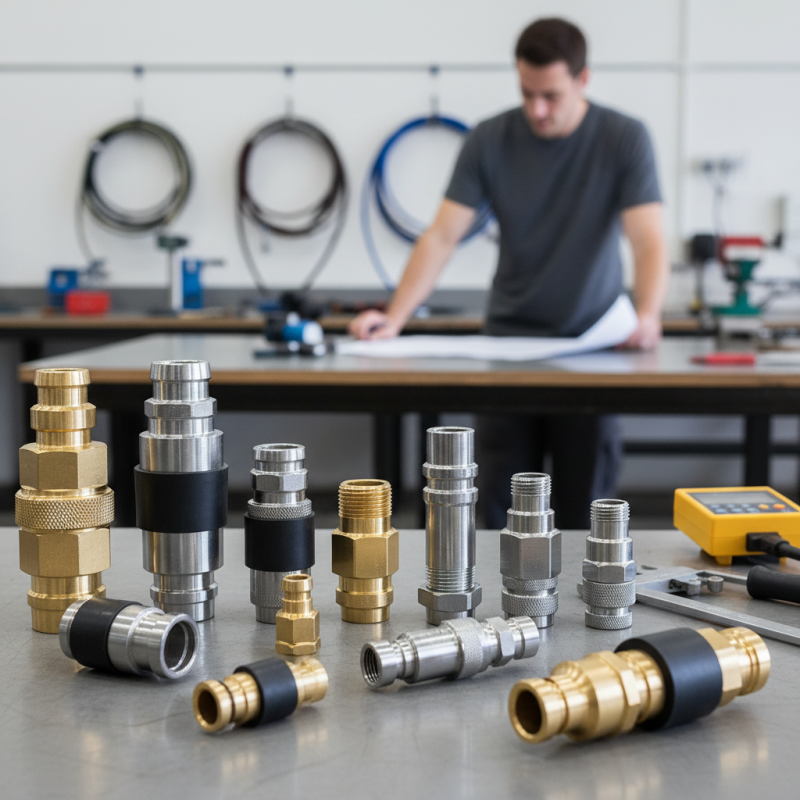
Understanding the Basics of Hydraulic Couplers and Fittings
Hydraulic couplers and fittings play a vital role in fluid connection systems. These components enable efficient fluid transfer in various applications, ranging from industrial machines to agricultural equipment. Understanding their basics helps in selecting the right fittings for your specific needs.
Hydraulic couplers are designed to connect hoses and tubes securely. They ensure minimal leakage and pressure loss, which is crucial for maintaining system performance. According to the National Fluid Power Association, well-chosen couplers can enhance system efficiency by up to 15%. Various types of couplers exist, including quick disconnects and permanent fittings, each suited for different applications. The choice often hinges on operating pressure, flow rate, and environmental conditions.
Fittings must be compatible with the specific hydraulic fluids in use. Using the wrong material can lead to corrosion or failure. Furthermore, installation errors can disrupt system integrity. Inadequate attention to details, such as torque specifications during assembly, could lead to serious issues. Engaging with hydraulic professionals can mitigate some of these risks, but clear understanding remains paramount.
Identifying Your Specific Hydraulic System Requirements
Identifying your specific hydraulic system requirements is crucial for selecting the right hydraulic coupler fittings. Begin by assessing the pressure rating of your system. Higher pressures require fittings that can withstand significant loads. This ensures that your system functions safely and effectively.
Consider the fluid type in your hydraulic system. Different fluids have varying properties. The right material for the couplers is essential. For example, some fluids can damage certain metals, while others require corrosion-resistant options. Always verify compatibility.
Tips: Always consult with a professional if unsure about material choices. Hydraulics can be misleading. A small mistake may lead to failures. Additionally, conduct regular inspections of your fittings to ensure they remain undamaged and reliable.
Pay attention to the size and flow requirements of your system. Choosing fittings that do not match can lead to inefficiencies. Proper sizes enhance system performance, while mismatched sizes may cause leaks or blockages. Make sure you double-check all measurements before making a purchase.
Evaluating Compatibility with Existing Equipment and Standards
When selecting hydraulic coupler fittings, compatibility is crucial. It's essential to assess how these fittings align with your existing equipment. Industry reports indicate that improper fitting selection can lead to 30% of machinery downtime due to leaks and malfunctions. Ensuring compatibility can enhance system efficiency and reliability.
Compatibility includes evaluating connection types and material specifications. Most hydraulic systems operate under various pressures and temperatures. Therefore, fittings need to withstand these conditions. According to a survey by the Hydraulic Institute, 25% of users reported equipment failure from using non-standard fittings. Proper fitting not only promotes safety but also maximizes uptime.
When reviewing options, consider industry standards such as ISO and SAE. These standards provide guidelines for dimensions and performance. However, adhering strictly to these standards is often overlooked. Some users prioritize cost over compatibility, risking equipment integrity. Regularly reviewing compatibility can improve long-term performance and reduce maintenance costs.
Assessing Size, Pressure Ratings, and Fluid Types for Selection
Choosing the right hydraulic coupler fittings requires a careful evaluation of size, pressure ratings, and fluid types. Understanding the dimensions is crucial. Measure the pipe diameter and ensure the fittings match perfectly. An incorrect size can lead to leaks. Always consider tolerances during measurement, as small discrepancies can create major issues.
Pressure ratings are another key aspect. Each fitting is rated for a specific pressure range. Selecting a fitting with an inadequate rating can lead to catastrophic failures. Check the specifications thoroughly. Recognize the importance of testing requirements; untested fittings may not perform as expected under high pressure.
Fluid compatibility is essential too. Different fluids can corrode materials or affect performance. For instance, hydraulic oil is different from water. Ensure the fittings are compatible with the specific fluid type being used. It's also valuable to consult with experts. Even seasoned professionals sometimes overlook details. Take time to research and double-check choices.
Best Practices for Installation and Maintenance of Hydraulic Couplers
Installing hydraulic couplers requires precision and care. Proper alignment during installation can enhance efficiency and safety. According to the Hydraulic Institute, misalignment can lead to up to a 30% reduction in system performance. Before installation, ensure that all components are clean. Contaminants like dirt can cause premature wear and failure.
Routine maintenance cannot be overlooked. Regular inspection of coupler fittings helps prevent leaks. The National Fluid Power Association suggests checking for wear at least every six months. If any wear is detected, immediate replacement is recommended. Neglecting maintenance can lead to costly downtime and repairs.
Be mindful of torque specifications when assembling fittings. Over-tightening can damage threads and create leaks. Inadequate torque may not secure connections enough, leading to failures. A gauge or torque wrench ensures the right balance. Following these practices can significantly extend the lifespan of hydraulic couplers, making regular maintenance fundamentally important.
How to Choose the Right Hydraulic Coupler Fittings for Your Needs?
| Fitting Type | Material | Pressure Rating (psi) | Temperature Range (°F) | Applications |
| NPT Couplings | Steel | 3000 | -40 to 250 | General Purpose |
| Metric Couplings | Stainless Steel | 5800 | -50 to 300 | Industrial Equipment |
| Flat-Faced Couplers | Aluminum | 4500 | -20 to 200 | Mobile Equipment |
| Quick Disconnect Couplers | Brass | 3000 | -40 to 250 | Service and Maintenance |
| Safety Couplers | Carbon Steel | 5000 | -15 to 210 | High Safety Applications |