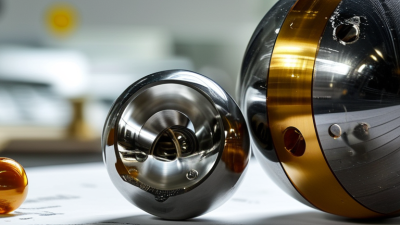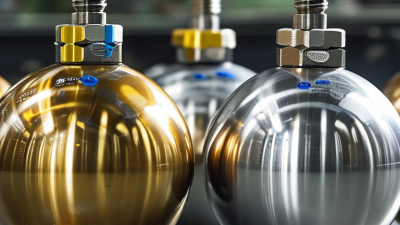
In industrial equipment, a ball may be tiny, but its effect is not. It rolls through a bearing race, supports load, and helps control friction at speed. A slight variation in diameter or roundness can change contact, vibration, and wear. Small parts. Big consequences.
The U.S. Department of Energy’s Improving Motor and Drive System Performance reports that motor-driven systems account for about 54% of electricity use in U.S. manufacturing. That figure does not measure the impact of precision balls alone. It does show why efficient, dependable rotating equipment matters. Precision balls can help manufacturers achieve consistent bearing performance, provided their material, grade, finish, and size match the application. ISO 3290-1:2014 defines requirements for steel balls, while SKF’s rolling-bearing technical guidance explains how operating conditions affect bearing selection and service life.
Quality expert Joseph M. Juran defined quality as “fitness for use.” That principle applies directly here: the best precision balls are not automatically the most expensive or tightest-tolerance ones. They are the ones suited to the load, speed, temperature, lubrication, and contamination risks in the machine. A pump, machine-tool spindle, and food-processing conveyor may need different choices. This deserves careful review. A specification can look impressive on paper and still miss the real operating conditions. Selecting precision balls with documented tolerances and traceable material data gives engineers a stronger basis for reliability, but it cannot replace testing in the actual assembly.

Precision balls are spherical components used in bearings, pumps, valves, and measuring instruments. Their controlled diameter and roundness help parts move smoothly and maintain consistent contact. Small differences matter. A rough surface or uneven size can increase friction, noise, or wear. Materials vary, too; stainless steel, bearing steel, and ceramics suit different operating conditions.
Manufacturing depends on the material and required tolerance. For many steel balls, wire is cut into small pieces and formed under pressure. The resulting blanks are heat-treated when the application requires greater hardness. Grinding brings each ball closer to its target size, while lapping refines its surface and roundness. Inspection may check diameter, surface defects, and consistency across a batch. A glossy finish alone proves little; measurements matter.
Tips: Match the ball material and tolerance to the load, speed, temperature, and surrounding fluid. Ask for inspection data when consistency is critical. Do not assume tighter tolerances are always better; they can add cost without improving a particular assembly. It is easy to overlook fit during selection, and that deserves a second look.
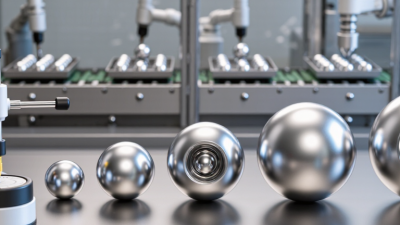
Precision balls support smooth, repeatable motion in bearings, valves, and measuring equipment. Their material affects wear, corrosion resistance, load capacity, and temperature performance. Chrome steel offers hardness and fatigue resistance in lubricated assemblies. Stainless steel suits damp conditions, though its corrosion resistance varies by grade and exposure. Silicon nitride is lighter than steel and electrically insulating, but it can be brittle under impact. There is no universal best choice.
Dimensional properties matter just as much. Diameter tolerance controls how consistently balls fit their raceways, while roundness and surface finish influence vibration and friction. A tiny size variation can change clearance across a bearing set. Check the specified grade, measurement method, and operating temperature rather than relying on nominal diameter alone. In practice, installation and lubrication can undermine even excellent ball accuracy. That detail is easy to overlook.
Tips: Match the material to the actual environment and load. Confirm tolerances against the assembly drawing, and inspect a sample lot with suitable measuring equipment. If the application is unusual, test under realistic conditions; calculations do not always capture every vibration or contamination issue.
Precision balls help industrial bearings, pumps, valves, and linear guides maintain smooth, repeatable motion. Controlled diameter, roundness, and surface finish can reduce uneven contact between rolling elements and raceways. In a high-speed spindle, that may mean less vibration and steadier positioning. In a pump, it can support consistent rotation under changing loads. Small parts matter. The U.S. Department of Energy’s 2014 motor-system sourcebook estimates that motor-driven systems use about 68% of the electricity consumed in U.S. manufacturing. This figure does not measure precision-ball performance directly, but it highlights why mechanical efficiency deserves attention.
Performance depends on the entire assembly. ISO 281:2007 defines basic bearing rating life using factors such as load and dynamic load rating; its L10 life represents a 90% reliability level under specified conditions. Precision balls can support consistent bearing operation, but poor lubrication, misalignment, or contamination can erase much of their advantage. Not glamorous. Maintenance teams can track noise, temperature, lubricant condition, and replacement intervals instead of assuming tighter tolerances solve every problem. Choosing a ball grade to suit speed, load, and operating conditions is often more useful than selecting the tightest tolerance automatically. Even a well-made ball cannot correct a distorted housing or rough raceway.
Precision balls serve many industrial sectors because their roundness and consistent diameter support smooth, repeatable motion. In electric motors and machine-tool spindles, they help bearings carry loads while limiting friction. Small details matter. A slight size variation can affect vibration, heat, and service life.
Pump and valve assemblies use precision balls as rolling elements or sealing components. In flow-control equipment, a ball must match its seat and operating pressure to help reduce leakage. Automotive steering systems and aerospace actuators also use them where controlled movement and dependable performance are important. The required material and finish vary with load, speed, temperature, and exposure to moisture or chemicals.
Tips: Check the load, speed, temperature, and lubrication before selecting a ball. Confirm material compatibility with the surrounding parts. A specification can look complete and still miss a real operating condition, so review it against test results when possible.
The right choice is rarely based on diameter alone. For example, a stainless-steel ball may resist corrosion, while a harder bearing-steel ball may suit demanding loads. Neither is automatically better. Surface finish, clearance, and maintenance conditions also matter. One detail is easy to overlook: real equipment may run hotter or dirtier than its design assumptions suggest. That deserves a second check.
Selecting precision balls starts with the operating conditions, not the smallest tolerance available. Identify the load direction, speed, temperature, lubrication, and contamination level. A ball in a high-speed spindle faces different demands from one in a slow, heavily loaded valve. Small errors matter. Diameter variation and roundness affect contact, vibration, and noise, while surface finish influences friction and wear.
Choose material and grade together. Stainless steel can resist corrosion, while bearing steel typically suits demanding rolling contact; ceramic may help where low mass or electrical insulation matters. Check the required diameter tolerance, sphericity, hardness, and surface condition against the assembly design. ISO 3290-1 defines dimensional and form tolerances for steel balls, giving engineers a consistent basis for comparing grades. Tighter tolerances can improve performance, but they also raise cost. More precision is not automatically better.
Consider the whole system, too. The U.S. Department of Energy’s 2014 Improving Motor and Drive System Performance sourcebook estimates that motor-driven systems account for about 68% of U.S. industrial electricity use. That figure is not a promise that better balls will deliver equivalent savings; alignment, seals, and lubrication also matter. For bearing applications, ISO 281 calculates basic rating life, with L10 representing a life reached or exceeded by 90% of a group under stated conditions. Treat it as a useful estimate, not a guarantee. I would verify fit and operating temperature in a prototype, because real assemblies can disappoint.
To learn more about any of the products and services provided by Abbott Ball Company, Inc., simply complete the form below.