
Choosing among China’s top Super Intalox Saddle manufacturers takes more than comparing prices or product photos. These structured packing components can influence liquid distribution, pressure drop, and mass-transfer performance in a tower. Dimensions, material, and surface finish matter. So does consistency between batches.
This guide introduces ten manufacturers for buyers to assess, not as a definitive ranking. Company capabilities and product ranges can change, and public information may not tell the whole story. A polished website is not proof. Request current specifications, material details, quality records, and a sample when practical. Check whether the supplier can explain tolerances and recommend a suitable size for your operating conditions. Ask how it handles inspection, packaging, and delivery, too. Small details count.
Compare like with like. A lower quotation may exclude testing, special materials, or protective packing. Confirm what is included before drawing conclusions. If a claim cannot be verified, treat it as a question—not a fact. That distinction is easy to miss. The right supplier should answer technical questions clearly and provide documents that match the goods shipped. Use this overview as a starting point, then verify each company directly against your process needs, project schedule, and purchasing requirements. No list can replace careful evaluation.
What Is a Super Intalox Saddle and How Does It Work?
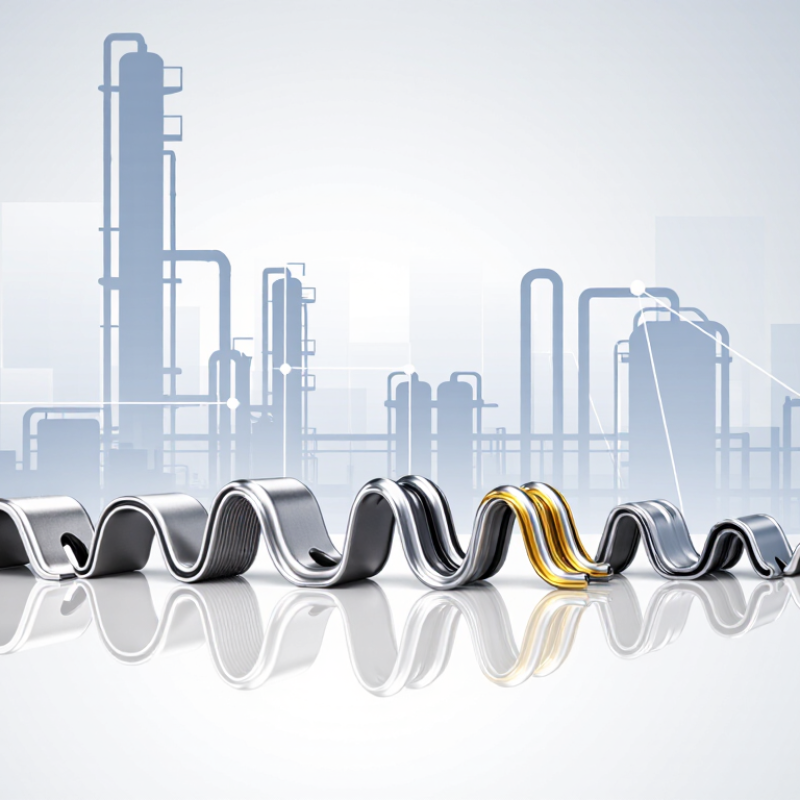
A Super Intalox Saddle is a type of random packing placed inside a packed tower. Its curved, open shape gives liquid and gas many surfaces to contact. Unlike a flat ring, the saddle’s contours can help liquid spread across the packing rather than run down one narrow path. A simple shape. Its actual performance still depends on material, size, and operating conditions.
In a tower, liquid flows downward over the saddles while gas moves upward through the open spaces. The streams meet on the wetted surfaces, allowing heat or components to transfer between them. The open structure can support good contact while limiting resistance to gas flow, but results vary with tower design and loading. Not quite a universal fix. Poor distribution can leave dry patches, even when the packing itself is well made.
Tips: Check that the packing size suits the tower diameter and process load. Keep installation even, and inspect liquid distribution near the top of the bed. Fit matters. If performance looks uneven, the distributor may deserve as much attention as the packing.
This table summarizes general Super Intalox saddle packing characteristics and selection considerations. It does not rank or identify manufacturers. Actual dimensions and performance depend on the product design, material, size, and operating conditions.
| No. | Data Dimension | General Description | Why It Matters |
|---|---|---|---|
| 1 | Packing type | Super Intalox saddles are randomly loaded tower packing with a curved, open shape. | The open geometry provides vapor and liquid with multiple paths through the packed bed. |
| 2 | Mass-transfer function | Liquid spreads over the packing surface while vapor flows through the open spaces, supporting contact between the phases. | Effective phase contact is important in operations such as absorption, stripping, and distillation. |
| 3 | Common materials | Commercial random saddles may be made from ceramic, metal, or plastic, depending on the design and service requirements. | Material choice affects chemical compatibility, temperature limits, weight, and mechanical strength. |
| 4 | Surface area | Geometric surface area is specified by the particular packing size and design; it is not a single value for all saddle products. | Surface area can influence available contact area, but must be considered together with wetting and operating conditions. |
| 5 | Void space | The shaped pieces leave open passages when randomly packed. The actual void fraction depends on the packing geometry and installation. | Open space affects gas and liquid flow, pressure drop, and the likelihood of liquid hold-up. |
| 6 | Pressure drop | Pressure drop varies with packing size, bed depth, gas and liquid loads, and fluid properties. | It is a key design and operating consideration, particularly when energy use or column capacity is important. |
| 7 | Liquid distribution | Performance depends on liquid being distributed across the packed bed; distributor design and installation are important. | Poor distribution can reduce effective packing use and lead to uneven mass transfer. |
| 8 | Typical applications | Random saddle packing is used in packed towers for processes including gas absorption, stripping, and some distillation duties. | The suitability of a specific packing should be checked against the process fluids and required separation. |
| 9 | Mechanical and chemical suitability | Selection should account for service temperature, chemical exposure, handling loads, and the support arrangement. | These factors help determine whether ceramic, metal, or plastic packing is appropriate for the duty. |
| 10 | Selection data to request | Confirm nominal size, material, packing factor or equivalent design data, pressure-drop information, operating limits, and applicable test documentation. | Comparable technical data is more useful for equipment selection than a manufacturer name or an unsupported ranking. |
Super Intalox saddles are made mainly from ceramic, metal, or engineered plastics. Ceramic suits hot, corrosive service and resists many acids, but it is brittle; rough handling can chip the edges. Stainless steel offers strength and thin walls, supporting high capacity, though alloy choice matters in corrosive streams. Polypropylene and other plastics are lightweight and resist many chemicals, but temperature and solvent limits need checking against the exact resin data sheet. Material choice is not cosmetic.
Perry’s Chemical Engineers’ Handbook, 9th edition, reports typical random-packing void fractions broadly around 70–90%, varying with shape and size. Higher voidage can reduce resistance to vapor flow, but does not guarantee lower pressure drop in every tower. The GPSA Engineering Data Book, 14th edition, likewise treats capacity and pressure drop as dependent on packing geometry, fluid properties, and operating rates. Look for uniform dimensions, smooth contact surfaces, and adequate crush strength; these affect installation damage and liquid distribution. Not a universal rule. In practice, fouling, poor wetting, and a badly loaded bed can erase a packing’s theoretical advantage. Ask for material-specific temperature limits, chemical compatibility, and pressure-drop test conditions before comparing supplier figures.
China’s Super Intalox saddle industry includes material specialists, integrated plants, and smaller workshops supplying components or customized batches. Ceramic producers shape and fire saddles, while plastic makers rely on injection molding and metal producers use forming and finishing processes. These routes create different cost, weight, and temperature profiles.
Production is only one part of the structure. Raw material suppliers, mold makers, testing teams, distributors, and export agents connect factories with project buyers. Quality checks may cover dimensions, crush strength, porosity, and packing consistency. For ceramic units, uneven firing can affect strength; for molded products, poor mold control may leave visible variation. Small details matter.
Not always.
A catalogue can look convincing, yet it cannot show how evenly a kiln load was fired or how carefully a shipment was inspected. Buyers comparing manufacturers should ask for material specifications, inspection records, and samples from routine production, not only polished display pieces. Capacity also needs context: a large stated output does not prove consistent delivery across different saddle sizes. The market is not perfectly transparent, and published figures can be difficult to compare.
A credible comparison of China’s top Super Intalox saddle manufacturers should begin with product consistency, not promotional claims. Check whether samples match the stated dimensions, surface finish, and material grade. Small differences can affect packing density and liquid distribution. Ask for inspection records and batch-to-batch quality data. Details matter.
Manufacturing capability is another useful measure. Review production capacity, mold control, and documented quality checks. For ceramic saddles, examine firing consistency and resistance to thermal or chemical conditions relevant to the process. For plastic or metal products, verify that the material suits the operating temperature and fluid. Request technical data on pressure drop, mass-transfer performance, and loading limits, then compare test conditions carefully. Numbers without test methods are hard to judge.
Strong suppliers can explain how product geometry fits a tower’s diameter, liquid load, and separation goals. They should provide clear drawings, packing guidance, and responsive engineering support. References from comparable installations can help, but ask what operating conditions those projects actually faced. A ranking still has limits: published data may be incomplete, and the lowest price rarely reveals lifetime cost. I would weigh transparent evidence more heavily than a polished catalog, while admitting that even good documentation cannot predict every plant’s performance.
When comparing Chinese suppliers of Super Intalox saddles, match the product to your tower conditions, not just the quoted price. Check material, nominal size, dimensional tolerance, bulk density, and documented crushing strength. Ask how the saddle’s shape and surface finish support liquid distribution and gas flow in your application. Request a current technical data sheet, then compare the same measurements across suppliers.
Tips: Ask for samples from a normal production batch, not a specially prepared display piece. Measure several units, inspect for chips and uneven edges, and request the test method behind each performance claim. A polished brochure proves little.
Supplier selection also depends on repeatability. Ask how batches are inspected, how defects are recorded, and whether shipment packaging protects ceramic or plastic pieces from impact and moisture. Confirm lead time, minimum order quantity, export packing details, and what happens if delivered dimensions differ from the approved sample. I would not treat one clean sample as proof of consistent production; that judgment needs batch records and follow-up checks. Small checks can prevent expensive tower delays. Compare written evidence, not confidence alone.
To learn more about any of the products and services provided by Abbott Ball Company, Inc., simply complete the form below.