
China’s manufacturing base offers a wide range of floor-care equipment, but choosing a supplier takes more than comparing prices. A Combination Sweeper Scrubber collects loose debris and washes floors in one pass. On a busy warehouse floor, that can mean fewer machine changes and less time spent crossing the same aisle. Yet results depend on the details: brush pressure, water recovery, turning radius, battery capacity, and access to replacement parts.
This guide compares Chinese manufacturers through practical buying criteria, not promotional claims. It considers product range, customization, production capability, quality documentation, service support, and the suitability of each machine for real sites. Small details matter. Can the machine pass through a narrow doorway? Does its recovery system leave a damp trail near loading bays? Ask for product specifications, test reports, and a live demonstration on your floor type. A polished brochure is not enough.
ISSA’s John Barrett is a recognized voice in the professional cleaning sector. To avoid presenting an unverified quotation as his exact words, the following is an editorial paraphrase of a useful industry principle: “Cleaning equipment earns its value through reliable performance and consistent care.” That idea frames this overview. No manufacturer should be treated as the automatic winner. Some buyers may also overlook service access while focusing on machine features. This guide helps procurement teams compare options carefully and identify questions worth asking before requesting quotations.
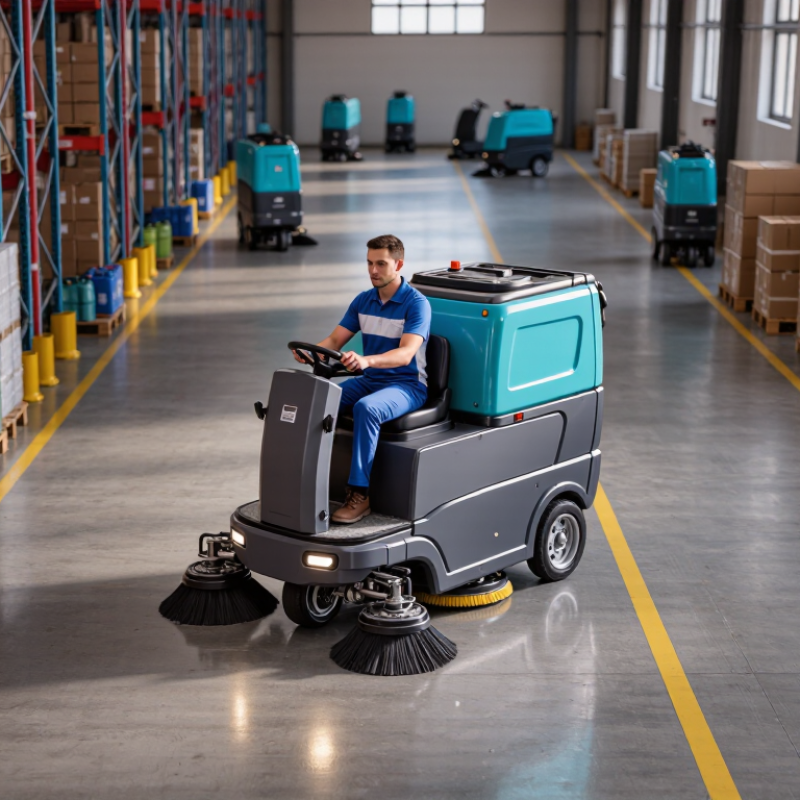
A combination sweeper scrubber handles dry debris and wet soil during one forward pass.
At the front, side brushes guide grit, leaves, and packaging fragments toward the pickup path. A collection system lifts loose material into a hopper before it spreads beneath the scrubbing deck. Then, cleaning solution reaches the floor, and rotating brushes loosen oily marks and tracked-in dirt. Small details matter. Brush pressure, water flow, and travel speed must match the floor and soil load. Otherwise, the machine may leave streaks or miss fine dust.
Behind the brushes, a squeegee gathers dirty water, while a vacuum motor draws it into a recovery tank. The floor may be ready for foot traffic sooner than after separate sweeping and scrubbing, though drying time depends on surface texture and settings. In a warehouse aisle, this sequence can reduce repeated passes and keep loose dust out of the wash water.
It is not effortless. Full tanks, clogged pickup filters, worn squeegee blades, or hurried turns can weaken results. Operators should inspect the pickup path and test a small area, especially on uneven concrete. Even a well-adjusted machine can leave debris along edges. That limitation deserves attention.
When comparing China’s combination sweeper scrubber manufacturers, use a clear benchmark: theoretical output = working width (m) × travel speed (km/h) × 1,000. A 1.0 m cleaning path at 5 km/h gives 5,000 m²/h on paper. The arithmetic is simple. The floor is not.
This figure assumes continuous travel at rated speed and full-width contact. Real sites have aisle ends, racks, drains, obstacles, and turns. Overlapping passes also reduce productive width. Ask suppliers whether “working width” means the brush path or the machine’s total width. Confirm whether the listed speed is a maximum or a sustainable cleaning setting. Small details matter. A high theoretical figure may look impressive, yet say little about a crowded warehouse.
For a fair comparison, trial machines on similar floor areas with consistent soil, water settings, and operating instructions. Record cleaned area per hour, water use, and whether the floor dries without streaks. Check tank capacity and refill time, too. I would treat the formula as a screening tool, not a promise; it can miss awkward layouts and operator differences. At aisle ends, a few extra turns can noticeably change the hourly result.
Theoretical output is calculated as cleaning width (m) × working speed (km/h) × 1,000. The configurations below are illustrative examples, not specifications for particular manufacturers or models. Actual productivity is usually lower because of turns, obstacles, overlap, stops, and site conditions.
| Illustrative Configuration | Cleaning Width (m) | Working Speed (km/h) | Calculation | Theoretical Output (m²/h) | Typical Comparison Context |
|---|---|---|---|---|---|
| Compact walk-behind class | 0.65 | 3.0 | 0.65 × 3.0 × 1,000 | 1,950 | Narrow aisles and smaller indoor areas |
| Large walk-behind class | 0.80 | 4.0 | 0.80 × 4.0 × 1,000 | 3,200 | Medium indoor spaces with frequent turns |
| Compact ride-on class | 0.90 | 5.0 | 0.90 × 5.0 × 1,000 | 4,500 | Warehouses and medium-sized paved areas |
| Standard ride-on class | 1.00 | 6.0 | 1.00 × 6.0 × 1,000 | 6,000 | Open floor areas with moderate obstacle density |
| High-capacity ride-on class | 1.20 | 7.0 | 1.20 × 7.0 × 1,000 | 8,400 | Large, relatively unobstructed hard-surface areas |
Comparison tip: Use the same measurement basis for every machine—brush or effective cleaning width, and the stated working speed under comparable conditions. Treat theoretical output as a maximum-rate calculation, not a guaranteed area-cleaned-per-hour figure.
Chinese manufacturers in the industrial cleaning sector commonly offer both ride-on and walk-behind scrubber-sweepers. Availability varies by factory, so buyers should confirm that both formats are current production models, not just catalog listings. That distinction matters.
Walk-behind units suit narrow aisles, smaller workshops, and areas with frequent turns. Check the cleaning width, recovery-tank capacity, brush access, and turning space. A machine that looks compact may still struggle around racks or doorways.
Ride-on models can cover larger floors with less operator walking. Compare rated runtime, charging time, turning radius, and seat visibility. Ask for performance data on a similar floor surface, not only a showroom demonstration.
For either type, request a dated specification sheet, parts list, and written warranty terms. Ask whether the same supplier can provide brushes, squeegees, and batteries for both models. Photos of the assembly area can help, but they do not prove production capacity. A catalog alone is not proof.
I would also ask how the machine handles wet debris and tight corners; these details are easy to overlook, and an answer may still need testing. Check whether demonstrations use comparable settings, since floor conditions can change cleaning results.
Tank capacity, battery runtime, and brush pressure shape how much floor a combination sweeper-scrubber can clean between interruptions. In a busy warehouse, a larger solution tank may reduce refill stops, while a larger recovery tank can delay emptying. Bigger is not always better. A full tank adds weight and may make tight turns harder. Check doorways, ramps, and disposal points before choosing capacity. Watch the route.
Battery runtime should match the site’s real cleaning schedule, not just a brochure estimate. Dust, floor texture, operator speed, and brush settings can all affect energy use. A unit listed for several hours may run for less time under heavy daily use. Ask for runtime information under comparable conditions, and consider charging access between shifts. This part is easy to overlook.
Brush pressure affects soil removal, water use, and wear. Too little pressure may leave dark tire marks behind; too much can increase battery drain or damage sensitive flooring. Pressure should suit the surface and the type of dirt, not simply be set to maximum. A small test area helps reveal streaking, residue, or uneven cleaning before a full shift begins. Honestly, site conditions can still surprise even experienced operators. Keep records of coverage, refill stops, and battery use during trials; those details make equipment comparisons more reliable.
For buyers comparing combination sweeper scrubber manufacturers in China, safety checks deserve as much attention as cleaning results. IEC 60335-2-72 sets particular safety requirements for commercial floor-treatment machines, including many ride-on and walk-behind models. It is a useful reference, not a promise of cleaning performance. The exact checks depend on a machine’s design and intended use.
Inspect the practical details. Technicians can assess electrical insulation, protective earthing where applicable, accessible moving parts, stability, and temperatures during operation. On a scrubber, water sits close to electrical components, so enclosure condition and cable routing matter. Check that controls are clear and that stopping the machine is straightforward. Small details count. A loose guard or worn cable can change the risk during a long shift. Keep test records, and repeat relevant checks after repairs or design changes. A checklist helps, but it can still miss awkward real-world use: wet floors, tight turns, and hurried operators. That gap deserves attention.
To learn more about any of the products and services provided by Abbott Ball Company, Inc., simply complete the form below.