
Choosing China’s best Produce Trays for global buyers requires more than comparing prices. The right tray must protect fresh products, support efficient packing, and remain stable during long-distance transport. Buyers should examine material quality, ventilation, stackability, and compatibility with automated packing lines. A tray that performs well in a local warehouse may fail after several days in humid, refrigerated conditions.
Experienced importers usually request samples before approving large orders. They check corner strength, surface cleanliness, drainage design, and label adhesion. Small details matter. A crushed edge can damage berries, tomatoes, or stone fruit before reaching retail shelves. Reputable Chinese manufacturers should provide clear specifications, production records, material declarations, and relevant food-contact documentation. Independent testing may also be appropriate when products enter tightly regulated markets.
There is no universal “best” tray. Recycled content, durability, appearance, and cost can create difficult trade-offs. Some buyers initially focus on unit price, then discover higher losses during handling. That assumption deserves review. Reliable sourcing depends on factory communication, quality-control procedures, mold consistency, and export experience. Buyers should compare several suppliers using the same sample requirements and inspection standards. This guide explores how to assess Chinese Produce Trays with practical attention to product safety, supply stability, and total operating value. Mistakes still happen, but careful testing makes them less expensive.
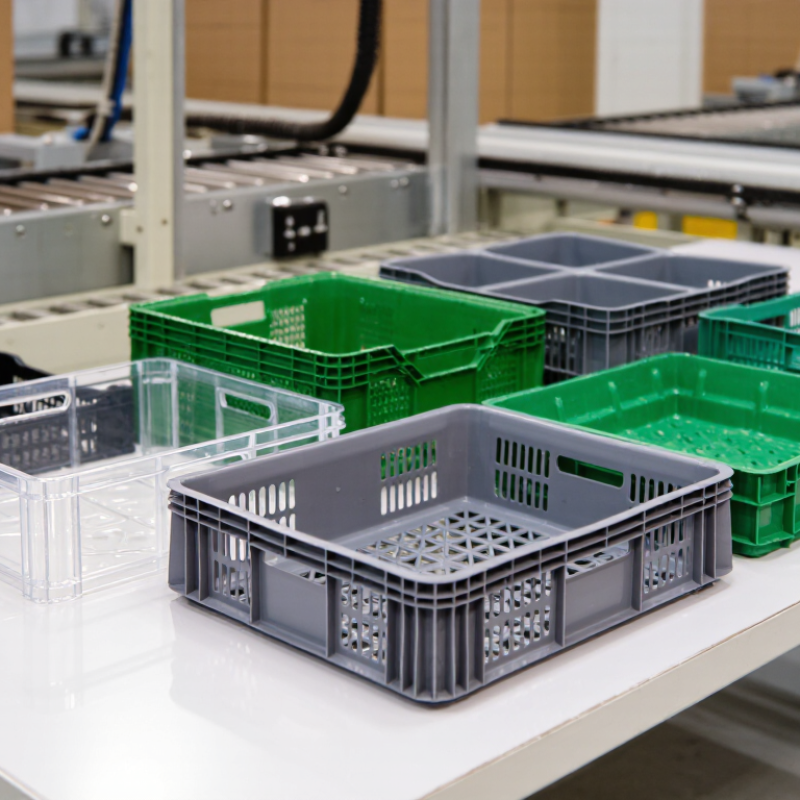
FAO estimates that 13.2% of food is lost between harvest and retail worldwide. Fresh produce carries much of this risk because it bruises, warms, and loses moisture quickly. For global buyers, produce trays are not simple packaging. They are handling equipment. A well-designed tray can separate delicate items, support airflow, and reduce crushing during stacking. The right choice starts with crop type, route length, humidity, and loading practice.
In procurement trials, inspect corners, ventilation holes, surface smoothness, and nesting accuracy. A tomato tray needs different support from a leafy-greens tray. Drainage matters when condensation collects after cold storage. Strong rims protect loads during forklift movement and port transfers. Reusable trays may lower packaging waste, but only when return logistics are realistic. Otherwise, cleaning, storage, and empty-trip costs can erase the benefit. That detail is easy to miss.
Ask suppliers for compression data, temperature limits, food-contact documentation, and sample testing. Test filled trays on the actual route, not only in a warehouse. Record bruising, weight loss, stacking shifts, and rejected units. Measurements build confidence. Yet no tray prevents every loss. Poor harvesting, delayed cooling, and rough handling still matter. I would also question one common assumption: heavier trays are not automatically safer. They may cost more energy and freight space without protecting the crop better.
For global produce buyers, the best tray depends on the route, crop, and packing line. PET offers strong clarity, clean presentation, and reliable shape retention. It suits berries, tomatoes, and cut produce when buyers want to inspect freshness quickly. Its main weakness is rigidity. PET trays can crack under impact or cold handling. Recycling also depends on local collection systems, not only the resin code.
PP handles heat, moisture, and repeated handling well. It works for heavier produce and supply chains with returnable packaging programs. However, its flexibility may reduce stacking stability when trays are thin. EPS provides excellent cushioning and insulation at a low weight. It protects delicate fruit during long transport, but its large volume creates storage and recycling difficulties. Some cold rooms also expose its brittleness.
Molded fiber gives a natural appearance and can support renewable-material goals. It performs well for dry produce and short retail cycles. Moisture remains a concern. Juice from ripe fruit may soften the tray or affect its shape. I once treated fiber as an automatic sustainability choice, but that view was too simple. Water resistance, coatings, transport distance, and local recovery capacity all change the result. Buyers should test filled trays in real cold-chain conditions. Measure compression, ventilation, product bruising, and nesting space. Small differences matter. A tray that looks efficient empty may waste labor when filled. Cost per shipment is often more useful than cost per unit.
What Are China’s Best Produce Trays for Global Buyers?
For global buyers, the best produce tray is not simply the cheapest or lightest option. It must protect fruit and vegetables during loading, transport, storage, and repeated handling. Cold-chain validation should begin at 0–4°C and 90–95% relative humidity. These conditions expose weak materials quickly. A tray may warp, soften, or trap condensation. Ventilation openings should support airflow without allowing excessive bruising. Smooth edges also matter because sharp corners can damage delicate produce.
Use a temperature and humidity data logger inside a loaded sample. Test the tray for at least 24–48 hours under controlled conditions. Check stacking strength before and after exposure. Inspect the bottom layer carefully. It often shows compression, moisture absorption, or poor drainage first. Confirm that the tray remains stable when moved with wet gloves. Real handling can reveal problems that laboratory tests miss. In my experience, one test is rarely enough. Route vibration, pallet height, and produce weight can change the result.
Tips: Request production samples, not only photographs. Test several tray sizes with your actual produce. Record weight loss, surface moisture, and visible bruising. Ask for material specifications and quality-control records. A small ventilation change may improve cooling, but it can also weaken the tray. Recheck the design after every adjustment. Suppliers should explain tolerances clearly, even when the answer is inconvenient.
| Tray Type | Typical Material | Common Format | Typical Vent Area | Moisture Resistance at 90–95% RH | Estimated Compression Retention After Cold Conditioning | Typical Reuse Potential | Suitable Produce | Recommended Validation |
|---|---|---|---|---|---|---|---|---|
| Ventilated Corrugated Fiberboard Tray | Kraft paperboard, commonly 3-ply or 5-ply corrugated board | 250–500 g produce packs; stackable open-top tray | 3–8% | Moderate; paper strength decreases as moisture increases | Approximately 35–55% | Single-use; recyclable when clean and dry | Apples, pears, citrus, stone fruit, mushrooms | Condition at 0–4°C and 90–95% RH for 24–72 hours; measure edge-crush strength, box compression, wet strength, and vent blockage. |
| Moisture-Resistant Corrugated Tray | Corrugated fiberboard with water-resistant coating or sizing | 250–1,000 g packs; reinforced stacking design | 4–10% | Moderate to good, depending on coating and edge protection | Approximately 50–70% | Single-use; recyclable subject to coating and local systems | Berries, grapes, cherries, tomatoes, leafy vegetables | Verify Cobb water absorptiveness, edge-crush strength, box compression, coating adhesion, and recycled-fiber compatibility. |
| Molded Pulp Produce Tray | Recycled cellulose fiber or molded agricultural-fiber pulp | 6–30 cavities; molded cushioning pockets | 2–7% | Low to moderate unless treated; fiber softening can occur at high RH | Approximately 40–65% | Usually single-use; recyclable or compostable depending on additives | Eggplant, peaches, pears, apples, delicate stone fruit | Measure moisture absorption, dimensional change, compression strength, pulp odor, surface cleanliness, and migration suitability for the intended market. |
| Ventilated PP Plastic Tray | Food-contact polypropylene, injection-molded or thermoformed | 250–1,000 g packs; nesting or stackable designs | 8–20% | Very high; negligible water absorption | Approximately 90–100% | Reusable; commonly suitable for multiple distribution cycles | Berries, grapes, tomatoes, mushrooms, leafy greens | Test stack load, hinge or snap durability, impact resistance at 0–4°C, food-contact compliance, washability, and nest-to-stack ratio. |
| rPET Clamshell or Ventilated Tray | Recycled polyethylene terephthalate with food-contact grade where required | 125–500 g hinged or lidded packs | 5–15% | Very high; low moisture absorption | Approximately 85–98% | Generally single-use; recyclable where collection infrastructure exists | Strawberries, blueberries, raspberries, cherries, cut produce | Check hinge-cycle performance, lid closure, top-load compression, condensation drainage, optical defects, and recycled-content documentation. |
| PET Produce Tray with Absorbent Pad | Clear PET tray with separate food-contact absorbent insert | 200–750 g packs; shallow cavity format | 4–12% | High for tray; pad capacity must be validated separately | Approximately 85–98% | Usually single-use; recycling depends on pad and material separation | Mushrooms, berries, cut vegetables, high-respiration produce | Validate liquid-holding capacity, pad integrity, odor transfer, condensation control, seal performance, and product-contact compliance. |
| Reusable HDPE Pool Tray | High-density polyethylene, rigid washable design | 5–15 kg bulk produce; returnable distribution format | 5–15% | Very high; low water absorption and good wash resistance | Approximately 90–100% | Multiple cycles when inspected and sanitized | Apples, citrus, melons, peppers, leafy vegetables | Test repeated stacking, drop impact at 0–4°C, wash-cycle durability, microbial-cleanability, label removal, and dimensional compatibility with pallets. |
What Are China Best Produce Trays for Global Buyers?
For global buyers, the best produce trays are not judged by price alone. They must support safe contact, efficient packing, and documented compliance. Polypropylene trays are common because they are light, stackable, and suitable for ventilation. However, material selection needs evidence. The resin, colorants, coatings, labels, and adhesives should match the intended food-contact use. Not every export tray is equally ready. That assumption causes costly rework.
Under EU PPWR requirements, buyers should examine recyclability, material reduction, recycled content, labeling, and producer responsibility obligations. Requirements are developing, so suppliers must provide current technical files and packaging data. A simple mono-material design may ease sorting, but it does not automatically guarantee compliance. For the United States, FDA 21 CFR compliance depends on the exact polymer and conditions of use. Request declarations, migration information, and supporting test reports. Check whether the tray will hold whole produce, cut produce, chilled goods, or wet contents.
UN ECE FFV standards focus mainly on fresh-produce quality, sizing, presentation, and tolerances. They do not replace food-contact rules. Tray dimensions should protect appearance and reduce bruising during transport. Drainage holes, corner strength, and ventilation deserve physical trials. Ask for lot identification and traceability records. A tray can pass a laboratory test yet fail during humid shipping. Recheck stacking pressure, temperature changes, and real loading patterns before approving large volumes. Supplier documents can be incomplete. Independent verification is still sensible.
For global buyers, the best China produce trays are not always the cheapest. Supplier screening should begin with BRCGS Packaging Materials certification, especially for trays touching fresh produce. Certification supports documented hygiene, traceability, audits, and corrective actions. Still, a certificate needs verification. Ask for its scope, expiry date, and latest audit status.
MOQ can expose hidden risk. A low price may require 100,000 trays, while your seasonal demand needs only 30,000. Request a trial order with the same material, mold, and production line. Then inspect stack height, ventilation holes, edge strength, and corner damage.
The FAO estimates that 13.2% of food is lost between harvest and retail, according to its 2019 food-loss report. Tray design cannot solve every loss, but airflow and compression control matter.
A complete COA should identify resin or paper grade, batch number, dimensions, weight, and test results. For plastic trays, request migration and mechanical data where applicable. For molded-fiber trays, check moisture resistance and pulp composition. Container yield deserves a calculation, not a promise. Compare loaded volume, pallet pattern, carton quantity, and empty-space percentage.
The UNEP Food Waste Index Report 2024 estimated 1.05 billion tonnes of food waste in 2022, showing why packaging efficiency deserves attention.
My practical mistake was trusting carton counts before checking pallet stability. Recheck everything.
To learn more about any of the products and services provided by Abbott Ball Company, Inc., simply complete the form below.