Best Uses of 316 Stainless Steel What You Need to Know?
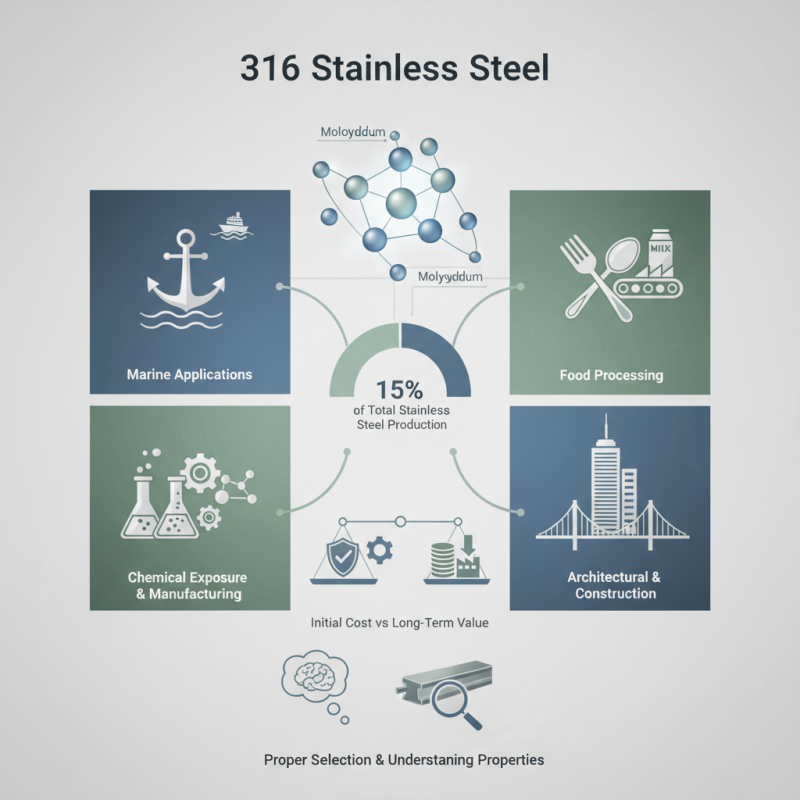
316 stainless steel is a popular choice in various industries due to its excellent corrosion resistance and durability. According to industry reports, this alloy accounts for nearly 15% of total stainless steel production. Its molybdenum content enhances its performance in harsh environments, making it indispensable in marine applications.
Many manufacturers rely on 316 stainless steel for components that face chemical exposure. The food processing sector also uses it extensively. Despite its advantages, some users underestimate the cost implications. While it offers durability, the initial expense can deter smaller businesses.
In construction, 316 stainless steel finds applications in architectural elements. However, improper selection or application can lead to performance issues. It’s important to weigh the benefits against potential drawbacks. Understanding its properties and limitations helps maximize its advantages in any project.
What is 316 Stainless Steel and Its Properties?
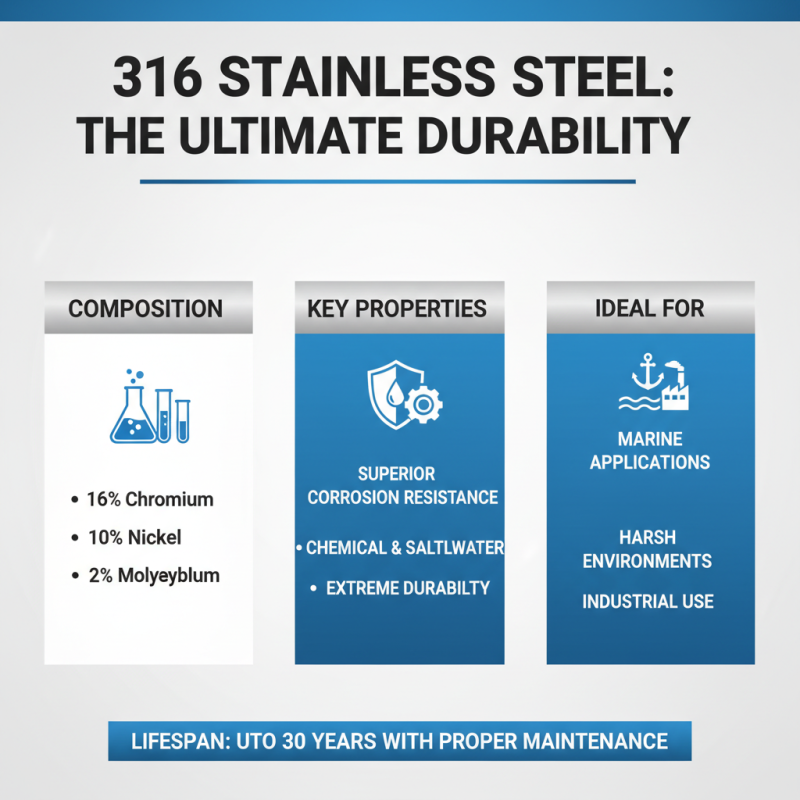
316 stainless steel is known for its excellent corrosion resistance and durability. It comprises about 16% chromium, 10% nickel, and 2% molybdenum. This unique composition makes it ideal for harsh environments. It withstands chemicals and saltwater, which is crucial in marine applications. According to industry reports, 316 stainless steel can last up to 30 years with proper maintenance.
It's crucial to note that while 316 stainless steel is robust, it is not entirely impervious to corrosion. The surface can develop rust spots if exposed to certain conditions. Moisture and contaminants can lead to pitting. Regular cleaning and inspection can help prevent this issue.
Tips: Always rinse 316 stainless steel with fresh water after exposure to seawater. Use a soft cloth to prevent scratches. Check for signs of wear regularly, especially in high-risk environments. Keeping it clean extends its life significantly.
Key Advantages of Using 316 Stainless Steel in Various Industries
316 stainless steel is known for its impressive corrosion resistance. Its composition includes molybdenum, which enhances its durability in harsh environments. Industries such as marine and chemical processing benefit significantly from using this alloy. Research from the International Stainless Steel Forum shows that 316 stainless steel maintains its strength even in extreme temperatures.
In the food and beverage industry, 316 stainless steel is preferred for its hygienic properties. Its smooth surface minimizes bacteria growth, making it ideal for food processing equipment. A report from the Food Safety and Inspection Service highlights that using this material reduces contamination risks significantly.
However, the high cost of 316 stainless steel can be a drawback. Not every application justifies the expense. In some situations, alternatives may offer sufficient performance. It's essential to evaluate the specific needs before choosing this alloy for projects.
Common Applications of 316 Stainless Steel in Construction and Manufacturing
316 stainless steel is a popular choice in construction and manufacturing due to its unique properties. This alloy contains molybdenum, which enhances its corrosion resistance. As a result, it's ideal for marine environments. Many structures use 316 stainless steel for framework and supports. Its durability ensures longevity, even in harsh conditions.
In manufacturing, 316 stainless steel is commonly found in food processing equipment. Its easy-to-clean surface minimizes the risk of contamination. This makes it suitable for kitchen appliances, pipelines, and storage tanks. Interestingly, some manufacturers struggle with welding this material. Proper techniques are essential to prevent weak joints.
Another common application is in medical devices. The alloy's biocompatibility is vital for implants and surgical tools. However, not all grades of stainless steel are suitable for every application. Choosing the right grade is crucial and can sometimes be overlooked. This reflection on material selection reminds us of the complexity in engineering choices.
Best Uses of 316 Stainless Steel - Common Applications in Construction and Manufacturing
| Application Area |
Description |
Key Properties |
| Marine Equipment |
Used in boat fittings, pumps, and valves due to its resistance to saltwater corrosion. |
Corrosion resistance, durability. |
| Chemical Processing |
Cylinders, storage tanks, and piping systems for corrosive substances. |
Chemical resistance, high strength. |
| Food Industry |
Used in food processing equipment, kitchen utensils, and storage vessels. |
Hygiene, corrosion resistance. |
| Pharmaceuticals |
Equipment for processing, storage, and transportation of pharmaceuticals. |
Purity, corrosion resistance. |
| Architecture |
Used in facade panels, railing systems, and architectural faces. |
Aesthetic appeal, weather resistance. |
Comparing 316 Stainless Steel with Other Stainless Steel Grades
When comparing 316 stainless steel to other grades, various factors emerge. This grade is known for its high corrosion resistance, particularly against chlorides. According to industry reports, 316 stainless steel contains about 2-3% molybdenum. This addition enhances its performance significantly compared to 304 stainless steel, which lacks molybdenum. In environments like marine applications and chemical processing, 316 is often the recommended choice.
However, it’s essential to consider the cost factor. 316 stainless steel is typically more expensive than its 304 counterpart. It may not always be the most practical choice, especially for less demanding applications. In general, the decision to use 316 should involve a careful analysis of the specific environment and potential risks.
For less corrosive settings, 304 stainless steel often suffices. It is more affordable and still offers good resistance. The trade-off boils down to balancing cost and performance. While 316 is strong in harsh conditions, some applications might not justify its premium price tag. Reflecting on such choices ensures smarter, more efficient material use in projects.
Best Uses of 316 Stainless Steel Compared to Other Stainless Steel Grades
Maintenance Tips for 316 Stainless Steel Products and Structures
When it comes to maintaining 316 stainless steel products, regular care is essential. This alloy resists corrosion but is not immune to it. To prolong its life, wash surfaces with soapy water. Rinse thoroughly. Avoid abrasive materials. They can cause scratches, leading to corrosion.
Another critical aspect is to dry the steel after cleaning. Water spots can develop into rust if left unattended. For tougher stains, specific stainless steel cleaners work well. Test a small area first to ensure compatibility.
Inspecting your stainless steel regularly is a good habit. Look for any signs of wear or damage. Early detection can save time and money. Remember, even stainless steel needs attention and care. It’s not invincible. Embrace the challenge of maintaining it properly.