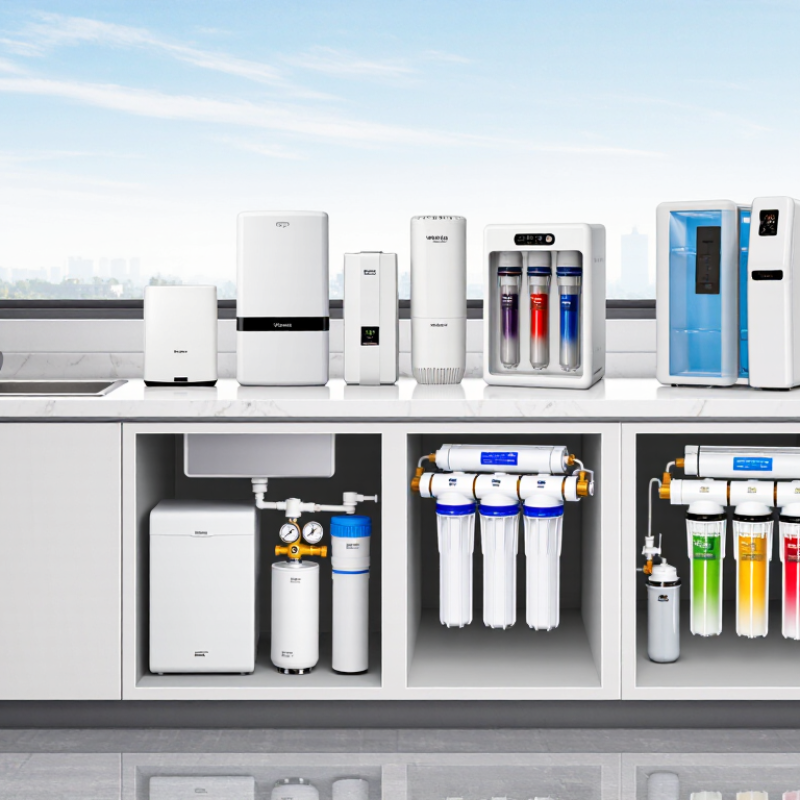
Choosing an RO Water Filter across international markets takes more than comparing prices or counting filtration stages. Buyers may face different source-water conditions, household sizes, water pressure, and replacement-part availability. A system that performs well in one kitchen may be awkward in another. Small details matter: a leaking connection, an unavailable cartridge, or a storage tank that barely fits beneath the sink. Not glamorous. Still important.
This guide compares ten options through practical criteria, including stated contaminant-reduction claims, certifications, daily capacity, installation needs, maintenance costs, and access to replacement filters. Product specifications should be checked against current manufacturer documentation, and local water quality should be tested where possible. Certifications and requirements also vary by market, so one label does not automatically settle every buyer’s question. A practical principle distilled—not quoted verbatim—from water-quality expert Dr. Joseph Cotruvo’s work is: “Match treatment to tested water conditions, then verify performance.” That is a useful starting point, not a guarantee. RO systems can differ in water use, flow rate, and mineral content, and marketing language may leave those trade-offs unclear. This comparison aims to make them easier to spot. It may still miss a detail that matters in your home. Review the specifications before choosing.
Reverse osmosis filters purify water through several stages, not one magical screen. In a typical system, a sediment cartridge catches grit, rust flakes, and other particles. A carbon stage reduces chlorine and some compounds that affect taste and odor. Then pressure pushes water against a semipermeable membrane. Water molecules pass through, while many dissolved salts, metals, and other substances are diverted into wastewater. The result? Cleaner water, but not automatically safe water. Performance depends on the source water, pressure, temperature, and membrane condition. Some contaminants may not be reduced effectively, so check test data for the specific substances you want addressed.
Many systems add a final carbon filter to improve taste before water reaches the faucet. That extra stage can help, but it cannot fix poor installation or neglected maintenance. A slow stream may signal a clogged cartridge, not better purification. Replace filters as directed, sanitize the storage tank when required, and consider testing the treated water periodically. Reverse osmosis also sends some water to a drain; the amount varies by system and operating conditions. Specs alone can be misleading. Compare them with local water reports and independent test results, and remember that even a well-designed filter involves trade-offs.
Reverse osmosis systems differ by where they treat water and how much they produce. Under-sink units serve one kitchen tap; countertop models suit rentals or compact kitchens. Both typically use prefilters and a membrane. WHO and UNICEF’s 2023 Joint Monitoring Programme report estimated that 2.2 billion people lacked safely managed drinking water in 2022. That figure is not an estimate of RO demand.
Whole-house systems treat water entering a property, but require more space and careful sizing. Commercial units supply kitchens, clinics, or small facilities at higher volumes. Brackish-water and seawater RO plants are larger systems, designed for feedwater with higher dissolved salts. They need suitable pretreatment, pressure, and maintenance plans. Different scale, different job.
Buyers should test source water before choosing a system. Salinity, hardness, sediment, and available water pressure can change performance. A neat product label cannot replace a water test. The World Health Organization’s 2022 Guidelines for Drinking-water Quality explain why treatment must match identified contaminants and local conditions. Also check wastewater output, replacement-filter availability, and storage capacity. A system that fits the kitchen may still disappoint when its filters are difficult to source.
Key Criteria for Evaluating RO Water Filters
A reliable RO filter should match the water it will treat. Start with a laboratory test of the source, then compare the results with the system’s specific reduction claims. The WHO/UNICEF Joint Monitoring Programme reported that 2.2 billion people lacked safely managed drinking water services in 2022. That figure highlights the value of testing, but it does not mean every household needs the same filter. Details matter. Check the stated output, operating pressure, storage capacity, and replacement schedule, especially where water supplies vary seasonally.
Certification helps separate tested claims from vague promises. NSF/ANSI 58 sets performance requirements for point-of-use reverse osmosis systems. Where available, verify the exact model and contaminant reductions in the certifier’s listing; a general “certified” label may not cover every claim. Compare water efficiency, too: recovery rates can differ, and reject water may matter where supply is limited. A low purchase price can become expensive when cartridges are hard to find. That trade-off is easy to overlook.
Tips: Keep the test report and record filter changes. Ask suppliers for replacement-part availability in your region. Check whether the unit includes a remineralization stage, but do not treat it as proof of better safety. Taste is useful feedback, not a water-quality test.
This comparison covers ten common reverse osmosis (RO) system types, not specific brands or models. Specifications and performance vary by design, feed water, operating pressure, temperature, and test conditions. Confirm local water quality, replacement-filter availability, and applicable certifications before buying.
| System Type | Best Suited For | Typical Configuration | Feed-Water & Installation Checks | Performance Considerations | Maintenance & Buying Criteria |
|---|---|---|---|---|---|
| 1. Standard under-sink RO with storage tank | Households seeking a familiar, point-of-use setup for drinking and cooking water. | Usually includes sediment and carbon pretreatment, an RO membrane, a storage tank, and a dedicated faucet. | Check cabinet space, drain access, faucet-hole requirements, and whether feed pressure meets the model’s stated minimum. | The tank stores treated water; actual delivery rate depends on pressure, temperature, membrane condition, and tank pressure. | Confirm replacement cartridge sizes and local availability. Compare the system’s tested contaminant-reduction claims, not just its number of stages. |
| 2. Tankless under-sink RO | Homes with limited cabinet space or users who prefer water produced on demand. | Typically uses a compact membrane assembly and may include an electric booster pump and electronic indicators. | Check power requirements, pump noise, electrical safety, and access to compatible replacement filters. | Some models advertise faster dispensing or lower wastewater ratios; compare independently documented figures at stated test conditions. | Review filter-change alerts and confirm that proprietary cartridges can be obtained in the destination country. |
| 3. Countertop electric RO | Renters, small kitchens, or users who cannot modify plumbing. | A freestanding appliance with a water reservoir or inlet connection, internal filtration, and a dispensing container. | Check appliance dimensions, voltage and plug compatibility, reservoir capacity, and where reject water is collected or discharged. | Output per hour and batch size vary considerably. A reservoir may need refilling, and reject water still requires appropriate disposal. | Verify that replacement filters are available locally and that the appliance has suitable electrical and food-contact approvals. |
| 4. Low-pressure RO with booster pump | Locations where incoming water pressure is below the selected membrane system’s operating requirements. | An RO unit paired with a pressure-boosting pump and the required electrical components. | Measure dynamic feed pressure and confirm reliable power, pump compatibility, and safe installation. | A pump can help maintain membrane operating pressure, but it does not correct unsafe source water or inadequate pretreatment. | Check pump noise, power use, service access, and replacement-pump availability. Follow the system maker’s pressure limits. |
| 5. RO with remineralization stage | Users who prefer a mineral-containing taste after RO treatment. | A conventional RO system followed by a mineral or pH-adjustment cartridge. | Check the media composition, replacement schedule, and whether the added stage is compatible with the system. | Remineralization changes water chemistry and taste; it is not a substitute for a verified contaminant-reduction claim. | Look for clear information about the minerals added and test the finished water if a specific mineral profile matters. |
| 6. RO system with UV disinfection | Some users with microbiological concerns, especially where a qualified water assessment recommends UV treatment. | RO filtration combined with a UV chamber, usually requiring electricity and periodic lamp or module service. | Assess source-water quality, power reliability, UV component availability, and installation guidance from a qualified professional. | UV performance depends on the unit’s validated dose and water conditions. UV does not remove dissolved salts or particles by itself. | Verify the exact microbial claims and relevant certification. Replace or service the UV component on schedule. |
| 7. RO with enhanced pretreatment for well water | Private-well users whose water test identifies sediment, hardness, iron, or other issues requiring pretreatment. | A treatment train selected from water-test results, potentially including sediment filtration or other dedicated pretreatment before RO. | Test the well water first; some contaminants require specific treatment and cannot be addressed by a standard RO unit alone. | Pretreatment can help protect the membrane, but its design must match the actual water chemistry and contaminant levels. | Budget for water testing and scheduled service. Seek advice from a qualified water-treatment professional for complex well water. |
| 8. RO system for high-dissolved-solids feed water | Users whose tested source water has elevated total dissolved solids (TDS) and is within the system’s specified limits. | A membrane system selected for the documented feed-water TDS, pressure, temperature, and required output. | Compare laboratory water results with the model’s maximum feed-water limits; do not assume every domestic membrane is suitable for every source. | Salt rejection and production rate depend on operating conditions. A handheld TDS reading alone does not identify which contaminants are present. | Request performance data at comparable test conditions and establish a routine for checking water quality and membrane condition. |
| 9. Compact RO for small households | One- or two-person households with modest daily drinking-water needs and limited installation space. | A lower-capacity under-sink or countertop system, with or without a small storage tank. | Check daily capacity against actual household demand, peak use, inlet pressure, and available space. | Rated production is commonly measured under specified test conditions; real-world output can be lower when feed water is cold or pressure is low. | Compare the total cost and availability of replacement filters, not only the initial purchase price. |
| 10. Commercial or high-demand point-of-use RO | Small food-service, office, or other applications with greater demand than a typical household faucet can supply. | Higher-capacity RO equipment, often installed with storage, a delivery pump, and application-specific pretreatment. | Have demand, drainage, power, feed-water quality, and local plumbing requirements assessed before installation. | Capacity and recovery depend on system design and operating conditions; household performance figures should not be used to size commercial equipment. | Plan for professional commissioning, routine sanitization where specified, and an ongoing supply of service parts. |

Key criteria for global buyers
Note: RO membranes produce a concentrate (reject-water) stream. The amount varies by system design and operating conditions; use the manufacturer’s documented figures for the specific model.
A useful RO filter is one that fits the household, water source, and daily routine. A compact under-sink model suits a small kitchen with limited cabinet space. A tank-based system can provide stored water when several people fill glasses at once. Tankless units save cabinet room, though they need power and careful installation. Countertop RO systems may suit renters who cannot alter plumbing. Portable countertop models offer flexibility, but their output can be modest. Space matters. Check the manual.
A remineralization stage can adjust taste after filtration; it does not replace water testing. An RO system with a UV stage may suit households seeking an additional treatment step, but its value depends on the source water. Higher-capacity membranes can help busy homes, while a booster pump may be useful when inlet pressure is low. A larger storage tank supports heavier use, though it takes more room. Modular cartridges can make servicing easier, if replacement parts remain available. That detail is easy to overlook. Compare independently verified performance claims, such as applicable NSF/ANSI 58 certification, and follow the maintenance schedule. RO output and water rejection vary by system and conditions. I would not choose by advertised speed alone.
Choosing an RO system across borders starts with the water, not the product label. Feed water can differ sharply in salinity, hardness, temperature, and pressure. Ask for a recent local water test, then check whether the system’s rated output reflects your conditions. A rating measured under ideal pressure may disappoint at a rural home with a slow supply. Small details matter.
The WHO and UNICEF Joint Monitoring Programme reported that 2.2 billion people lacked safely managed drinking-water services in 2022.
That figure does not mean every household needs reverse osmosis; it does show why local water assessment matters. WHO’s Guidelines for Drinking-water Quality emphasize health-based targets and ongoing water-quality management. For buyers, look for independently verified performance and clear documentation, such as testing against NSF/ANSI 58. Water varies. A certification is useful, but it cannot replace testing your own supply.
Maintenance is where many systems quietly lose performance. Record the installation date, inspect for leaks, and follow the specified schedule for prefilters and membranes. Replace cartridges based on the maker’s guidance and actual water conditions, not a universal calendar. A gradual drop in flow, unusual taste, or persistent drain flow deserves investigation. Also check whether replacement parts are available where you live; a perfect system is inconvenient when its filters are stranded overseas.
One point is easy to miss: RO systems send some water to drain, and the ratio varies by design and operating conditions. Review that figure before purchase, and measure it after installation if water is scarce.
To learn more about any of the products and services provided by Abbott Ball Company, Inc., simply complete the form below.