How to Choose the Best Ice Bath Pods for Global Sourcing?
Choosing the right Ice Bath Pods for global sourcing requires more than comparing prices. A pod may look impressive in product photos, yet fail during repeated use. Buyers should examine insulation, liner strength, frame stability, drainage design, and temperature performance. Small details matter. A weak valve can create costly leaks.
Experienced sourcing teams usually request samples before placing large orders. Test the pod on a firm surface, fill it fully, and inspect seams after several hours. Check whether the cover stays secure in wind and whether the materials resist cracking during cold storage. Product specifications should be clear, consistent, and supported by reliable test records.
Supplier evaluation also deserves careful attention. Review manufacturing experience, quality-control procedures, packaging methods, and communication speed. Ask for material information and relevant conformity documents for the target market. Requirements may differ across regions, so professional verification remains important. A low quotation is not always the best value. Freight volume, replacement parts, warranty support, and delivery reliability can change the final cost significantly.
Some sourcing decisions remain uncertain. A supplier may provide excellent samples but inconsistent mass production. That risk should not be ignored. Compare multiple factories, document every requirement, and use written inspection standards before shipment. The best Ice Bath Pods balance safety, durability, user comfort, and practical logistics. They should also fit the actual customer environment, whether it is a home gym, wellness studio, hotel, or outdoor training space. Looking beyond appearance leads to a more dependable global purchasing decision.
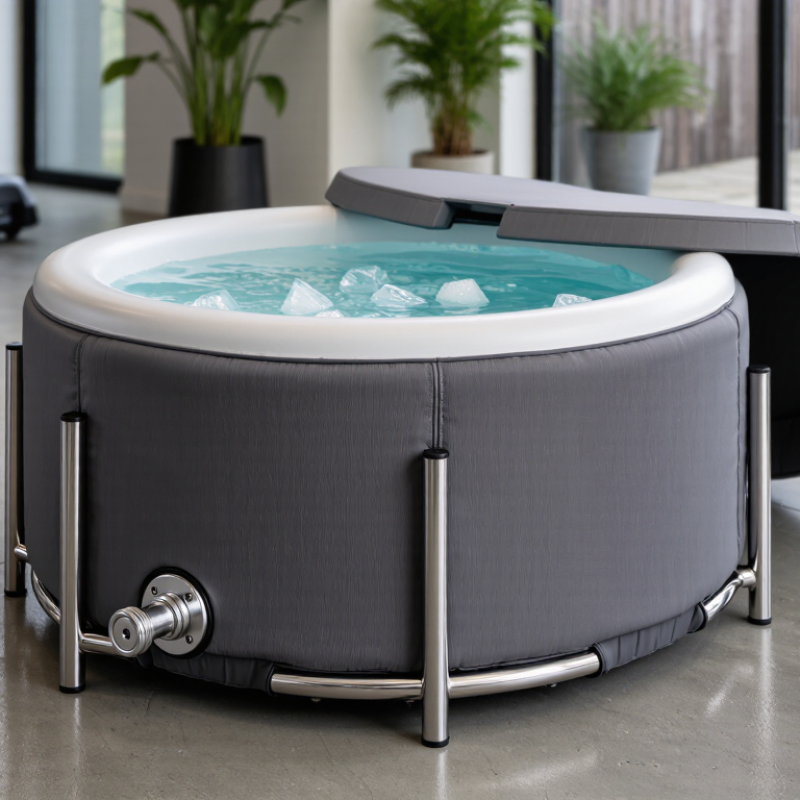
Define Your Ice Bath Pod Sourcing Requirements
Before requesting quotations, define the use case, buyer profile, climate, and installation setting. A home user needs different controls than a recovery studio. Record water volume, external dimensions, empty weight, and drain location. Specify a working temperature range, not an impressive minimum. For example, 8–15°C may suit repeated commercial operation, but colder claims require stronger validation. Include cleaning frequency, filtration needs, noise limits, and electrical requirements. Keep every requirement measurable.
The Global Wellness Institute’s 2024 Global Wellness Economy Monitor valued the wellness economy at $6.3 trillion in 2023. It projects growth to approximately $9 trillion by 2028. This expansion can attract inexperienced factories and vague specifications. Ask suppliers for material grade, insulation thickness, pump flow, leakage-test records, electrical safety documents, and temperature recovery time. Require test conditions. “Cools quickly” means little without water volume and ambient temperature. Request sample photos, serial-level inspection records, packaging dimensions, and drop-test evidence.
Global sourcing also requires carton dimensions, pallet quantity, minimum order quantity, lead time, warranty exclusions, and spare-part availability. Confirm voltage and plug requirements for each destination market. A certification logo alone is not reliable evidence; request the issuing body and test scope. The first specification is rarely perfect. I once underestimated drainage access, and the installation cost changed sharply. That small oversight deserves attention.
Evaluate Suppliers, Certifications, and Manufacturing Standards
How to Choose the Best Ice Bath Pods for Global Sourcing?
Supplier evaluation should begin with evidence, not polished brochures. The ISO Survey 2022 recorded more than 1.2 million ISO 9001 certificates worldwide, yet certification does not guarantee product quality. Ask for the certificate scope, audit date, factory address, and corrective-action records. Check whether the certified site actually manufactures the pod. A trading office may not control production.
Manufacturing standards need product-level proof. Request material declarations for the liner, insulation, frame, and drain fittings. For powered cooling systems, review electrical safety testing against relevant IEC standards. Verify ingress protection, grounding, leakage testing, and thermal cut-offs. Independent laboratory reports are stronger than supplier-created photographs. The 2023 World Bank Logistics Performance Index assessed 139 economies, showing why local inspection and reliable shipping partners matter. A low-cost factory can become expensive after delays, rejected batches, or damaged cartons. I have seen sourcing teams overlook packaging tests. That mistake is easy to repeat.
Tips: Require a pre-shipment inspection, serial-number traceability, and a small pilot order. Fill the pod for 24 hours before approval. Check seams, drain flow, pump noise, and water temperature stability. Ask suppliers to disclose subcontractors. If documentation feels unusually perfect, investigate further. Standards help, but they do not replace physical testing.
How to Choose the Best Ice Bath Pods for Global Sourcing
Supplier evaluation benchmark based on certification coverage, product safety, materials, manufacturing controls, and international logistics.
Certifications should be verified against their defined scope and current validity. Prioritize product safety documentation, cold-resistant material specifications, waterproofing tests, documented quality controls, and export capability before comparing supplier quotations.
Review Pricing, Customization, Shipping, and Minimum Orders
Choosing the best ice bath pod for global sourcing starts with landed cost, not factory price. A supplier may quote 180 dollars per unit, but packaging, inspection, insurance, duties, and inland delivery can add 25–60%. Request a complete pro forma invoice with Incoterms, carton dimensions, gross weight, and payment stages. UNCTAD reports that maritime shipping carries over 80% of global merchandise trade by volume. Small volume changes can therefore affect freight costs quickly. I learned this after comparing two similar quotes with different carton sizes.
Customization deserves a separate calculation. Ask whether logos, colors, drain fittings, insulation, and digital temperature displays require new tooling. Tooling fees may be modest, but custom molds can increase lead times by several weeks. A practical sample should test seam strength, water retention, drainage, and packaging damage. Do not trust product photos alone. That mistake is expensive.
Minimum order quantities also need negotiation. A low MOQ can raise unit pricing, while a large MOQ can trap cash in slow inventory. Request tiered prices for 50, 100, and 500 units. The World Bank’s Logistics Performance Index 2023 evaluates customs, infrastructure, tracking, and delivery reliability; these factors matter more than a cheap quotation. Confirm production capacity, inspection procedures, replacement terms, and shipping routes in writing. DHL’s 2024 Global Connectedness Report also shows that international trade networks remain resilient, but disruptions still shift timing and costs. Build a small buffer. I would still avoid over-ordering until customer returns reveal the real weaknesses.