
A glass sorting line can look simple from the control room: bottles move across a belt, sensors scan them, and air jets push unwanted pieces aside. The difficult work is consistent separation. Ceramic fragments, heat-resistant glass, labels, and mixed colors can all affect the quality of recovered cullet. For buyers comparing the 7 Best Glass Sorting Machines for Sale in 2026, the key question is not just speed. It is how reliably a machine handles the feedstock your plant actually receives.
Industry data shows why that distinction matters. FEVE’s 2022 reporting put Europe’s glass packaging collection rate at about 80 percent. Collection, however, does not guarantee clean, furnace-ready material. The U.S. Environmental Protection Agency’s materials-management reporting also tracks glass recycling as a distinct part of the waste stream, underscoring the need to assess local feedstock and recovery targets. Sensor types, belt configuration, contamination levels, and maintenance access can all shape real-world performance. Small details matter.
A useful buying principle is simple: “Judge the sorter by the cullet it produces, not only by its advertised throughput.” This is an editorial guideline, not a verified quotation from a named industry expert. Without a source for an expert’s exact words, attributing a direct quote would be unreliable. This guide therefore focuses on measurable criteria, including sorting accuracy, capacity, service support, and operating conditions, so readers can compare machines against their own plant requirements.
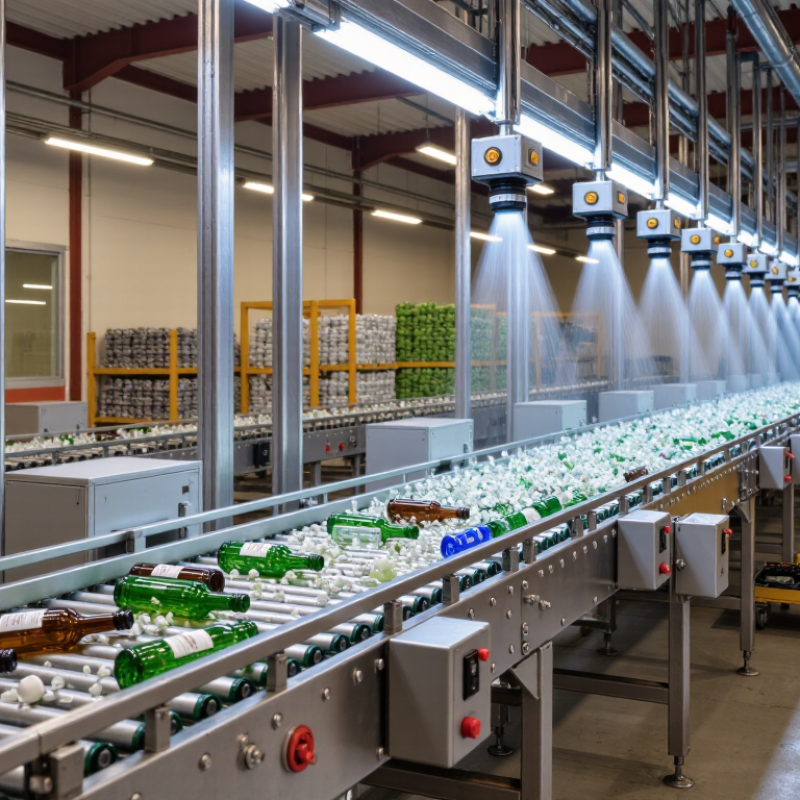
Glass sorting machines separate mixed fragments by color, size, and material type. In a processing line, optical sensors inspect each piece as it moves along a belt; timed air jets then eject unwanted items. Some systems also detect ceramics, stones, and heat-resistant glass, which can weaken recycled glass if they enter the furnace. The details matter. A clear shard beside a ceramic cup may look similar to a person, but not to a well-calibrated sensor. Even so, no machine removes every contaminant.
Applications range from municipal recycling facilities to glass container plants, where cleaner cullet can support consistent furnace batches. The US Environmental Protection Agency’s 2018 waste report estimated that 3.1 million tons of glass were recycled from 12.3 million tons generated, a 25.1% recycling rate. In Europe, the European Container Glass Federation reported an 80% container-glass recycling rate for 2022. These figures describe different regions and systems, so they are not directly comparable. For buyers, practical checks include feed size, color mix, contamination levels, and tested output purity. Ask suppliers to run samples from your own line. A tidy demonstration sample may not reflect the dusty, uneven material arriving on a busy shift.
A glass sorting line starts with a practical problem: bottles arrive mixed by color, size, and condition. Belts spread the pieces into a thin layer, while cameras inspect each fragment under controlled lighting. Visible-light sensors distinguish clear, green, and amber glass. Near-infrared sensors can help identify material differences, while X-ray systems may detect dense contaminants such as ceramics or stones. No sensor reads every fragment perfectly.
When a camera flags a piece, a timed air jet pushes it into a separate chute. Small timing errors matter. A shard can spin, overlap another piece, or disappear beneath dust. Operators therefore check sample streams and adjust belt speed, lighting, and ejection settings. The weak point is often inconsistent feed, not a lack of sophisticated sensors.
The scale is substantial. The US Environmental Protection Agency’s 2018 materials report estimated 12.3 million tons of glass waste generated and 3.1 million tons recycled, a 25% recycling rate. FEVE’s 2022 report placed Europe’s glass-container recycling rate at 80.1%, using 2021 data. These figures describe different regions and measurement systems, so they are not directly comparable. They do show why clean output matters: color sorting supports furnace recipes, while removing ceramics and stones helps prevent defects. Even well-tuned equipment needs routine checks; a few contaminated samples can reveal problems a dashboard misses.
Visible-light and near-infrared (NIR) sensors examine different parts of the spectrum. These approximate wavelength bands provide context for how optical sorting systems can help identify glass by color and material signatures.
In practice, sensors measure selected wavelengths rather than the entire band. Systems combine sensor readings with air jets or mechanical ejectors to separate identified pieces. Spectral-band boundaries are approximate and can vary by convention.
Comparing glass sorting machines in 2026 starts with the feed, not the brochure. Measure hourly tonnage, particle size, moisture, and contamination at your plant. Mixed cullet needs different settings from a clean, single-color stream. Ask for recovery and purity figures tested on similar material. Small details matter.
Check how a machine separates colors and removes ceramics, stones, and heat-resistant glass. Ask whether its sensors hold accuracy when cullet is dusty or unevenly lit. Inspect the reject stream, too: good-looking output can hide valuable glass losses. A plant trial is more useful than a polished specification sheet, though trials rarely match every shift.
Market data gives useful context, not a machine guarantee. Eurostat’s 2022 packaging-waste dataset reports a 75.9% recycling rate for glass packaging in the EU. The U.S. EPA’s 2018 Facts and Figures estimated that 3.1 million tons of glass containers were recycled from 12.3 million tons generated. These figures describe different markets and years, so compare them cautiously. Before buying, record baseline purity, recovery, downtime, and energy use; then repeat those measurements during a trial. A neat throughput number alone can mislead.
Glass recyclers can compare seven machine types in 2026, depending on material and production goals. Color sorting machines separate clear, green, and amber cullet using cameras and targeted air jets. Ceramic, stone, and porcelain detectors remove look-alike contaminants that can damage furnaces or weaken new glass. Mixed-color optical sorters handle varied feed, but perform best when pieces are spread evenly across the belt. Flat-glass sorters are designed for sheets and fragments, where size and surface condition matter. Dust matters. Before choosing, ask suppliers to test representative samples, including dirty and irregular pieces.
Whole-container sorting machines inspect bottles before crushing, helping remove unwanted items early in the process. Fine-particle sorters target small cullet that larger systems may miss, though dust and overlapping fragments can affect accuracy. Multi-sensor sorting machines combine camera data with other detection methods to classify material more precisely. They may also require more setup and maintenance. Not every line fits. Compare usable throughput, expected purity, air consumption, access for cleaning, and local service support. Ask for test results in writing, and check how performance changes when feed quality shifts. A polished demonstration is useful, but actual plant material can behave differently. One overlooked detail: operators need clear access to lenses and ejectors during routine cleaning.
Choose a glass sorting machine around your actual feed, not its advertised maximum throughput. Record particle sizes, moisture, labels, and the share of mixed colors. The U.S. EPA’s 2018 Advancing Sustainable Materials Management report estimated that 3.06 million tons of glass containers were recycled, a 31.3% recycling rate. That national figure does not predict your plant’s results, but it shows why recoverable material and reject losses both matter.
Match sensors and ejectors to the contaminants you need to remove. Color cameras can separate clear, amber, and green glass; magnets or metal detection may help upstream. Ceramics, stones, and porcelain need special attention because they can resemble glass. Ask suppliers to run representative samples, then measure purity, recovery, and false rejects. A lab demo can flatter a machine. Test wet and dusty material too.
Check capacity at your real particle-size range, plus floor space, power use, noise, and service access. Ask how quickly settings can be changed when the feed varies. Review reject-bin capacity and where each output stream will go. A high-speed unit may not be the best fit if it sacrifices saleable cullet. Pilot results help, but seasonal feed changes can still surprise you.
| Rank | Machine Type | What It Separates | Typical Sorting Method | Best Fit | Key Limitations | What to Check Before Buying |
|---|---|---|---|---|---|---|
| 1 | Optical Color Sorter | Glass cullet by visible color, commonly clear, green, and amber. | Visible-light cameras classify pieces; air jets eject material selected for removal. | Facilities producing color-separated cullet for remelting or other color-sensitive uses. | Results depend on clean, well-presented material. Labels, dirt, coatings, and overlapping pieces can affect detection. | Confirm the accepted particle-size range, color categories, detection accuracy on your sample, and air-compressor requirements. |
| 2 | Ceramic, Stone, and Porcelain Sorter | Ceramics, stones, and porcelain (CSP) mixed into glass cullet. | Camera- or sensor-based detection identifies objects with properties that differ from glass; ejection is commonly pneumatic. | Glass recycling lines where CSP contamination must be reduced before cullet is sold or remelted. | Small, partially hidden, or visually similar contaminants can be harder to detect; performance varies with feed condition and particle size. | Ask for a test using representative feed and define the target contaminant size and acceptable residual level. |
| 3 | Sensor-Based Non-Glass Contaminant Sorter | Selected non-glass materials, such as certain plastics or other identifiable contaminants in a glass stream. | Depending on the application, sensors may use near-infrared, visible imaging, or a combination of detection methods. | Facilities needing an additional cleaning stage for non-glass items not adequately removed by screens or manual picking. | One sensor does not identify every material. Dark, dirty, layered, or overlapping objects may reduce sorting effectiveness. | Verify which specific contaminants the sensor can distinguish and whether the system is designed for your glass fraction and feed size. |
| 4 | Magnetic Separator | Ferrous metals, including iron and steel pieces, from a glass stream. | A permanent magnet or electromagnet attracts ferrous material as the feed passes the separation zone. | As a protective and cleaning stage for removing ferrous metal before downstream equipment or cullet processing. | Does not remove non-ferrous metals such as aluminum, and performance depends on material presentation and separator placement. | Check belt or chute configuration, magnet strength and working distance, cleaning method, and the expected metal load. |
| 5 | Eddy-Current Separator | Conductive non-ferrous metals, particularly aluminum, from suitable mixed-material streams. | A rotating magnetic field induces currents in conductive metals, creating a force that separates them from the main flow. | Lines where non-ferrous metal contamination remains after screening and ferrous-metal removal. | It is not a glass color sorter and is generally most useful when the feed is presented as a suitable, reasonably even layer. | Confirm the minimum recoverable metal size, rotor and belt configuration, feed-layer requirements, and compatibility with your stream. |
| 6 | Vibrating or Trommel Screen | Material by particle size; separates undersize and oversize fractions rather than identifying glass by color or composition. | Screen openings retain or pass particles according to their size and the selected screen arrangement. | Pre-sorting and size classification to create more consistent feed for optical or other downstream equipment. | Does not distinguish glass from contaminants of similar size. Wet, sticky, or irregular feed may reduce screening efficiency. | Choose screen openings based on the required product fractions, and assess throughput, blinding risk, maintenance, and dust control. |
| 7 | Air Classifier or Aspiration System | Lightweight material, such as paper, film, and other low-density material, from heavier glass fragments. | Controlled airflow carries lighter fractions away from heavier material; collection equipment captures the separated light fraction. | Pre-cleaning or polishing stages where lightweight contaminants are present in the glass feed. | Separation is based mainly on aerodynamic behavior, not material identity; dust and very small glass fragments require attention. | Review airflow adjustment, dust collection, fire and housekeeping requirements, and the expected amount of lightweight material. |
| Selection note: The best machine depends on feed composition, particle-size distribution, required product quality, and the sorting stages already installed. Throughput and sorting results vary by machine configuration and material condition; request a trial with representative feed and compare the resulting product against your facility’s specifications. | ||||||
To learn more about any of the products and services provided by Abbott Ball Company, Inc., simply complete the form below.