
MON - FRI 8AM - 5PM

What Are the Best Custom Table Legs from China?

Choosing the best Custom Table Legs from China requires more than comparing prices online. The right supplier should combine stable manufacturing, clear communication, and consistent quality control. Materials matter greatly. Steel legs can provide strong support, while cast iron offers a heavier, more traditional feel. Aluminum may suit lightweight furniture and modern interiors.

Experienced buyers usually request drawings, material specifications, load-testing details, and finish samples before placing an order. A matte black powder coating should look even under direct light, without visible bubbles or thin edges. Welds should appear smooth and secure. Small details matter. Adjustable feet, mounting plates, and pre-drilled holes can affect installation time.

However, product photos are not enough. Some suppliers present excellent samples but deliver inconsistent batches. This risk deserves attention. Factory audits, third-party inspections, and documented quality procedures can improve reliability. Buyers should also confirm production capacity, packaging methods, lead times, and replacement policies. These steps may feel slow, but they prevent expensive surprises.

The best supplier depends on the project, not only the lowest quotation. A restaurant table may need higher load resistance and frequent cleaning. A residential desk may prioritize appearance and easy assembly. Custom dimensions, colors, and branding can also influence minimum order quantities. China offers broad customization options, yet careful verification remains essential. Even a promising supplier can make mistakes. Good sourcing leaves room for questions, testing, and honest revision.
What Are the Best Custom Table Legs from China?

Types of Custom Table Legs Available from China

What Are the Best Custom Table Legs from China?

Types of Custom Table Legs Available from China

China offers a wide range of custom table leg designs for homes, restaurants, offices, and retail spaces. Steel legs remain popular because they provide high load capacity and precise dimensions. Common profiles include hairpin, U-shaped, trapezoid, X-frame, and central pedestal designs. Stainless steel suits humid areas, while aluminum reduces weight for movable tables. Solid wood legs add warmth, especially in dining and hospitality interiors.

Height-adjustable legs support shared workspaces and changing user needs. Folding legs work well for training rooms, compact apartments, and portable displays. Cast iron legs create an industrial appearance, but their weight can increase shipping costs. Powder-coated finishes offer many colors and improve surface resistance. Still, coating quality depends heavily on pretreatment and curing control.

Grand View Research reported that the global furniture market was valued at over 500 billion U.S. dollars in 2022, showing strong demand for flexible furniture components. The Freedonia Group also identifies customization and modular design as continuing furniture trends.

For reliable sourcing, buyers should request load-test results, steel thickness, weld photographs, coating specifications, and sample measurements. Standards such as ANSI/BIFMA and EN 12520 can guide performance checks, although they may not cover every leg design. In practice, a beautiful prototype can fail if the mounting plate flexes. I have found this detail easy to overlook. Exact floor height, screw position, and packaging protection deserve equal attention.

Key Materials and Construction Methods for Table Legs

Custom table legs from China can combine flexible design with dependable construction. The material choice, however, controls more than appearance. It affects weight, stability, corrosion resistance, and long-term maintenance.

Powder-coated steel suits dining tables, workbenches, and heavy stone tops. Its welded joints should have even beads, clean corners, and no visible pinholes. I usually check the leg frame on a flat surface before installation. A small wobble often reveals poor jig alignment.

Aluminum is lighter and resists rust, but it needs thicker profiles for demanding loads.

Solid wood legs add warmth and can match oak, walnut, or painted furniture. They need kiln-dried timber, sealed end grain, and properly centered dowels. Wood can still move with seasonal humidity.

Cast iron creates a strong, traditional base for café and industrial tables. It is stable, yet heavier and more vulnerable to chipped finishes. For modern designs, manufacturers often combine steel tubing with laser-cut plates and threaded inserts. This method supports repeatable dimensions and easier replacement.

Bolted joints are practical for flat-pack shipping, while full welding offers greater rigidity.

Neither method is automatically better. The connection must match the table’s weight and intended use.

Ask for material thickness, weld photos, coating specifications, and load-test records. A sample inspection is valuable. Some attractive prototypes feel less convincing after repeated assembly. I would also verify screw quality and thread depth, because small hardware failures can damage an expensive tabletop. Dimensions should be checked twice. Mistakes happen.

How to Evaluate Chinese Table Leg Manufacturers

Choosing custom table legs from China requires more than comparing online prices. A reliable manufacturer should explain materials, dimensions, tolerances, finishes, and production limits clearly. Ask whether the legs use solid steel, stainless steel, aluminum, or engineered wood. Request drawings with exact tube thickness, mounting-hole positions, and maximum load. Small details matter when a tabletop must sit level.

Samples reveal more than polished catalog photos. Check welds under bright light. Look for uneven grinding, sharp edges, weak threads, or paint bubbles. Ask the factory to produce a sample using your actual design, not a similar model. A useful supplier should provide inspection photos, packaging details, and a realistic production schedule. Independent testing can verify load capacity and coating performance, especially for furniture used in offices, restaurants, or public spaces.

Communication is another serious measure. Can the manufacturer answer technical questions without vague promises? Does it document changes after approval? Factory audits, quality records, and traceable material certificates improve confidence, but they do not remove every risk. No supplier is perfect on paper. A buyer may overlook packaging strength or installation instructions. I would review these points twice, because a beautiful leg can still arrive scratched or become unstable after assembly. Clear payment terms, agreed inspection standards, and written defect procedures make the relationship more dependable.

What Are the Best Custom Table Legs from China?

How to Evaluate Chinese Table Leg Manufacturers

A practical evaluation should prioritize material and load performance, followed by finish consistency, customization capability, delivery reliability, order flexibility, and technical documentation. The weights below represent a balanced procurement framework with a total score of 100 points and do not represent any specific company or brand.

Customization Options for Different Table Designs

What Are the Best Custom Table Legs from China?

Customization Options for Different Table Designs

Custom table legs should begin with the table’s purpose, not a catalog image. A dining table may need wide steel frames and concealed leveling feet. A café table may require a compact cast-iron base. For a light console, tapered aluminum legs can reduce visual weight. Grand View Research valued the global furniture market at US$516.66 billion in 2022, with growth projected through 2030. That scale increases demand for flexible, small-batch components.

Specify height, tube diameter, wall thickness, mounting-hole spacing, finish, and load target. Powder coating suits many indoor applications, while brushed stainless steel handles a different visual and maintenance brief.

Ask Chinese manufacturers for CAD drawings, a physical sample, weld photographs, and load-test records. Packaging also matters. Corner protection can prevent expensive scratches during long-distance shipping.

Statista Market Insights estimates global furniture revenue at roughly US$766 billion in 2025, although its market definition differs from Grand View Research. The figures should not be compared blindly.

A useful design is rarely perfect.

One practical mistake is choosing a dramatic leg shape before checking floor clearance. The result may look attractive but restrict seating. Another overlooked detail is the mounting plate. Thin plates can flex under uneven loads. Request material certificates when the project requires documented traceability. Confirm tolerances in writing, especially for height and hole alignment. Customization offers freedom, but every extra bend, finish, or assembly step can increase cost and inspection risk.

Ordering, Quality Control, and Shipping Considerations

What Are the Best Custom Table Legs from China?

Ordering, Quality Control, and Shipping Considerations

The best custom table legs begin with a precise specification. Send drawings with dimensions, steel grade, finish, mounting-hole locations, and expected load. Do not rely on photographs alone. A supplier should confirm tolerances, production capacity, and sample costs before receiving a large order. Ask for a physical prototype, especially for unusual angles or concealed brackets. Small design errors can make installation frustrating.

Quality control needs more than a final visual check. Review weld smoothness, joint alignment, coating thickness, and surface defects. Request measurements from several finished pieces, not only one sample. A simple load test can reveal weak welds or flexing tubes. Powder coating should resist ordinary handling, but color variation may still occur between batches. That detail is easy to underestimate.

Shipping requires careful packaging and realistic timing. Protective foam, corner guards, and reinforced cartons help prevent scratches and bent mounting plates. Confirm carton dimensions, gross weight, labeling, and the agreed delivery terms. Sea freight usually reduces cost, while air freight suits urgent, smaller shipments. Build extra time for production changes and customs processing. Delays happen. A checklist improves reliability, but it cannot replace direct inspection. When possible, use an independent inspection before shipment, even if the order looks straightforward.

What Are the Best Custom Table Legs from China? - Ordering, Quality Control, and Shipping Considerations
Leg Type Common Material Best For Typical Finish Options Indicative MOQ Typical Production Lead Time Key Quality-Control Checks Ordering and Shipping Considerations
Tapered Steel Legs Cold-rolled steel tubing or pressed steel Dining tables, desks, conference tables, and modern residential furniture Powder coating, electroplating, or satin paint Usually 100–300 sets for standard designs; higher quantities may be required for fully customized tooling Approximately 25–40 days after drawing approval and deposit Tube wall thickness, weld continuity, leg-to-leg height consistency, load testing, coating adhesion, and surface defects Nested packing can reduce carton volume. Confirm floor-protection pads, screw-hole positions, carton drop testing, and corrosion protection before shipment.
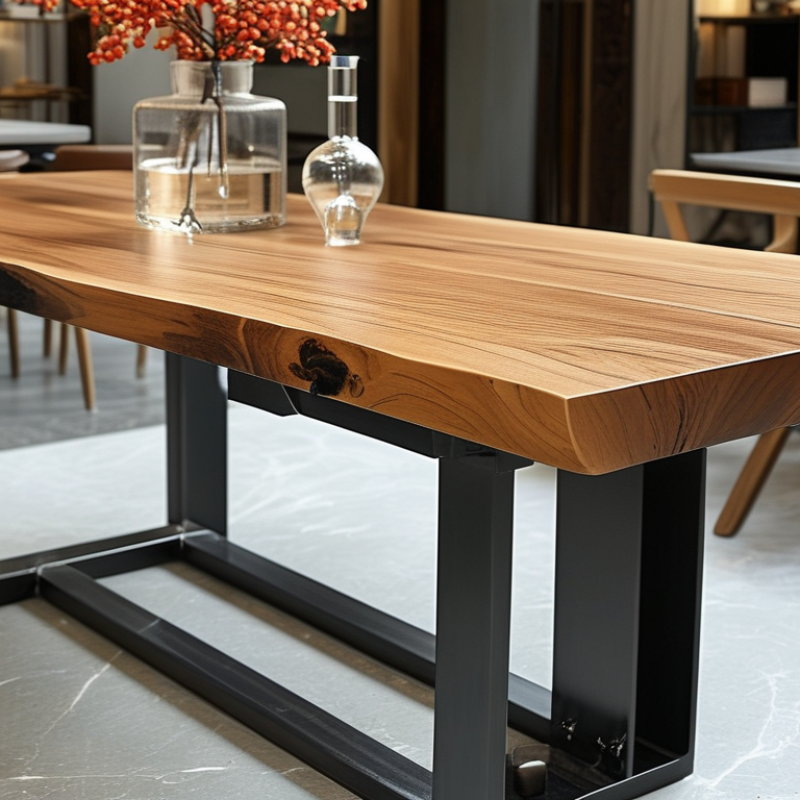
U-Shape Steel Legs Welded steel tube or rectangular steel profile Large dining tables, workbenches, office tables, and industrial-style furniture Textured powder coating, matte black, white, gray, or custom color Commonly 50–150 sets for an existing design; custom profiles may require a larger run Approximately 30–45 days, depending on welding fixtures and finish requirements Frame squareness, diagonal measurement, weld strength, base flatness, load capacity, and coating coverage at corners Large welded frames may create high dimensional-weight charges. Knock-down or two-piece construction can improve container utilization and reduce damage risk.
Hairpin Steel Legs Solid steel rod, commonly formed into two- or three-rod profiles Coffee tables, side tables, benches, and lightweight furniture Powder coating, clear coating, raw steel, or plated finish Often 100–500 sets, depending on rod diameter and customization Approximately 20–35 days for established shapes and finishes Rod diameter, bend symmetry, weld quality, wobble inspection, foot-pad fit, and rust prevention The compact shape is generally efficient to pack. Specify whether mounting plates, screws, and adjustable feet are included in each set.
Stainless-Steel Legs 304 stainless steel for general indoor use; 316 stainless steel for more demanding environments Kitchens, hospitality furniture, premium interiors, and humid indoor locations Brushed, mirror polished, satin, or PVD-colored finish Typically 100–300 sets; special tubing, polishing, or PVD work may increase the MOQ Approximately 30–50 days, with additional time for polishing or specialty coatings Material grade verification, weld discoloration, surface scratches, polishing uniformity, tube thickness, and corrosion resistance Request material certificates when grade is critical. Individual protective wrapping is recommended because polished surfaces scratch easily during ocean or rail transport.
Aluminum Legs Extruded or die-cast aluminum alloy Lightweight tables, outdoor-covered areas, portable furniture, and contemporary commercial projects Anodizing, powder coating, mill finish, or brushed finish Often 300–1,000 sets for custom extrusions; standard profiles may be available at lower quantities Approximately 35–60 days when extrusion dies or casting tooling are required Alloy specification, dimensional tolerance, wall thickness, casting porosity, surface uniformity, and joint strength Confirm tooling ownership, die charges, and whether tooling costs are refundable. Aluminum is lighter than steel but may require reinforced packaging to prevent bending.
Solid Wood Legs Rubberwood, beech, oak, ash, or other specified hardwood Traditional, Scandinavian, farmhouse, and premium residential tables Clear lacquer, stain, painted finish, oil, or water-based coating Commonly 100–500 sets, subject to wood species, grade, and finish complexity Approximately 35–60 days; kiln-drying and moisture conditioning can affect the schedule Wood moisture content, cracks, knots, grain direction, color consistency, joint strength, thread insert alignment, and finish quality Specify the target moisture range and allowable natural variation. Use corner protection and moisture-resistant packaging for long-distance sea transport.
Height-Adjustable Metal Legs Steel or aluminum columns with threaded feet, telescopic tubes, or lifting mechanisms Office desks, ergonomic workstations, laboratory tables, and flexible-use furniture Powder coating, anodizing, or plated hardware Usually 100–300 sets for manual systems; powered systems may require higher order volumes Approximately 40–70 days, depending on mechanism sourcing and testing requirements Adjustment range, thread or mechanism durability, wobble resistance, static load test, cycle test, noise level, and electrical safety for powered systems Confirm packaging for long components and spare-part availability. Powered systems may require additional compliance documents, labeling, and transport planning.
Folding Table Legs Steel or aluminum with hinges, locking brackets, and support braces Portable tables, event furniture, training tables, and space-saving products Powder coating, anodizing, or zinc plating for hardware Typically 100–500 sets, depending on the folding mechanism and locking design Approximately 30–50 days after mechanism approval and sample testing Lock engagement, hinge alignment, repeated folding cycles, pinch-point safety, deployed-position stability, and load testing Test the complete folded package, not only the individual legs. Confirm installation instructions, hardware bags, protective film, and carton compression strength.
Planning note: MOQ, lead time, inspection requirements, and freight cost vary according to material, dimensions, finish, tooling, order quantity, packaging method, and destination. Approve a production sample and a written specification before mass production.

Request a Quote

To learn more about any of the products and services provided by Abbott Ball Company, Inc., simply complete the form below.