Best Custom Cigar Labels Manufacturer in China?
Choosing the best custom cigar labels manufacturer in China is not only about finding a low quote. A label may be small, but its paper, finish, and print accuracy shape the first impression of a product. A gold foil border, textured stock, or precise embossing can look striking on screen and disappointing in hand. Details matter.
This guide explores how to assess suppliers before placing an order. It looks at print methods, material options, color matching, adhesive performance, minimum quantities, and sample policies. Ask for a physical proof when appearance matters; digital previews cannot fully show texture or reflectivity. Also confirm how the supplier handles revisions, production timelines, packaging, and delivery updates. Clear answers are useful evidence of a dependable process, though they are not a guarantee.
Experience comes from asking specific questions and checking real samples, not from polished claims alone. Request relevant production examples, compare finishes under consistent lighting, and clarify which quality checks are performed before shipment. If a supplier cannot explain its process plainly, pause and ask again. That can feel awkward, but it may prevent costly surprises. No single manufacturer fits every project: a small launch and a large recurring order may need different materials, quantities, and support. Use the criteria in this article to build a shortlist, then verify details directly with each supplier.
What Custom Cigar Labels Are and How They Identify a Cigar Brand
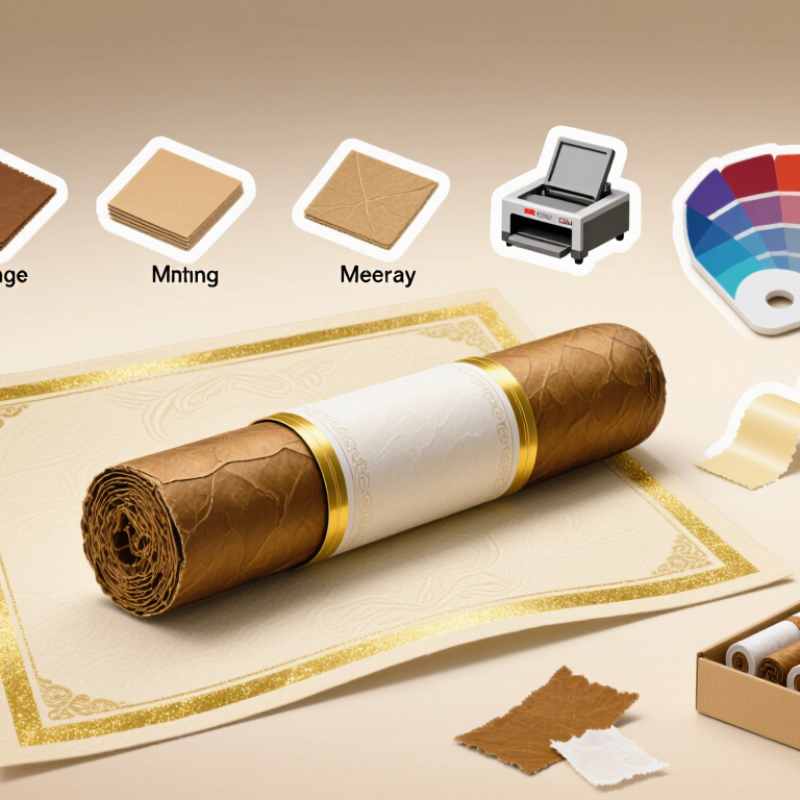
Custom cigar labels are the printed bands wrapped around cigars. They give a cigar brand a recognizable visual identity and help distinguish one product from another. A label may show the brand name, collection, size, or blend details, depending on the maker’s needs. Clear lettering matters, especially on a narrow band viewed under warm shop lighting.
Design choices carry practical weight. A printer can help check artwork size, color contrast, paper stock, and how fine lines reproduce. Embossing or foil can add texture, but small text may become harder to read if the layout is crowded. Small details matter. Before production, a physical proof can reveal color shifts or spacing problems that are easy to miss on a screen.
A useful label feels distinctive without hiding essential information. Consistent placement and color can make different cigar lines easier to recognize, while careful finishing helps the band sit neatly around the cigar. Still, a striking design is not automatically a useful one. Sometimes a simpler label communicates more clearly, and that trade-off deserves a second look.
Materials, Finishes, and Design Options for Custom Cigar Labels
Custom cigar labels begin with a material that suits the box and its storage conditions. Uncoated paper offers a natural, tactile look, while coated paper produces sharper color and cleaner fine lines. Textured stocks can add depth, but heavy grain may soften small lettering. Adhesive matters too: a label should sit flat on curved or lacquered surfaces without lifting at the edges. Test it on the actual box. Humidity, surface texture, and handling can change how well it holds.
Finishes shape both appearance and readability. Foil stamping catches light on a small emblem; embossing adds a raised detail that can be felt through the paper. Matte varnish reduces glare, while gloss can make dark colors appear richer. It is easy to overdecorate. Too many effects may compete with the printed information, so keep contrast and type size clear. Ask a manufacturer in China for physical samples, color proofs, and checks on alignment before approving a production run. A digital preview helps, but it cannot show the feel of paper or the way foil reflects light. Even careful specifications may need revision after testing; that part is not always convenient, but it can prevent avoidable defects.
How Custom Cigar Labels Are Made in China
Custom cigar labels in China usually start with a dieline, artwork file, and a clear choice of paper or film. A factory checks the label’s dimensions against the packaging, then prepares print proofs for color and placement. Small details matter. A thin gold-foil border can shift visibly if registration is off. Embossing also needs a test, because heavy pressure may soften fine lettering.
Offset printing suits larger runs and consistent color; digital printing can be practical for shorter runs or multiple versions. Smithers’ 2023 report, The Future of Labels and Release Liners to 2028, estimated global label sales at about US$46.5 billion in 2023. That figure covers labels broadly, not cigar labels alone, but it shows the scale of the print category. In production, operators inspect color, foil alignment, adhesive coverage, and die-cut edges. Samples should be checked on the actual packaging, not just on a flat proof. Humidity can affect paper and adhesive, especially during storage. One imperfect step is common: a digital proof may look right, yet printed stock can absorb ink differently. Careful suppliers allow time for a physical sample and adjustments.
Best Custom Cigar Labels Manufacturer in China? - How Custom Cigar Labels Are Made in China
Typical production steps and quality checks for custom cigar bands and labels. Materials, specifications, and finishing options vary by design and order requirements.
| Production Stage | What Happens | Common Materials or Methods | Typical Quality Check |
| 1. Artwork and specification | Artwork, dimensions, colors, and finishing requirements are prepared for production. | Digital artwork; vector files are commonly used for precise text and line work. | Check artwork size, legibility, color references, and spelling before approval. |
| 2. Prepress setup | The approved design is arranged for printing and prepared with cutting and finishing details. | Print-ready files, color separations, and die-cut outlines. | Review a proof for layout, alignment, and areas requiring special finishes. |
| 3. Printing | The design is printed onto the selected label stock using a method suited to the artwork and order. | Paper stocks; offset or digital printing may be used depending on job requirements. | Inspect color consistency, registration, print clarity, and surface defects. |
| 4. Decorative finishing | Optional effects are added to emphasize selected design details. | Hot foil stamping, embossing, debossing, or varnish, subject to the chosen stock and design. | Check finish placement, definition, and consistency across the printed run. |
| 5. Die-cutting | Printed sheets or rolls are cut into the required band or label shape. | Custom cutting dies or suitable digital cutting methods. | Verify shape, dimensions, edge quality, and alignment with the artwork. |
| 6. Inspection and packing | Finished labels are checked, counted, and packed for shipment. | Batch inspection and protective packaging appropriate for the product. | Check quantity, visible defects, packing condition, and order specifications. |
How to Evaluate a Chinese Cigar Label Manufacturer
When evaluating a Chinese cigar label manufacturer, look beyond polished product photos. Ask how long the company has produced labels and which printing processes it handles in-house. A clear answer matters. Request a sample made with the paper, finish, and adhesive you plan to use. Check whether the colors stay consistent across several copies, not just one.
Inspect the details under good light. Are small letters sharp? Do foil edges look clean, and do cut lines follow the artwork without rough corners? Rub a sample gently and test how it adheres to the intended packaging surface. Ask the supplier to explain material options, proofing steps, inspection methods, and typical production lead times. If answers stay vague, pause. A low quote alone tells you little about repeatability.
Communication is part of quality control. Send a simple specification sheet with dimensions, color references, finish, and quantity, then see whether the factory identifies missing details before production. Review a physical proof whenever possible; screens can distort color. Request photos of inspected batches and ask how defects are recorded and corrected. A small trial order can reveal more than a long sales call. Still, one successful batch is not proof of perfect consistency. Record what worked, note what did not, and use those observations to refine the next order.
Ordering, Quality Checks, and Packaging for Custom Cigar Labels
Best Custom Cigar Labels Manufacturer in China?
A dependable order begins with a clear specification: label dimensions, paper or film, adhesive, finish, colors, and roll direction. Send the artwork as a print-ready file, then request a physical proof before approving production. A Grand View Research report valued the global self-adhesive labels market at about US$48.3 billion in 2023, reflecting broad demand for tailored label formats. Market growth does not guarantee a good batch, though. Confirm the supplier’s sample and inspection process directly.
Quality checks should cover color consistency, sharp text, clean cuts, and adhesive performance on the intended surface. Ask for a signed proof and a production sample; inspect edges under bright light and test adhesion after handling. For larger orders, agree on an inspection plan and acceptable defect limits before production. Small mismatches matter. A label can look correct on screen yet shift in shade on paper.
Tips: Request labels in the actual roll or sheet format you will use. Check that corners stay flat and rolls unwind smoothly. For packaging, specify moisture protection, carton strength, and clear lot identification. One detail is easy to overlook: tightly packed rolls can deform at the edges during transit. Record any issue with photos, then review the specification before reordering.
Custom Cigar Label Ordering: Indicative Lead Time
A planning view of the main steps from artwork approval to packed labels.
Indicative planning estimates in business days, not guaranteed or industry-wide benchmarks. Actual timing depends on order quantity, materials, finishes, proof approvals, and shipping arrangements. Confirm label dimensions, artwork, color, adhesive, and packaging requirements before production.