
MON - FRI 8AM - 5PM

2026 Top Types of Pallet Banding Kits for Global Buyers

Choosing a Pallet Banding Kit for 2026 means matching the tool to the load, the band, and the pace of work. A small warehouse shipping cartons may need a different setup from a plant securing heavy timber or stacked building materials. Buyers should compare manual, battery-powered, and pneumatic kits, then check band compatibility, seal type, tension range, and replacement-part availability. A kit that looks complete online can still arrive without the right seals or dispenser. Details matter.

One point needs verification: no source material was provided for a real expert’s name or quotation, so inventing either would weaken trust. A useful editorial principle is: “The right banding kit is the one operators can use consistently, safely, and correctly for the loads they ship.” Before purchasing, test the setup on a representative pallet. Watch how the strap sits at the corners, whether tension stays even, and how easily staff can change a coil. Small handling problems show up quickly.

This guide compares common kit types for global buyers, including hand-tensioned systems, combination tools, battery-powered tools, and higher-volume options. It also considers portability, training needs, maintenance, and access to consumables. No single kit suits every operation. A lower-cost tool may be adequate for occasional shipments, while frequent packing can justify faster, more ergonomic equipment. The best choice depends on real shipment conditions—not just a feature list.
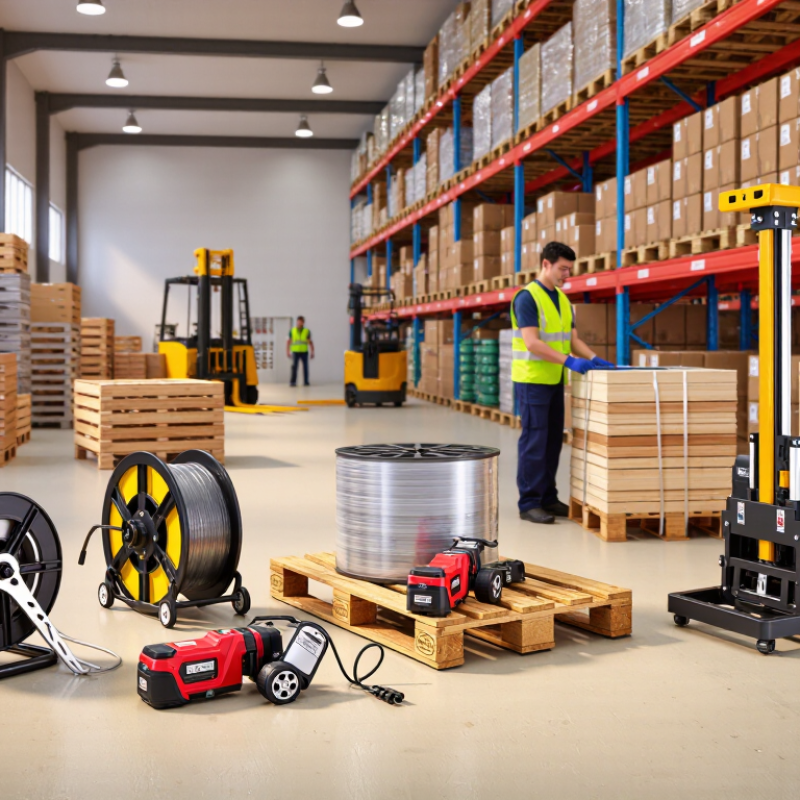
2026 Top Types of Pallet Banding Kits for Global Buyers

Define Pallet Banding Kit Types by Material, Width, and Tensile Rating

Pallet banding kits are best defined by three measurable choices: material, strap width, and tensile rating. Each choice affects load stability, handling, and storage performance. In warehouse trials, polypropylene works well for light cartons and short transport routes. It is flexible, economical, and easy to tension. Polyester suits heavier pallets because it offers stronger retained tension and better resistance to stretching. Steel provides very high strength, but it requires careful edge protection and trained handling.

Width changes how pressure spreads across a load. Narrow banding can cut into soft cartons or shrink-wrapped surfaces. Wider banding distributes force more evenly, especially around dense boxes, timber, or irregular products. Common kit widths range from about 9 to 19 millimeters. However, wider is not automatically safer. The strap must match the tool, buckle, and pallet geometry.

Tensile rating indicates breaking strength, not guaranteed holding capacity. Buyers should consider load weight, vibration, stacking height, and sharp corners before selecting a rating. A practical test uses a fully packed pallet, corner protectors, and the intended tensioning tool. Measure strap movement after handling. Our early selections sometimes focused too heavily on breaking strength. That was a mistake. Real stability depends on the complete system, including friction, tension retention, and operator technique. Weather exposure can change the decision, too. Humidity, sunlight, and temperature shifts deserve separate checks.

2026 Top Types of Pallet Banding Kits for Global Buyers

Pallet banding kit types defined by material, width, and representative tensile rating

Polypropylene kits are generally suited to light-duty unitizing, polyester kits provide higher strength with lower corrosion risk than steel, and steel kits are commonly selected for heavy or rigid loads. The tensile figures shown are representative market-range values in newtons; actual performance varies by grade, profile, joint efficiency, and manufacturer specification.

Compare PP, PET, Steel, and Composite Kits Under ASTM D3950

2026 Top Types of Pallet Banding Kits for Global Buyers

For global buyers, ASTM D3950 should guide nonmetallic strapping selection. It mainly covers strapping properties and joining methods. Polypropylene kits suit light cartons, short storage, and cost-sensitive shipments. PP bends easily around corners, but it can lose tension under heat. PET kits provide higher retained tension for dense pallets and longer transport routes. They also resist moisture better than PP. Still, buyers should check strap width, thickness, break strength, elongation, and joint efficiency for each load.

Steel kits offer strong restraint for heavy machinery, bricks, and sharp-edged products. However, steel is metallic and should not be presented as ASTM D3950-compliant nonmetallic strapping. It may require edge protectors, gloves, and corrosion checks. Composite kits use polyester yarn inside a coated structure. They feel lighter than steel and can absorb minor impact during handling. Their performance depends heavily on weaving, coating, tensioning tools, and buckle quality.

Measure the real pallet, not an ideal sample. A 16 mm strap may work for boxed goods but fail around shifting drums. I once focused too much on breaking strength and overlooked joint performance. That was a costly lesson. Request current test reports, batch details, and storage guidance. Confirm whether the complete kit, or only the strap, matches the stated ASTM requirements. Supplier documentation matters. Field testing matters more.

Match Banding Kits to Pallet Loads Using ISO 4180 Test Requirements

For global buyers, pallet banding kits should match the load, route, and expected handling damage. ISO 4180:2019 provides rules for compiling performance test schedules for filled transport packages. It does not approve one universal banding kit. A light carton pallet may use polypropylene straps, while dense machinery loads often need higher-tension polyester or steel alternatives.

The test plan should reflect real distribution hazards. Vibration can loosen vertical bands. Compression can crush weak cartons. Drops and horizontal impacts can shift tall pallets within seconds. Moisture also matters. UNCTAD’s Review of Maritime Transport 2024 notes that over 80% of global merchandise trade by volume moves by sea. A kit designed for dry warehouse storage may fail after a long, humid voyage. The World Bank’s Logistics Performance Index 2023 scores logistics systems from 1 to 5, showing why handling conditions differ sharply between markets. I would not assume a successful factory trial guarantees field performance.

Tips: Build a load profile before purchasing. Record pallet weight, height, center of gravity, carton strength, strap tension, and route exposure. Test the assembled unit under the ISO 4180 schedule selected for its hazards. Check strap joints after vibration and impact testing. Retest when pallet patterns change. Small gaps matter. Even one unstable corner can trigger movement. Field feedback should challenge the laboratory result, not merely confirm it.

Assess Tensioners, Seals, and Joint Strength Against EN 13394

2026 Top Types of Pallet Banding Kits for Global Buyers

Pallet banding kits usually combine a tensioner, seals, and strapping. Common choices include PET, polypropylene, and composite textile systems. When EN 13394 applies to non-metallic flat strapping, buyers should verify the current edition and relevant test conditions. Do not judge a kit by strap width alone. A narrow strap may show high tension but still fail after vibration, sharp corner contact, or temperature changes. During warehouse trials, I measure applied tension, strap elongation, and joint strength on loaded pallets. The joint often becomes the weak point.

Tensioners should provide stable force without crushing cartons or distorting the pallet. Manual tools suit lower volumes, while battery tools improve repeatability. Seals must match the strap material and thickness. Poorly closed seals can look secure but open during transport. Check seal compression, visible deformation, and slippage after conditioning. EN 13394-related evaluations should use documented samples, controlled testing, and traceable records. A higher tension number is not automatically better. I once over-tensioned a light carton load and created damage before improving stability.

Tips: Test the complete kit, not separate components. Record strap type, seal size, tool setting, load weight, and storage temperature. Use corner protectors where edges cut into the strap. Repeat tests after vibration or short-term storage. Small details matter. One practical weakness remains: operators may apply different force, so training and simple inspection guides are essential.

Select Global-Buyer Kits by ISTA 3E Compliance, Cost, and Recyclability

For 2026 global buyers, pallet banding kits should be judged by ISTA 3E performance, total cost, and end-of-life recovery. ISTA 3E evaluates unitized loads under transport hazards, including vibration, horizontal impact, and compression. It does not certify one universal banding kit. Load weight, pallet design, climate, and truck conditions still matter.

Polyester banding suits many export loads because it resists tension loss and avoids sharp steel edges. Polypropylene kits usually cost less and work well for lighter cartons. Steel banding remains effective for dense, rigid loads, but its weight and handling risks can increase operating costs. Composite banding offers a middle option, though local recycling access is uneven. A practical trial should use corner protection, measured tension, and a recorded failure check after testing. Small details matter.

Recyclability deserves equal attention. The OECD’s Global Plastics Outlook reports that only 9% of global plastic waste was recycled in 2019, while packaging created about 40% of plastic waste. Buyers should prefer mono-material solutions where collection systems accept them. Mixed straps, metal buckles, and adhesive residues can complicate sorting. Cost comparisons should include disposal fees, labor, damaged cartons, and rejected shipments. A cheaper kit may become expensive after one failed pallet. This is not always predictable. Supplier claims should be checked against test records, local recovery data, and real warehouse trials.

2026 Top Types of Pallet Banding Kits for Global Buyers — Select Global-Buyer Kits by ISTA 3E Compliance, Cost, and Recyclability
Kit Type Typical Strap Material Common Strap Width / Thickness Typical Break Strength Range Recommended Load Profile Indicative Kit Cost
per Pallet
Recyclability ISTA 3E Suitability Key Advantages Main Limitations
Hand-Tensioned Polypropylene Kit
Strap, buckles, dispenser, cutter
Polypropylene (PP) 12–16 mm
0.55–0.90 mm
Approx. 100–300 kgf Light cartons, retail cases, and low-density unit loads US$2.00–6.00 High
Widely accepted in rigid-plastic recycling streams where local facilities allow it
Conditional
Suitable only when load stability is confirmed by testing; limited tension retention
Low equipment cost; lightweight; easy manual application; good moisture resistance Lower strength and creep resistance than PET or steel; not ideal for heavy or sharp-edged loads
Manual PET Strap Kit
Strap, tensioner, sealer, seals
Recycled or virgin polyethylene terephthalate (PET) 12–19 mm
0.60–1.00 mm
Approx. 300–850 kgf Medium-to-heavy cartons, tiles, timber, and construction products US$4.00–12.00 High
Commonly recyclable as PET strapping, subject to regional collection rules
Strong Candidate
Good retained tension and shock resistance, but the complete load still requires validation
High strength-to-cost ratio; good tension retention; corrosion-free; suitable for export moisture exposure Requires correct seal installation; strap may be damaged by unprotected sharp corners
Composite Cord-Strap Kit
Composite strap, buckles, tensioner, cutter
High-tenacity polyester yarn encased in polypropylene 13–19 mm
0.70–1.10 mm
Approx. 400–1,100 kgf Irregular, flexible, or mixed-load pallets requiring controlled tension US$6.00–16.00 Limited
Usually requires separation of textile and polymer components before recycling
Strong Candidate
Good vibration tolerance and load conformity when properly applied
Flexible around uneven loads; safer handling than steel; no rust; strong shock absorption Multi-material construction complicates recycling; buckles add consumable cost
Woven Polyester Strap Kit
Woven strap, tensioner, buckle, corner protection
Woven polyester (PET) 16–32 mm
0.70–1.20 mm
Approx. 500–1,500 kgf Heavy, unstable, or high-value loads with uneven surfaces US$8.00–22.00 Moderate
Polyester content is recyclable, although woven construction may not be accepted everywhere
Strong Candidate
High elongation and recovery can reduce movement during transport testing
Excellent flexibility; high impact absorption; gentle on painted or sensitive surfaces Higher material cost; requires careful tensioning; textile recovery can be difficult in some markets
Steel Strapping Kit
Steel strap, seals, manual tensioner, crimper, cutter
Cold-rolled steel 16–19 mm
0.50–0.80 mm
Approx. 700–2,000 kgf Very heavy, rigid, sharp-edged, or high-temperature loads US$10.00–30.00 High
Steel is widely recyclable through metal scrap systems
Strong Candidate
Very high retained tension, but edge protection and worker safety are essential
Highest strength and stiffness; strong resistance to heat and creep; reliable for rigid loads Heavier; corrosion risk; sharp edges create handling hazards; may damage products without protectors
Battery or Pneumatic PET Strapping Kit
Powered tensioner, PET strap, friction-weld or heat seal
PET 12–19 mm
0.60–1.00 mm
Approx. 400–900 kgf High-volume warehouse, distribution, and export pallet operations US$18.00–45.00 High
Strap is commonly recyclable as PET; the tool is reusable equipment
Strong Candidate
Consistent tension and seal quality can improve repeatability during ISTA 3E preparation
Higher productivity; repeatable tension; fewer manual sealing steps; suitable for standardized loads Higher initial equipment cost; batteries, chargers, or compressed air add operational requirements
Reusable Ratchet Banding Kit
Textile band, ratchet, hooks or anchor points
Polyester webbing 25–50 mm
1.00–2.00 mm
Approx. 500–2,500 kgf
depending on webbing and hardware
Closed-loop distribution, returnable pallets, and repeat lanes US$15.00–50.00
Reusable over multiple cycles
Moderate
Reusable design reduces waste; textile and hardware are not always recycled together
Conditional
Effective when the band remains tensioned and anchor points are engineered for the load
Low disposable waste; adjustable; useful for repeated shipments and return logistics Higher loss risk in one-way shipping; may loosen if incorrectly routed or exposed to vibration
Buyer guidance: Indicative costs are typical planning ranges for the strap, basic application hardware, and consumables; freight, duties, tooling, and regional labor are excluded. ISTA 3E is a test procedure for packaged products transported as unit loads by motor freight, not a blanket certification for a strap or kit. Final suitability should be verified through a documented test using the actual pallet, product, packaging, load weight, and distribution environment.

Request a Quote

To learn more about any of the products and services provided by Abbott Ball Company, Inc., simply complete the form below.