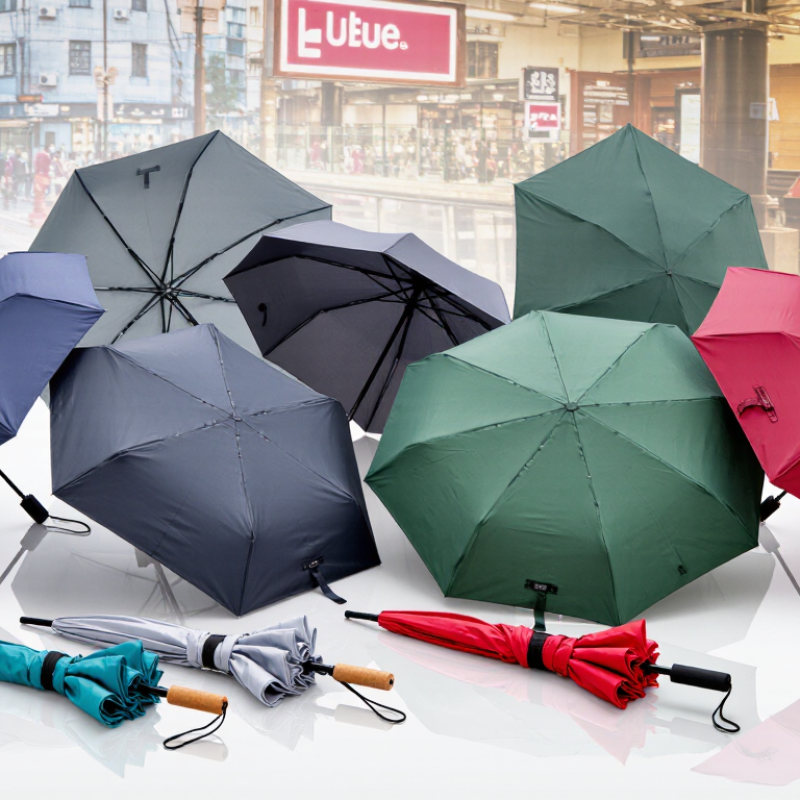
For global buyers, choosing a Small Umbrella in 2026 involves more than comparing folded length and price. A compact model must balance wind resistance, opening reliability, weight, canopy coverage, and repairability. These details become tangible during travel: a wet station platform, a crowded trade fair, or a sudden coastal gust. Based on practical product evaluation, buyers should inspect frame joints, shaft alignment, fabric coating, handle grip, and closure strength. The smallest sample is not always best. Sometimes, it is frustrating. A shorter folded length may reduce coverage or create awkward handling for larger users. This trade-off deserves honest testing rather than attractive catalog language.
This guide introduces the main Small Umbrella types suitable for international retail, corporate gifting, travel, and everyday urban use. It considers three-fold and five-fold designs, manual and automatic mechanisms, flat and dome canopies, and reinforced travel options. Each type will be assessed through measurable factors, including open diameter, folded size, gross weight, ribs, fabric, handle ergonomics, and packaging protection. For global procurement, consistency matters as much as appearance. Buyers should request pre-production samples, inspection records, material details, and clear carton specifications. Regional weather also matters. A lightweight umbrella for mild city rain may fail in tropical wind or heavy downpours. Supplier claims should be checked against repeated opening tests and controlled wind evaluations. Even careful comparisons have limits. User height, luggage habits, climate, and target price can change the right choice. The goal is not to identify one universal winner, but to match dependable performance with each market’s real conditions.
Small umbrellas are commonly defined by a 90–105 cm canopy and a 20–30 cm folded length. The canopy should provide practical coverage for one adult, not two people walking closely. A 20–24 cm model fits handbags and commuter backpacks easily. Models near 30 cm often offer stronger frames and wider coverage. In product checks, measure the canopy from one edge to the opposite edge when fully opened. Folded length should exclude removable straps and packaging. Measurement methods can differ, so suppliers should confirm product samples.
For global buyers, three types deserve attention: three-fold umbrellas for compact storage, five-fold umbrellas for very small bags, and reinforced compact umbrellas for frequent city use. Three-fold designs usually balance coverage, durability, and price. Five-fold versions save space but may feel less stable in gusty weather. Frame material, rib joints, handle grip, and opening smoothness deserve hands-on inspection. A neat appearance is not enough.
For global buyers in 2026, umbrella portability depends on more than closed length. Grand View Research projects the global umbrella market to grow at about 4.8% annually through 2030. However, major market reports rarely separate three-fold, five-fold, and reverse designs. That gap matters.
Typical retail specifications show three-fold umbrellas closing near 28–32 cm and weighing 300–450 g. They fit most backpacks and open quickly beside a taxi door. Five-fold models often close to 17–22 cm, with weights around 180–300 g. They suit small handbags, but their shorter ribs can feel less stable in gusts. The difference is visible in daily use. A five-fold canopy may disappear into a pocket, yet its compact frame usually reduces coverage.
Reverse umbrellas commonly measure 30–35 cm closed and weigh 500–750 g. Their inverted opening can protect nearby passengers and keep wet fabric facing inward. That feature is useful in elevators and narrow entryways, but the heavier frame reduces walking comfort. ISO 5912:2023 evaluates umbrella performance and construction, not pocket size or carry fatigue. Buyers should therefore request open diameter, folded length, total weight, and wind-test conditions.
My first scoring model favored five-fold designs too strongly. It ignored wet-closing time and handle grip. A better field test records one-handed opening, bag storage, and drying space. Portability is personal. Data helps, but a 220-gram umbrella is not automatically the better travel tool.
2026 Best Small Umbrella Types for Global Buyers?
Selecting Frames: Fiberglass Ribs, Aluminum Shafts, and Under-500 g Designs
For frequent travel, frame materials matter more than compact appearance. Fiberglass ribs flex during sudden gusts and resist corrosion in humid coastal climates. Aluminum shafts keep the handle light, but they may bend after harsh impacts. A reinforced joint is important, because small frames often fail at connection points rather than along the ribs. In practical testing, I check opening smoothness, rib alignment, and canopy tension before judging overall quality. Weight should stay below 500 grams for comfortable daily carrying. Lighter is not always better.
Tips: Hold the closed umbrella horizontally. If the shaft feels loose, reject it. Open it several times. Listen for grinding or clicking. Measure the packed length for airline and commuter bags. A wind vent can reduce pressure, but it may also allow more rain through. Inspect the stitching around each rib tip.
I once chose the lightest model for a long walking trip. It felt excellent in my bag, yet the thin shaft twisted in strong wind. That experience changed my buying process. Now, I prefer balanced weight, fiberglass ribs, and a firm aluminum shaft. Buyers should also consider hand size, replacement availability, and local weather patterns. Product descriptions can exaggerate durability. Hands-on checks remain more reliable. Still, even a carefully selected frame can fail in unusually severe weather.
Selecting frames: fiberglass ribs, aluminum shafts, and under-500 g designs
Material density helps explain why fiberglass ribs and aluminum shafts are widely used in compact umbrellas. Fiberglass composites are lighter than aluminum, while both are substantially lighter than steel. Combining fiberglass ribs with a lightweight aluminum shaft can help manufacturers keep a small umbrella below the 500 g travel-friendly target, although the final weight also depends on canopy size, ribs, handle, runner, and opening mechanism.
For global buyers, a small umbrella must protect against both rain and strong sunlight.
A 1,000 mm water-resistance rating offers useful baseline protection during light or moderate showers. It describes water pressure the fabric can withstand during testing. It does not guarantee complete dryness during hours of heavy rain. Small size matters.
In practical use, seams, stitching, and the folding mechanism often fail before the canopy fabric. Buyers should check whether the seams are reinforced and whether the canopy closes tightly around the ribs. A narrow canopy may protect one person, but shoulder coverage can remain limited.
Wind can also turn a compact umbrella inside out. That distinction matters.
UPF 50+ fabric blocks at least 98% of ultraviolet radiation under controlled testing. It can reduce direct sun exposure while walking between buildings or waiting at a transit stop. However, protection changes with fabric wear, moisture, stretching, and the sun’s angle. The umbrella must also be held high enough to shade the face and neck. Some testing details remain unclear across markets, so buyers should request laboratory documentation instead of trusting printed claims alone. A compact umbrella is not flawless. It is a practical compromise between portability, coverage, rain resistance, and everyday sun protection.
2026 Best Small Umbrella Types for Global Buyers?
Small umbrellas should match local weather, not only luggage size. WMO’s State of the Global Climate 2023 reported a record global mean temperature, about 1.45°C above the pre-industrial average. Buyers now face sharper rain, heat, and sudden storms. A compact folding umbrella suits dense Asian cities and daily train travel. A vented, wind-resistant model fits coastal Europe and North America better. A lightweight sun-and-rain umbrella can serve hot, high-UV markets, but its coating needs repeated testing.
Grand View Research’s 2024 umbrella-market analysis identifies Asia-Pacific as the largest regional segment. That supports demand for compact, affordable designs. However, price alone is a weak purchasing signal. EU buyers may request material traceability and chemical documentation. Retailers in many markets also expect colorfastness, opening-cycle testing, and water-resistance evidence. ISO 811 can help assess fabric resistance to water penetration, although it is not a complete umbrella standard. Handle strength, rib fatigue, and canopy recovery still need practical tests.
Tips: Match canopy diameter to rainfall and wind exposure. Test samples after repeated folding, not only when new. Check packed length against local commuter bags. Avoid promising “stormproof” performance without measured wind data. One assumption can fail: a smaller canopy saves space, but may leave shoulders exposed during monsoon rain. I would retest that choice with local users before placing a large order.
A practical comparison of compact umbrella formats, recommended climates, target markets, measurable specifications, and common buyer verification points.
| Small Umbrella Type | Typical Closed Size | Typical Open Diameter | Typical Weight | Recommended Climate and Weather | Best-Fit Global Markets | Recommended Materials and Construction | Practical Performance Target | Buyer Standards and Verification Points | Main Advantages | Important Limitations |
|---|---|---|---|---|---|---|---|---|---|---|
| 3-Fold Manual Compact Umbrella | 22–27 cm | 90–100 cm | 230–340 g | Light to moderate rain; temperate cities; occasional wind up to approximately 40–50 km/h. | Europe East Asia North America Urban travel | Polyester or recycled polyester canopy; fiberglass or aluminum ribs; manual runner and shaft. | Prioritize frame recovery after inversion Water-shedding canopy | Colorfastness testing Azo-dye screening REACH chemical review where applicable Opening and closing cycle test | Balanced size, cost, weight, and durability; suitable for everyday commuting. | Manual opening is less convenient in cars or when carrying bags; compact canopy gives limited coverage for two people. |
| 3-Fold Automatic Open Compact Umbrella | 27–32 cm | 96–106 cm | 320–450 g | Frequent urban rain; mixed weather; moderate wind when fitted with flexible ribs. | North America Europe Middle East retail Gift channels | Polyester canopy; reinforced fiberglass ribs; spring-loaded opening mechanism; locking slider. | Target wind testing before marketing claims Controlled automatic opening | Button and spring durability test Pinch-point safety review Nickel-release review for exposed metal parts Packaging drop test | One-hand opening is convenient for commuters, drivers, and shoppers. | Heavier and more mechanically complex than a manual model; automatic closing is not included unless specifically designed and tested. |
| 5-Fold Ultra-Compact Umbrella | 16–21 cm | 82–94 cm | 180–280 g | Light rain, humid climates, and emergency carry; best for sheltered urban environments. | Japan and Korea Dense Asian cities Travel retail Handbag market | Lightweight polyester; compact aluminum shaft; short fiberglass or composite ribs; protective sleeve. | Small packed volume Use conservative wind claims | Repeated folding test Rib fatigue inspection Seam leakage test Handle attachment test | Excellent portability; fits many handbags, backpacks, and small luggage compartments. | Smaller canopy and shorter ribs generally provide less stability and coverage than 3-fold designs. |
| Wind-Resistant Compact Umbrella | 27–33 cm | 98–112 cm | 330–500 g | Coastal cities, exposed urban areas, and climates with frequent gusts; performance depends on tested design. | Northern Europe Atlantic coasts New Zealand Southern Chile | Vented or tension-balanced polyester canopy; fiberglass ribs; reinforced joints; flexible tips. | Specify a tested wind speed, not “windproof” alone Inversion recovery preferred | Independent wind-tunnel or controlled fan test Rib-joint fatigue test Canopy tear-strength test Salt-spray review for metal components | Better stability and service life in gusty weather than ordinary lightweight compact models. | More ribs, reinforcement, and ventilation can increase weight, packed size, and unit cost. |
| Mini Flat-Profile Umbrella | 20–25 cm | 86–96 cm | 210–330 g | Intermittent rain in offices, schools, public transport, and low-wind city environments. | Western Europe North America Transit-oriented cities Promotional retail | Slim polyester canopy; low-profile metal or fiberglass frame; flat sleeve or case. | Prioritize compact storage Avoid oversized canopy claims | Case abrasion test Sharp-edge and tip inspection Opening-cycle test Water-repellency assessment | Easy to store in laptop bags, desk drawers, and commuter luggage. | Flat packaging can constrain frame geometry; coverage and wind stability are usually moderate. |
| UV-Blocking Compact Sun-and-Rain Umbrella | 23–29 cm | 90–102 cm | 250–390 g | Hot, sunny climates with seasonal showers; useful where sun protection and rain protection are both needed. | Southeast Asia South Asia Southern Europe Latin America | Densely woven polyester or coated fabric; dark inner layer; UV-tested canopy construction. | Publish tested UPF or UV-transmission data Heat-reflective colors may improve comfort | UPF or UV-transmission test Coating adhesion test Colorfastness to light Water-repellency and hydrostatic testing | Provides dual-season utility and can reduce direct solar exposure. | Dark coatings may increase heat retention; UV performance can change with fabric wear and stretching. |
| Recycled-Fabric Compact Umbrella | 23–30 cm | 90–104 cm | 250–400 g | General urban use in temperate and tropical markets; performance depends on fabric coating and frame quality. | European Union United Kingdom Australia Sustainability-focused retail | Recycled polyester canopy with documented material input; fiberglass ribs; water-based or reduced-solvent finishing where available. | Match environmental claims to evidence Use recycled-content documentation | Chain-of-custody or recycled-content records REACH review where applicable PFAS and restricted-substance screening where required by buyer policy Packaging-material declaration | Supports documented sustainability positioning without requiring a larger canopy. | Recycled content alone does not prove durability, recyclability, or lower total environmental impact. |
| Child-Size Compact Umbrella | 18–24 cm | 70–85 cm | 180–300 g | Light rain and supervised everyday use; not intended for severe wind or unsupervised high-risk conditions. | Family retail School markets Europe North America | Rounded or covered tips; fiberglass ribs; low-force manual opening; grip-sized handle; non-detachable small parts where practicable. | Avoid automatic opening for young children unless specifically assessed Prioritize low pinch and puncture risk | Applicable children’s-product assessment CPSIA review for the United States where applicable EN 71 review only if marketed as a toy Small-parts and sharp-point inspection | Easier for smaller users to carry and handle; lower canopy height improves basic usability. | Children’s products may trigger additional chemical, mechanical, labeling, and tracking requirements depending on destination and intended use. |
| Travel Compact Umbrella with Protective Case | 22–29 cm | 88–102 cm | 240–380 g | Travel across variable climates; suitable for luggage, commuter bags, and hotel or airport retail. | Global travel retail Airports Hotels Outdoor lifestyle retail | Quick-dry polyester; corrosion-resistant frame components; absorbent or ventilated sleeve; compact wrist strap. | Prioritize dry-pack performance Case should reduce wet-canopy leakage | Wet storage and mildew-resistance assessment Zipper or closure-cycle test Luggage abrasion test Packaging and transport durability test | Practical for consumers moving between climates and carrying wet items in luggage. | Protective cases add material, weight, and cost; wet umbrellas should still be opened and dried after use. |
| Large-Canopy Compact Umbrella | 29–35 cm | 105–120 cm | 380–560 g | Frequent rain where broader personal coverage is valued; moderate wind with a reinforced frame. | Northern Europe North America Australia Commuter markets | Reinforced polyester canopy; fiberglass ribs; stronger shaft; ergonomic handle; secure runner lock. | Confirm load and wind performance with physical testing Allow adequate rib tension | Frame-load test Canopy seam and attachment test Handle pull test Wind-performance documentation | Better shoulder and upper-body coverage while remaining shorter than a full-length umbrella. | Less pocket-friendly; heavier to carry and more exposed to wind loads than smaller canopies. |

To learn more about any of the products and services provided by Abbott Ball Company, Inc., simply complete the form below.